


13 Apr Home Theater Under $750: Atmos Soundbar or 2.1 System? 2026 Test
▶ 6:42 read time · Updated: April 2026
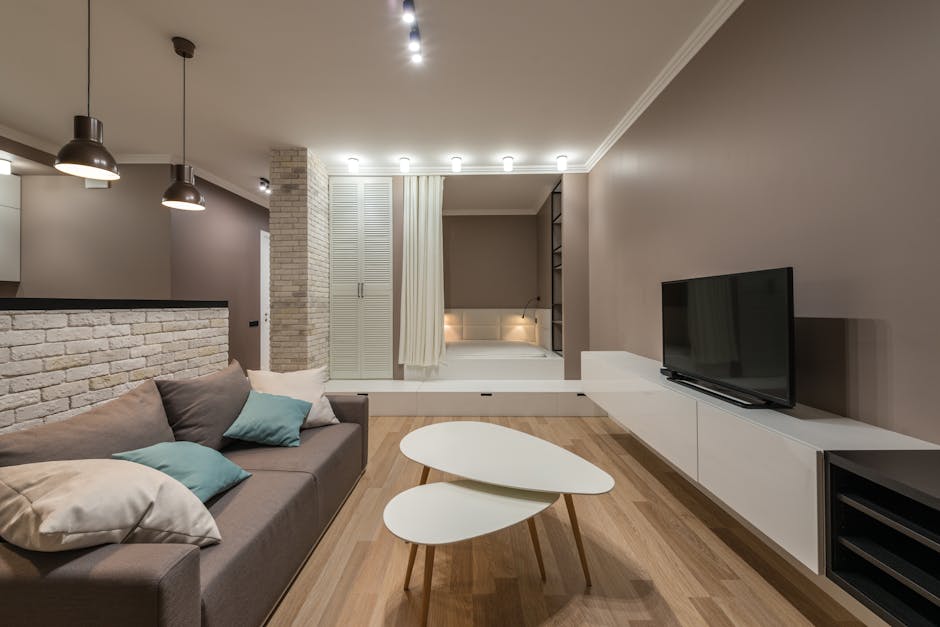
You’re sitting in your living room, new TV in place. The sound from its built-in speakers is like a phone call with reverb. You want a home cinema experience, but no receiver, no 5.1 setup with cables snaking through the floor, no weekend project. Budget: 700 euros. Soundbar with Atmos or a compact 2.1 system? I’ve listened through the honest options—and what marketing sells rarely matches what you’ll actually hear in your living room.
Atmos reality check: real vs. virtual vs. marketing
This is where things get murky fast. Not every soundbar with Dolby Atmos on the box can actually deliver overhead sound. True Atmos requires either ceiling speakers or up-firing drivers that bounce sound off the ceiling. A 3.1.2 soundbar like the Polk Signa S4 has two of these up-firing drivers. A 3.1 bar like the Klipsch Cinema 600 doesn’t. Both can display the Atmos logo because they decode Atmos signals.
The Sennheiser Ambeo Mini takes a third approach. It uses psychoacoustic processing to create the illusion of a 7.1.4 setup from a single box. This works surprisingly well in acoustically favorable rooms—but less so in open spaces with high ceilings or lots of soft surfaces. Marketing calls this Atmos too. Those who prefer precision call it virtual Atmos.
What you really need to decide before you buy
Three questions cut through the spec sheet clutter. First: Do you have room for a separate subwoofer? If not, cross Klipsch off your list—your only option is an all-in-one like the Sennheiser Ambeo Mini. Second: Is your living room primarily for movies, or does music matter just as much? Atmos soundbars prioritize effects, while HiFi bars like Nubert focus on pure sound. Third: How important are app control, AirPlay, and multi-room? That’s where D2C brands like Teufel diverge noticeably from US brands like Polk and Klipsch. Answer these, and your shortlist shrinks from five to two.
What is Dolby Atmos? Dolby Atmos is a 3D audio format that places sound in a three-dimensional space—including height. To achieve this, you either need ceiling speakers or upward-firing drivers that reflect sound off the ceiling. Soundbars without up-firing drivers can decode Atmos but can’t reproduce height. That’s the difference between Atmos-compatible and truly Atmos-capable.
Polk Signa S4: The Most Affordable True Atmos Soundbar Tested
The Polk Signa S4 is available from around €250 at German retailers—and that’s a minor pricing sensation. It’s a genuine 3.1.2 Atmos soundbar, complete with two up-firing drivers and a wireless subwoofer. Features include HDMI eARC, Bluetooth, and streaming via the Roku platform, though it skips Wi-Fi multiroom. Sound-wise, it’s honest: the subwoofer delivers solid punch, and Atmos effects are noticeable if your ceiling is under 2.5 meters. Dialogue clarity is good. Visually, it leans more toward functional tool than premium product. If you’d rather invest in sound than aesthetics, this is the pick. Note: Polk markets the soundbar in the U.S. as the Signa S4 Ultra Slim. There’s no separate “S4 Ultra” model—”Ultra Slim” simply refers to its low-profile design.
- you want the cheapest true Atmos setup
- you’re buying the subwoofer and soundbar together
- you can live without an app ecosystem
- you need Wi-Fi multiroom or AirPlay 2
- design matters to you
- your ceiling is over three meters high (Atmos reflections fade)
Sennheiser Ambeo Soundbar Mini: All-in-One, No Compromises
The Sennheiser Ambeo Mini currently starts at around €496, with prices varying by retailer up to €571. Six drivers in a single enclosure, dual integrated subwoofers, and automatic room calibration. Sennheiser’s AMBEO processing transforms this compact unit into a virtual 7.1.4 soundscape—seven surround channels plus four height channels. In well-treated rooms, the effect is almost magical. In open-plan kitchens with high ceilings, the impact remains audible but more subtle. No subwoofer needed, no cables snaking across the room. App control, AirPlay 2, multiroom, Chromecast—it’s the full package. Made in Germany is a rarity in the premium segment these days.
- you don’t want or can’t accommodate a subwoofer
- app control and AirPlay are priorities
- your room has standard acoustics
- your space is an open-plan area over 30 square meters
- you prefer physical channels over virtualization
- your budget caps at under €500
Teufel Cinebar 11 for Dolby Atmos: German D2C version
The Teufel Cinebar 11 in its Atmos variant with subwoofer currently retails for around 350 Euro as a set, down from an RRP of 449.99 Euro. It delivers height effects virtually—no up-firing drivers here. And for the price, it does a surprisingly good job. Hi-fi testers in the specialist press rate it around the “good” mark. What Teufel brings to the table as a German D2C brand: a German-language manual, German support, a well-designed app, and a customer-friendly return policy. What it doesn’t deliver: the last bit of true Atmos authenticity, since it lacks up-firing drivers. For small to medium-sized living rooms, it’s a well-balanced compromise.
- you prefer German brands and support
- your living room is under 20 square metres
- you’re okay with virtual Atmos if the price is right
- you want true Atmos with up-firing drivers
- you need multiroom with AirPlay 2
- premium aesthetics matter to you
Nubert nuBoxx AS-225 max: no Atmos, but honest hi-fi
The Nubert nuBoxx AS-225 max, priced at around 498 Euro, is the wildcard in this roundup. It decodes Dolby Digital but doesn’t support Atmos. This is a pure stereo system in soundbar form, packing 180 watts and engineered for uncompromising sound fidelity. Listen to it, and you’ll quickly understand why German hi-fi critics sing its praises. Vocals are clear without harshness, bass is tight without booming. While it can’t deliver Atmos-style home cinema effects, it more than makes up for it with music performance. It earns its place here by posing the most honest question: do you *really* need Atmos, or do you just want clean, high-quality sound?
- music matters more than movies
- you can live without home cinema effects
- hi-fi sound trumps spec sheets
- you want Atmos for films
- you expect a 3D soundstage
- you’ll miss having a subwoofer (none included)
Klipsch Cinema 600: 3.1 with Large Sub and 600 Watts of Power
The Klipsch Cinema 600 currently retails for around 550 Euro and delivers a 3.1 configuration with a dedicated center speaker and a 10-inch wireless subwoofer. That’s 600 watts of system power. Its signature horn tweeters in the high range ensure crisp dialogue and effects, though some may find them a bit sharp. It can decode Atmos signals but lacks up-firing drivers, so there’s no true height information. For those who want loud action without diving into receiver territory, it’s a solid pick. For Atmos purists, though, it’s the weakest option under 700 Euro in our test.
- you love loud movies and want serious bass impact
- you prefer that bold US sound with horn tweeters
- Atmos doesn’t matter to you and you’re sticking with 3.1
- you’re after true Atmos with up-firing speakers
- you want voices to sound softer (Klipsch leans bright)
- a premium app ecosystem is a must for you
Soundbar or 2.1 System: Which Fits Your Living Room?
If you’re being honest and only watch movies, those up-firing speakers are worth it. If you also listen to music and can’t be bothered with subwoofer placement, the all-in-one wins. And if you’re waiting for “the best,” you’re wasting your summer.
When your budget is tighter
If you’re looking at under 500 euros, I tackled the soundbar vs. stereo question in an earlier article—perfect if that’s your price range: Soundbar or stereo setup under 500 euros. The logic stays much the same, just the models change: fewer true Atmos options, but some solid active stereo speakers as an alternative to the soundbar.
What matters more in your living room than the model itself
Three things make a bigger difference than your actual purchase. Placement: ideally, position your soundbar at ear level, keep the subwoofer free between the wall and couch—not in the corner (to avoid booming). Source: use HDMI eARC, not optical, or you won’t get Atmos streaming. Streaming: Apple TV 4K, Nvidia Shield Pro, or a modern smart TV will deliver Atmos via Disney+, Apple TV+, and Netflix. If you’re using a receiver with ARC, check for lossless Atmos. Third: don’t expect miracles from Bluetooth. Atmos over Bluetooth doesn’t exist. For movies, always go wired.
Four tracks to test once your new soundbar is set up
Hans Zimmer’s *Time* builds from a whisper to a wall of sound, revealing whether your sub and soundbar work in sync. Daft Punk’s *Contact* ends in a crescendo that exposes weak subs. Bonobo’s *Migration* tests stereo imaging and depth layering. *Floating Points* checks if the upper mids come through cleanly or sound harsh.
Post-Show Q&A
Click on a question to reveal the answer.
Do I need a ceiling under 2.5 metres for Atmos?
Is a soundbar without a subwoofer enough for movies?
Do I need HDMI eARC, or is ARC enough?
What’s the difference between Atmos and DTS:X?
Is upgrading from a soundbar to a full 5.1 receiver worth it?

Soundbar vs. stereo under 500 Euro: Which sounds better? →
PC speakers under 400 Euro: Active speakers tested in 2026 →
Dolby Atmos Music: Revolution or marketing hype? →
What is a DAC, and do you really need one? →
Hi-Res Audio: Can you really hear the difference? →
Source image: Pexels / Max Vakhtbovych (px:7512034)
Translated from the German original using artificial intelligence. The German version is authoritative.