


12 Apr Best IEMs Under 200 Euro: In-Ear Monitors for Music Lovers
▶ 5:09 reading time
IEMs were long the tool of stage professionals. Technicians who had to disconnect from the monitor mix during a concert. Then a wave of Chinese manufacturers arrived with absurdly good products for absurdly low prices. Suddenly, in‑ear monitors under 100 Euro were on the table, making headphones that cost three times as much look outdated. That’s no exaggeration. That’s the Chi‑Fi market in 2026.
What sets IEMs apart from regular in‑ear earbuds
The earbuds that come with your smartphone sit loosely in the ear and let ambient noise in. IEMs are inserted into the ear canal with silicone or foam tips that seal like an earplug. Result: passive isolation of up to 37 dB. That’s more than many active noise‑cancelling headphones achieve. And it requires zero power.
Then there’s the driver technology. Consumer earbuds have a single dynamic driver. IEMs in the 80‑200 Euro range often use hybrid configurations: dynamic drivers for the bass, balanced‑armature drivers for mids and highs. Each driver does what it does best. The result is a level of detail that over‑ear headphones in the same price bracket rarely reach.
Three IEMs for under 200 Euro
Truthear Hexa (starting around 80 Euro). 1 dynamic + 3 Balanced‑Armature drivers. Impedance: 20,5 Ohm. Frequency response: 8 to 40.000 Hz. The Hexa was tuned in collaboration with audio reviewer Crinacle and is regarded as one of the most neutral tunings under 100 Euro. The housing is 3D‑printed from medical resin, fits ergonomically and weighs almost nothing. Bass is present but not dominant. Midrange is clear. Treble is detailed without becoming harsh. If you’re looking for an all‑rounder that works across every genre, the Hexa is the safest pick on this list.
37 dB
Passive Isolation (SE215)
4
Drivers in the Truthear Hexa
ab 80€
Entry‑level Chi‑Fi HiFi IEMs
7Hz Legato (starting around 100 Euro). Dual‑dynamic: 12‑mm woofer + 6‑mm tweeter. 26 Ohm impedance. CNC‑machined aluminum housing. Eight audio‑grade tantalum capacitors in the crossover. The Legato is for people who want bass—not the bloated bass of cheap consumer earbuds, but deep, controlled sub‑bass with physical impact. Up to 15 dB boost in the low‑end compared to the mids. That’s not neutral. That’s intentional. If you listen to techno, hip‑hop or drum and bass, the Legato is a treat. With acoustic music it sounds too warm.
Shure SE215 (starting at 108 Euro). Single MicroDriver. 22 to 17.500 Hz. This is the veteran of the list. Shure has been building in‑ear monitors for professional musicians for decades. The SE215 isolates up to 37 dB, features a detachable MMCX cable and works with Bluetooth adapters. Sound: warm, bass‑rich, not especially detailed in the highs. But: indestructible. Shure offers a two‑year warranty. Many stage technicians have been using the SE215 daily for years. If durability and reliability matter more than audiophile perfection, the SE215 is the right choice.
An 80‑Euro IEM with four drivers reveals details that would cost a 300 Euro over‑ear headphone. The Chi‑Fi market has rewritten the rulebook.
What to look for when buying
Tips shape the sound. The silicone tips that come in the box are often adequate, but foam tips (Comply, SpinFit) noticeably improve isolation and bass response. Spend 10 to 15 Euro on quality tips. It’s the best upgrade you can get for the price.
Detachable cables are a must. Every IEM on this list features a detachable cable (0,78‑mm‑2‑Pin or MMCX). If the cable breaks, you buy a new cable, not a new IEM. And you can switch to a Bluetooth cable when you want to listen wirelessly on the go.
Impedance is secondary. All three IEMs are under 30 Ohm and play loudly enough on any smartphone without an amp. If you also use a DAC, the sound improves, but it isn’t required.
Fit: The Underrated Factor
No IEM sounds good if it doesn’t sit properly. The shell has to fit into your ear cup, the cable runs over the ear (not straight down like with AirPods). It feels odd at first. After a week you’ll never want to listen any other way.
The tips decide everything. Too small tips: no bass, no isolation. Too large tips: pressure after 30 minutes. Most IEMs come with three to six pairs of silicone tips in various sizes. Try them all. If none fits perfectly, foam tips from Comply or SpinFit are the solution. They conform to your ear canal and improve both isolation and bass response. Between 10 and 15 Euro for a pair. The cheapest upgrade with the biggest impact.
Another detail beginners often overlook: IEMs are quieter than over‑ear headphones at the same setting because the sound goes directly into the ear instead of being dampened by a cushion. You need less volume. That protects your hearing over time. A benefit rarely discussed, but it makes the biggest long‑term difference.
For you if
- You want hi‑fi sound that fits in your pocket
- You need better isolation than ANC headphones provide
- You want a product that lasts for years by swapping cables
Hold off if
- You prefer the wearing comfort of over‑ear headphones
- You need ANC (Active Noise Cancelling), not just passive isolation
- You don’t feel like trying out different ear tips
♫ IEM Check – Tracks that test detail resolution
Songs with fine textures, sub‑bass and spatial details.
- Peggy Gou – It Makes You Forget (Itgehane) The synth pads in the background reveal what your IEM resolves
- James Blake – Limit To Your Love The sub‑bass from 1:30 separates good IEMs from bad ones
- Bonobo – Kerala Layers, percussion, space. Perfect hybrid driver test
- Justice – D.A.N.C.E. Dynamics test: from the whispering intro to the chorus explosion
Q&A after the Show
Click a question to expand the answer.
What does Chi-Fi mean?
Are IEMs harmful to your ears?
What’s the difference between 2‑Pin and MMCX?
Is upgrading to a Moondrop Blessing 3 worth it?
Alec Chizhik
Chief Digital Officer, Evernine
Read more:
- Beyerdynamic DT 900 Pro X: The headphones producers love
- Bluetooth codecs explained: aptX, LDAC, LC3
- What is a DAC – and do you really need one?
- Over‑ear vs. in‑ear: Which headphones suit you?
- Paris 2024 tech for hobby athletes IBS
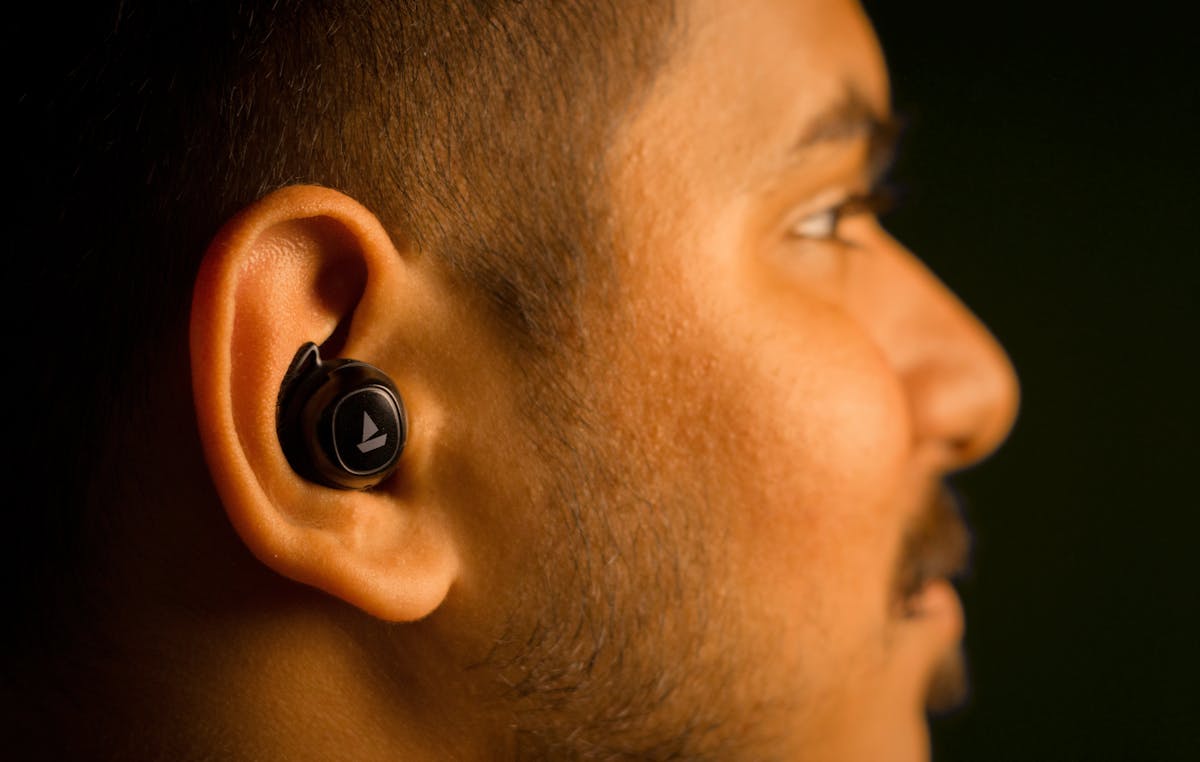
Source cover image: Pexels / Sanket Mishra (px:15399395)
IBS Publishing is a publishing brand of Evernine Media GmbH