


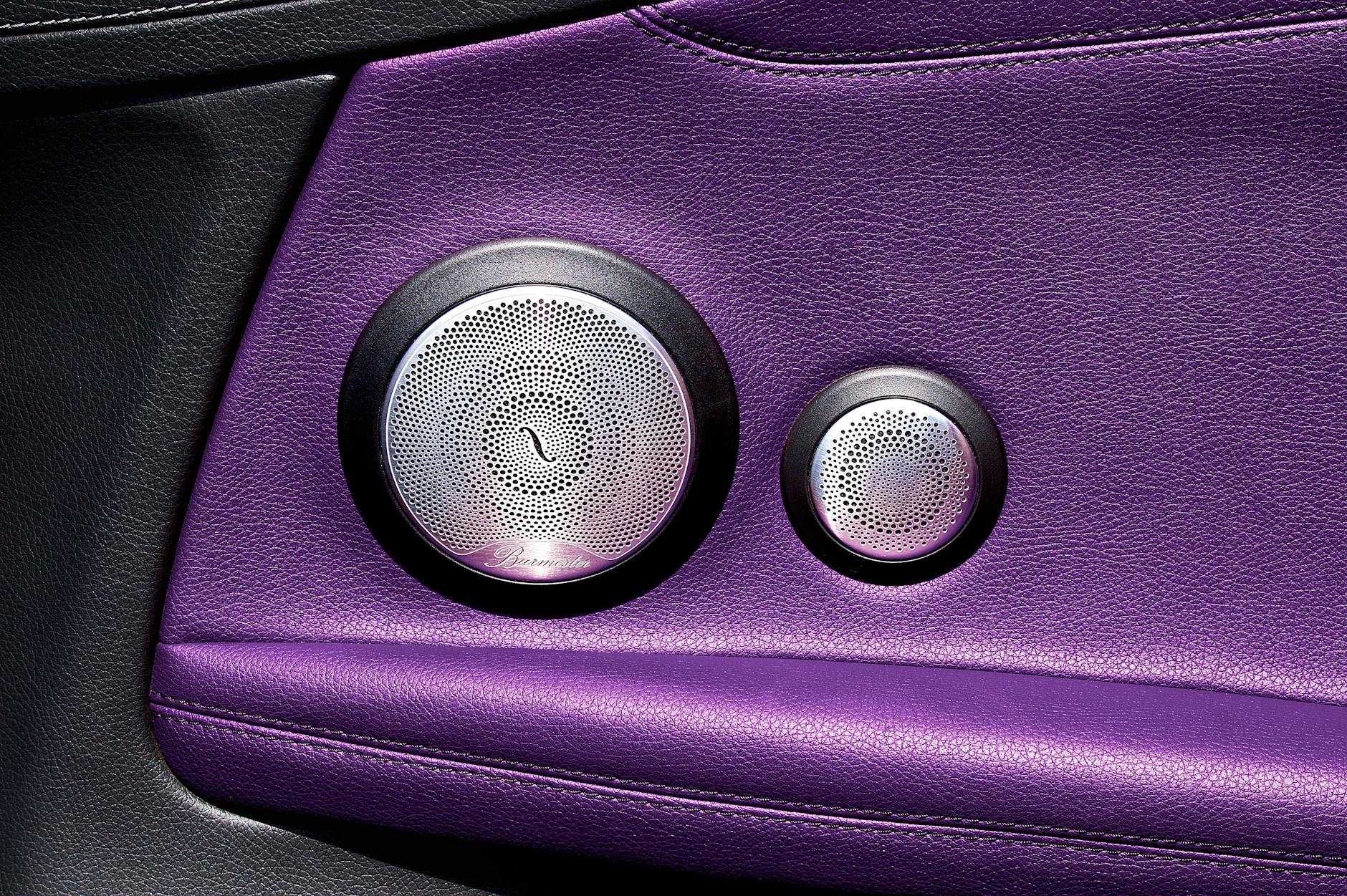
23 Mar DSP in the Car: How Digital Signal Processing Transforms Your Sound
▶ 3:12 Reading time
You have a decent amplifier, good speakers, maybe even a subwoofer that makes your rearview mirror vibrate. But something’s not right. The mids sound dull, the highs are harsh, and the bass is coming from the wrong direction. The problem isn’t your equipment. The problem is your car. And the solution is called DSP.
What a DSP Does – And Why Your Car Needs It
Your car is the worst listening room in the world. Asymmetrical seating, reflective glass, vibrating doors, a dashboard that absorbs frequencies. No matter how good your speakers are – they’re fighting against the physics of your vehicle. And without correction, they lose.
A DSP sits between your source (radio, phone, streaming) and your amplifier. It analyzes the audio signal and corrects it in real-time: time alignment so the sound reaches you simultaneously from all speakers. An equalizer that smooths out your car’s resonances. Crossovers that send only the frequencies each speaker can handle well. The result: A soundstage that doesn’t come from the dashboard, but builds up in front of you. As if the band were playing right on the hood.
The difference isn’t subtle. Without a DSP, you’re sitting in the driver’s seat hearing the left speaker much louder than the right. The bass drum comes from somewhere in the trunk instead of the center. And at 120 km/h, the highs disappear into the road noise while the bass drones dully through the door panel. A DSP corrects all this digitally before the signal reaches your speakers.
The principle is the same as Dolby Atmos in the cinema: The processor knows the position of each speaker and calculates in real-time which signal needs to arrive where and when, so you’re sitting in the middle of the stage. Except your listening room isn’t a cinema, but a Golf with four door speakers and a subwoofer. And that’s exactly why your car needs a DSP more than your living room.
Three DSPs Dominating the Market
Helix DSP Pro MK3 – the all-rounder. Audiotec Fischer from Germany manufactures the world’s best-selling car audio DSP. 8 channels, 32-bit processing, software that even beginners can understand. The community is vast, with YouTube tutorials for every vehicle model. If you want a DSP that just works and is supported by every car hi-fi installer, this is it. Price range: around 500 Euro.
miniDSP C-DSP 8×12 DL – the technological leap. The first car audio DSP with Dirac Live room correction. Place a measurement microphone in your car, Dirac analyzes the acoustics and calculates precise corrections. 8 inputs, 12 outputs, 400-MHz SHARC processor with 32-bit AKM converters. The catch: Around 900 Euro for the processor plus 400 Euro for the Dirac Live license. Worth it for those who want maximum sound quality without hours of manual tuning.
Helix DSP Ultra S – the reference. 12 channels, dual 32-bit AKM Velvet Sound converters, 96 kHz signal path. This is the DSP people use to win competitions. Bandwidth beyond 40 kHz, studio-level noise floor. Price range: over 1,000 Euro. For SQ competitions and those who prioritize sound over their car’s residual value.
Installation and Setup: What You Need to Know
A DSP is not a plug-and-play device. The hardware is usually installed under the seat or in the trunk. Wiring between the source, DSP, and amplifier must be correct. The real effort, however, lies in tuning: setting delays, adjusting the equalizer, defining crossover frequencies. If you’re doing this for the first time, plan for three to four hours.
The good news: Software makes it easier than ever before. Helix Director has the most intuitive interface on the market. miniDSP offers Dirac Live, an automatic calibration that delivers results in five minutes, which would take you hours manually. And YouTube is full of tuning tutorials for specific vehicle models.
„A DSP turns a 500-Euro system into something that sounds like a 2,000-Euro setup without a DSP. The impact is greater than any speaker upgrade.“
For installation: If you’ve ever replaced a radio or wired an amplifier, you can do this yourself. If not, have it installed professionally. Car-HiFi workshops charge between 100 and 300 Euros for DSP installation plus basic tuning. You can then do the fine-tuning yourself on your laptop. And that’s where it gets addictive: Once you start, you’ll hear things in every song that you missed before.
Q&A after the Show
Click on a question to reveal the answer.
Do I need a DSP if I already have a good amplifier?
What is the difference between Helix and miniDSP?
Can I connect a DSP to my factory radio?
How much does a complete DSP setup with installation cost?
Is a DSP worth it for Spotify streaming?

Dolby Atmos in the Car: Pioneer SPHERA puts an end to stereo →
Open-Ear Earbuds: Bose, Nothing, Shokz face off →
Portable DACs: HiFi for your pocket →
Calisthenics 2026: Bodyweight training that makes you stronger IBS →
Ice Baths 2026: What science really says IBS →
IBS Publishing is a publishing brand of evernine media
Title image source: Pexels / Mike Bird