


16 Feb Old Music, New Billions: The Catalog Boom
▶ 4:41 min read
Bob Dylan’s songs have fetched over €450 million. Bruce Springsteen’s catalog has gone for around €500 million. Queen’s for €1.27 billion. Pink Floyd’s for roughly €400 million. What sounds like a fire sale is actually the biggest shift in the music industry since streaming took off. Old music is the new gold. And the world’s biggest labels are paying prices that would have been unthinkable a decade ago.
Why old songs are suddenly worth billions
The short answer: streaming. Before Spotify and Apple Music, songs barely earned anything after a few years. The CD was sold, the radio played new music, and revenue dried up. Streaming has completely flipped that logic. A song written in 1975 generates just as much revenue in 2026 as it did on the day it was released. Every stream counts. And old songs are streamed. Constantly. Everywhere. Queen’s “Bohemian Rhapsody” has racked up over 2 billion streams on Spotify. Michael Jackson’s “Billie Jean” has more than 1.5 billion. Bob Dylan’s “Like a Rolling Stone” is streamed thousands of times every day—sixty years after its release. These songs cost nothing to produce, nothing to market, nothing to promote. They simply exist and keep generating money. Forever. The major labels have taken notice. Sony Music has pursued an aggressive acquisition strategy in recent years. The purchase of the Queen catalog for around €1.27 billion in mid-2024 was the largest deal to date. In February 2024, Sony secured half of Michael Jackson’s publishing and master rights for over €600 million. By the end of 2024, the Pink Floyd catalog was added for roughly €400 million. Universal Music had set the pace earlier, acquiring Bob Dylan’s songwriting rights in 2020 for an estimated three-digit million sum. Sony followed with Dylan’s master rights. Bruce Springsteen’s entire catalog also went to Sony, for around €500 million.
The math behind the deals
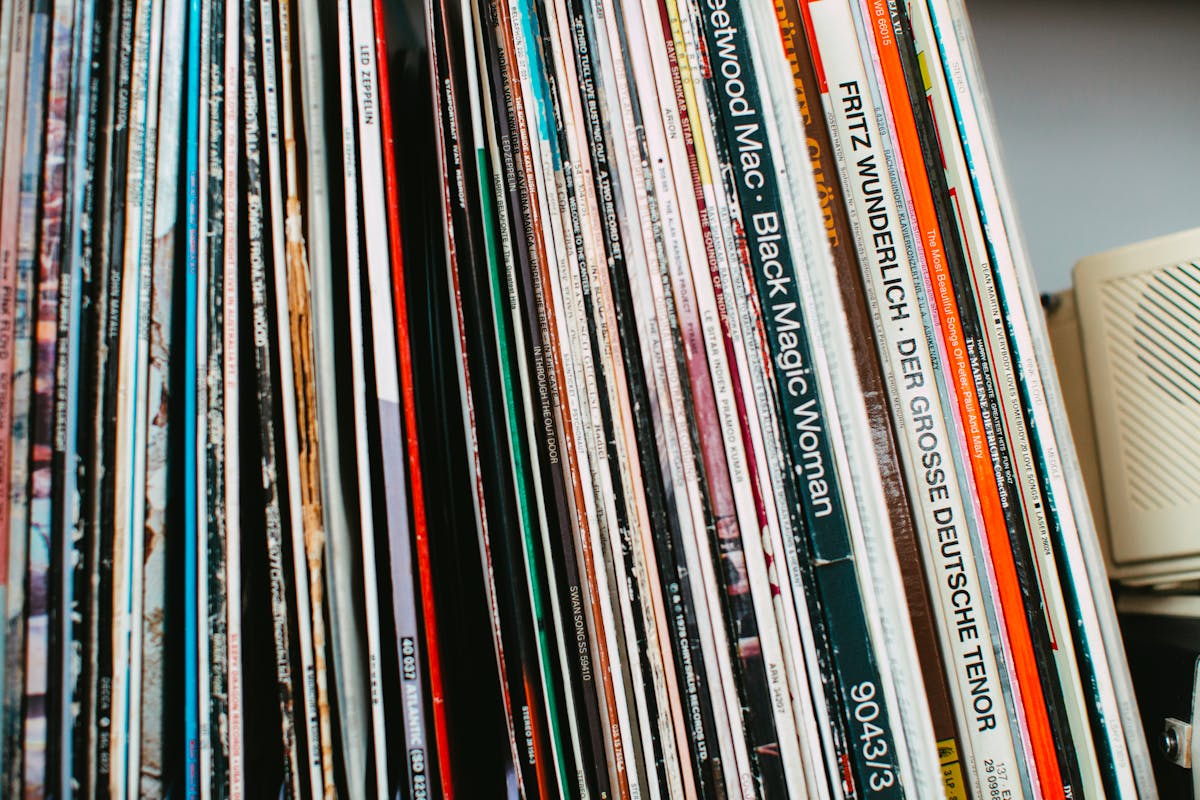
Catalog valuations are based on a multiple of annual earnings. A typical catalog is valued at 15 to 30 times its yearly revenue. The more stable and predictable the streams, the higher the multiple. Queen’s catalog is the perfect example: a handful of instantly recognizable songs that appear constantly in films, ads, sports events, and playlists. The revenue is as predictable as a government bond—only with better returns. For buyers, it’s a low-risk investment. “Bohemian Rhapsody” will still be streamed in ten years. In twenty. Probably in fifty. These songs are part of cultural history. They don’t grow old. They face no competition. No new artist can replace “Billie Jean.”
Why artists sell
The obvious answer: the money. But it’s more complicated than that. Many of the artists selling now are in their seventies or eighties. Bob Dylan was 79 when he sold his songwriting rights. Springsteen was 72. These deals are also estate planning. Instead of leaving heirs a complex portfolio of music rights that must be managed, artists receive a lump sum during their lifetime that can be taxed more favorably than ongoing royalties. Then there’s the fact that valuations have never been higher. The combination of rock-bottom interest rates in the early 2020s and the streaming boom drove multipliers to record highs. Anyone who sold in 2021 or 2022 timed the market perfectly. Whether prices will stay this high is anyone’s guess. The rate turnaround has made capital more expensive, and some analysts are already warning of a correction.
No new artist can replace “Billie Jean.” That makes old songs the safest investment the music industry has.
What this means for young artists
Here’s where it gets uncomfortable. When Sony pays €1.27 billion for Queen, that investment has to pay off. That means the songs have to be everywhere—on playlists, in films, in ads, in algorithms. Every slot “Bohemian Rhapsody” occupies in a Discover Weekly playlist is a slot a new song doesn’t get. Streaming platforms have a finite inventory of prominent playlist positions, and labels that have spent billions on catalogs have a vested interest in placing those songs as often as possible. The result is a competition in which new artists aren’t just up against other newcomers; they’re up against the biggest songs of all time backed by billion-dollar marketing budgets. That doesn’t mean new music has no chance. But it does mean the bar is higher. Anyone following the streaming war between Apple and Spotify can see the pattern: the platforms need exclusive content and fresh hits, yet their algorithms favor what already works. And what has worked for fifty years enjoys an unfair advantage.
Music as an Asset Class: The Other Side
The catalog boom has lured in a new breed of investors. The Hipgnosis Songs Fund, launched in 2018, was one of the first vehicles to package song rights as an investable product. Investors buy shares in song catalogs the way they buy stocks. Returns come from streaming revenue, sync deals for film and advertising, and licensing fees. It sounds abstract, but the consequences are real. When music becomes an asset class, yield and predictability trump artistic merit. The most valuable catalogs aren’t the most critically adored; they’re the ones with the steadiest streams. A track streamed 100,000 times every day is worth more than a critically hailed album with volatile numbers. For the music industry, this is a tectonic shift. Music has always been a high-risk game: most songs flop, a handful become hits. Old catalogs eliminate that risk. They’re the safe harbor in an industry built on uncertainty. Whether AI-generated music will change the equation—or simply flood the market with fresh content while the classics keep streaming steadily—is one of the hottest debates in the business.
Legacy music has become the safest investment in the industry. For legends, it’s a lucrative exit; for labels, a bet on eternity. For emerging artists, it means the competition isn’t just next door—it’s the biggest songs in history.
Q&A after the show
Click on a question to reveal the answer.
What exactly is sold in a catalog deal?
What’s the biggest catalog deal of all time?
Does a catalog deal change anything for fans?
Can emerging artists sell their catalogs too?
Featured image source: Pexels / cottonbro studio

Music Editor ››
Apple vs. Spotify: The streaming war escalates →
Vinyl revival: Why Gen Z is buying records →
AI music: Labels and streaming set boundaries →
Spring fitness 2026: How to start the season strong IBS →
Cold-water immersion 2026: What science really says IBS →
IBS Publishing is a publishing brand of evernine media
Translated from the German original using artificial intelligence. The German version is authoritative.