


03 Feb KAYTRANADA: The Silent Architect of Club Sound
▶ 5:01 read time
You have probably heard KAYTRANADA before without knowing his name. The Montreal producer has built beats that have appeared on Beyoncé albums, in Nike commercials, and on the world’s biggest festival stages. Still, hardly anyone outside the scene knows him. That is no accident. It is his strategy.
The Boy from Montreal Who Fused Everything
Louis Kevin Celestin, born in Montreal in 1992, the son of Haitian immigrants. His musical upbringing: the dancehall parties of his community, the hip-hop of MF DOOM and J Dilla, the house tradition of Montreal’s underground clubs. Out of that mix, he built something that had not existed before.
He started making beats at 14. By 18, he was a fixture on SoundCloud. At 24, he released his debut album 99.9%, which received an 8.5 from Pitchfork and was immediately treated as one of the best electronic albums of the decade. The twist: it was not an electronic album. It was an album that happened to use electronic tools.
Why His Sound Works
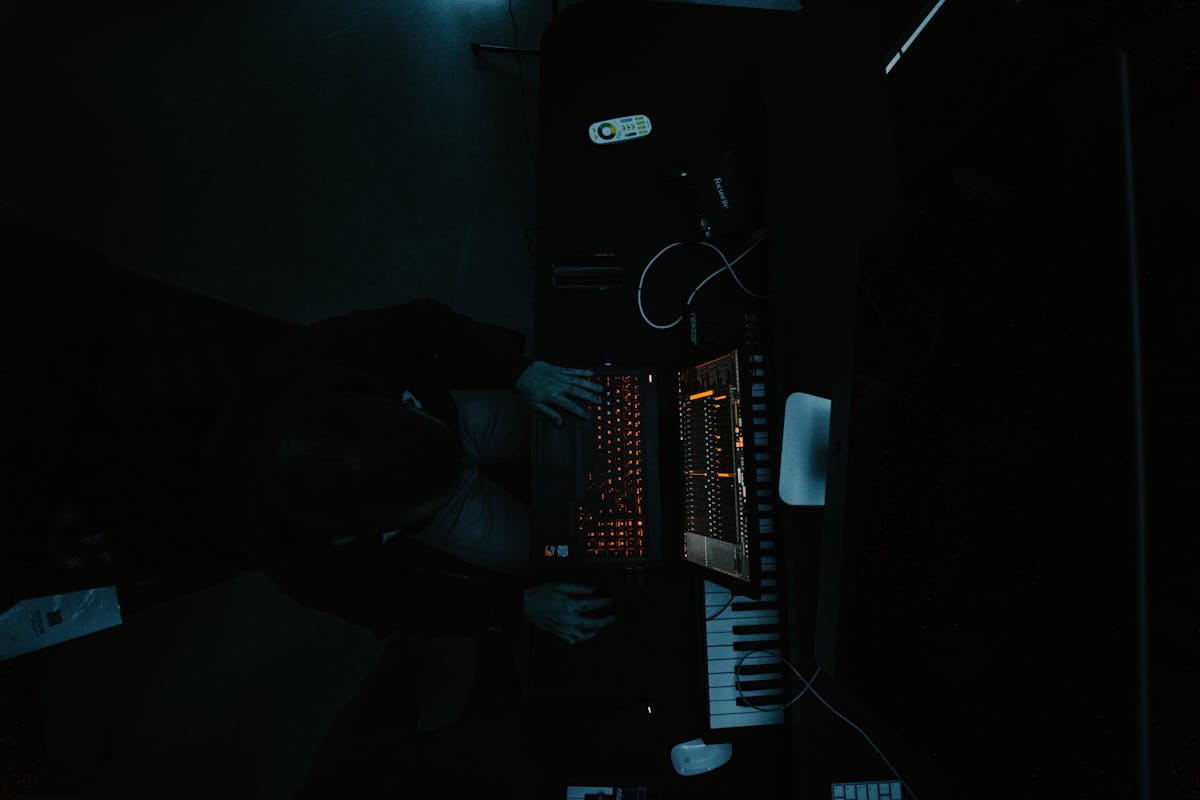
What KAYTRANADA does technically is hard to describe because it sounds so natural. He takes a house kick, places a hip-hop snare over it, filters everything through an R&B harmony, and adds Afrobeat percussion so quiet that you only notice it on the third listen. It sounds simple. It is not.
His signature move: the delayed snare. In most productions, the snare lands on the two and the four. With KAYTRANADA, it sits just a breath behind. That creates a swing your body feels before your head understands it. It is the reason his beats force you to dance, even if you are actually just sitting at your desk. Anyone who understands earworms recognizes the pattern: rhythmic deviations that hook the brain.
His sampling technique is just as unique. He does not simply chop up old records. He takes a fraction of a second from a 1970s funk track, pitches it up, and uses it as a hi-hat substitute in a modern beat. You never hear the source, but you feel the warmth that a digital sound alone would not have.
BUBBA and the Grammy
BUBBA was released in 2019 and won the Grammy for Best Dance/Electronic Album in 2021. That alone would be remarkable. But what really makes BUBBA special is this: it is not a dance album in the traditional sense. It is an R&B album with house production. A hip-hop album with a disco groove. Tracks like 10% with Kali Uchis move between genres like a DJ operating three turntables at once.
The Grammy was also a signal to the industry. The Dance/Electronic category is traditionally dominated by pure club producers. The fact that KAYTRANADA won shows that the boundaries of this category have become porous. You do not have to build a straight four-on-the-floor beat to be recognized as an electronic artist. You simply have to be good.
After BUBBA, he could have done the same thing again. Instead, he disappeared from view. Features for Beyoncé, remixes for Disclosure, DJ sets that refuse to follow a pattern. KAYTRANADA is not an artist who works through album cycles. He is a producer who appears, delivers, and disappears again. Until the next time.
The Influence No One Can Pin Down
KAYTRANADA’s influence is everywhere, but invisible. When you hear new music that makes you dance and chill at the same time, his DNA is in it. Anderson .Paak, Tyler, the Creator, and Frank Ocean have worked with him. His sound has influenced an entire generation of bedroom producers sitting in Ableton trying to reproduce that specific groove.
What makes him special: he lets his beats breathe. Where other producers fill every millisecond, KAYTRANADA leaves space. Silence is an instrument for him. The pause between the kicks is just as important as the kick itself. That makes his music alive, warm, human. At a time when AI-generated beats are becoming more and more perfect, that is a mark of quality no algorithm can copy.
The Montreal Sound: How a City Shaped a Genre
Montreal has a long tradition of electronic music. From the French-Canadian club scene of the 1990s to labels like Turbo Recordings and Musique Risquée. KAYTRANADA grew up in this ecosystem, but he is not only from Montreal. He is from Haiti. His family emigrated when he was a child. The combination of Caribbean rhythms and Canadian club culture is the core of his sound.
In interviews, he rarely talks about the Haitian influence. But you can hear it. The syncopated rhythms, the shifted accents, the way his beats breathe instead of pound. That does not come from a DAW manual. It comes from a childhood between Kompa music at the kitchen table and Tribe Called Quest in his headphones.
Montreal also taught him to exist between worlds. French and English. Mainstream and underground. Hip-hop and house. In a city that is itself a cultural mix, KAYTRANADA learned that identity is not either-or. It is a sample from different sources, blended into something new.
Why KAYTRANADA is the most important producer you do not know
That sounds exaggerated. It is not. Count the features: Pharrell, Anderson .Paak, Tinashe, Kali Uchis, H.E.R., SZA. Every one of those artists actively asked for a KAYTRANADA production, not the other way around. When the best singers and rappers in the world come knocking, you are not underground. You are the reference point.
His influence reaches far beyond his own releases. The entire “R&B meets house” wave of the past five years bears his signature. If you hear a lo-fi or chillhop mix on Spotify that sounds groovier than usual, chances are good that the producer cites KAYTRANADA as an influence.
What Comes Next
KAYTRANADA has not released a new album since BUBBA. That sounds like a break. It is not. In recent years, he has produced more features than some producers make beats. Tracks for Aminé, Thundercat, Lucky Daye. Each one a small masterpiece, none of them sounding like the next.
The 2026 festival season will show where things are heading. KAYTRANADA is booked for Coachella, Primavera Sound, and the Montreux Jazz Festival. By now, his live shows are more than DJ sets. He plays instruments, occasionally sings, and builds transitions that last 15 minutes and never get boring.
What sets him apart from other festival DJs: he plays almost exclusively his own productions and edits. No hit medley, no “next track everyone knows”. Anyone who goes to a KAYTRANADA set does not get a greatest-hits show. They get a journey. Sometimes into the club, sometimes into the desert, sometimes to a place that does not have a name yet. And that is exactly the point.
KAYTRANADA invented a genre that does not need a name. As long as algorithms cannot feel his groove, he remains irreplaceable.
Q&A after the show
Click a question to expand the answer.
What is KAYTRANADA’s best album to start with?
Does KAYTRANADA still tour live?
What makes his sound so special?
Tech Editor ››
Peggy Gou: From Seoul via Berlin to the global elite →
Skrillex: The man who redefined bass →
AI music 2026: Who still needs producers? →
Spring 2026: How to start the sports season IBS →
IBS Publishing is a publishing brand of evernine media
Translated from the German original using artificial intelligence. The German version is authoritative.