


09 Jan Eurosonic 2026: 40 Years of Talent Forging
▶ 5:18 Reading Time
Dua Lipa played here. Hozier played here. Stromae played here. Before the world knew their names, they stood on small club stages in Groningen, performing for booking agents and a few hundred people. Eurosonic Noorderslag celebrates its 40th anniversary in 2026 – and if you want to know who’ll be filling arenas in two years’ time, you need to be in the Netherlands this January.
Why Eurosonic is Different
Most festivals book acts that are already known. Eurosonic turns that logic on its head. Here, artists who nobody knows yet play for an audience that wants to discover them. For four days, hundreds of shows run in parallel across Groningen’s city center. Small clubs with 50 seats sit alongside churches with 500 listeners. Every corner offers a different sound, every door a new genre.
The concept works because the right people are listening. Eurosonic isn’t just a festival; it’s one of Europe’s most important music conferences. Over 4,000 industry professionals come to Groningen every year: booking agents from the biggest festivals, A&R managers from major labels, festival programmers from Glastonbury to Roskilde. Anyone who plays a strong gig here wakes up the next morning with offers in their inbox.
And that’s not just a marketing promise. Dua Lipa said it herself when she returned as a keynote speaker in 2023: Eurosonic was a major driver of her career. In 2016, she played here for a few hundred people in a club most don’t know the name of. Two years later, she was filling arenas worldwide. The connection between the small gig in Groningen and the global breakthrough is no coincidence for Eurosonic alumni. It’s the system.
The Discovery Machine

Eurosonic’s alumni list reads like a best-of European pop music from the last two decades. Hozier played here in 2014. “Take Me to Church” was just a small hit in Ireland; the rest of the world didn’t know him yet. A few months after Eurosonic, the song was everywhere. Number one in twelve countries, Grammy nomination, world career.
Stromae debuted on the ESNS stage in 2011. “Alors on danse” was already big in Belgium but unknown internationally. After Groningen, the wave rolled across all of Europe. Christine and the Queens, Rag’n’Bone Man, AURORA, Sigrid, Fontaines D.C., The XX, Robyn: they all took the same path. First the small stages in Groningen, then the big stages of the world.
What makes the festival so effective is the density. In four days, you can see 40, 50, 60 shows. You stumble from one act to the next. No algorithm decides what you hear. Your ears decide. And sometimes you stand in a basement with 30 other people and realize something special is happening right there. That moment, when an unknown act makes the room vibrate, is why people have been coming to Groningen for 40 years. Anyone who knows Coachella knows what big festivals feel like. Eurosonic is the opposite: intimate, raw, and full of surprises.
What Makes 2026 Special
The 40th edition runs under the anniversary motto “Europe Calling”. Over 260 acts from 39 countries perform from January 14 to 17 in Groningen. From Barbora Hora of the Czech Republic and Saga Faye of Sweden to Dutch duo YIN YIN, the lineup reflects the musical diversity of an entire continent.
The Main Hall opening is handled by Dutch rapper Donnie, with his special show “The Party Committee”. A bold statement: Eurosonic isn’t just indie and alternative. Hip-hop, electronic music, pop, Afrobeats – everything has its place here. Over four decades, the festival has evolved from a purely rock- and pop-focused showcase into a platform embracing all genres.
For the music industry, the conference remains the beating heart. Panels tackle AI in music production, sustainable festival concepts, and the future of streaming. Anyone wanting to understand where the industry is headed over the next few years will find answers here – or at least the right questions. The European Talent Exchange Programme (ETEP), coordinated at Eurosonic, has facilitated thousands of bookings for European artists at international festivals since its inception.
You wander from one act to the next. No algorithm decides. Your ears decide.
Why Groningen is Perfect
The city itself is part of the experience. Groningen boasts the youngest population in the Netherlands – over a quarter of its residents are students. Its music scene is vibrant; its infrastructure compact. You walk from venue to venue. No shuttle buses, no logistical overload. In ten minutes, you’re from the Main Hall to the city’s smallest club.
January is cold and dark in northern Holland. Perfect. The atmosphere inside packed clubs feels different when it’s minus five degrees outside – more intense, more focused. People are there because they want to hear music, not because they need an Instagram photo. That’s what sets Eurosonic apart from nearly every summer festival: no glamour, no lifestyle branding – just sound.
And that’s precisely what makes it so valuable for fans, too. Where else do you stand three meters from an artist who’ll fill stadiums in two years? Where else can you chat with the act at the bar after the gig – the very one that just blew your mind? Eurosonic is the last major festival that still feels like a voyage of discovery – not like a product.
How to Use Eurosonic the Right Way
The best strategy? Have no plan – or at least a flexible one. The official ESNS app lists all shows; you can mark favorites and build a schedule. But your best discoveries happen when you ignore the plan and simply follow intriguing sounds into the next club.
Many attendees swear by the “Three-Song Rule”: stay for three songs. If the act hasn’t grabbed you by then, move on. With over 260 acts across four days, it’s the only way to keep your bearings. And if an act hooks you after one song? Stay for the whole set.
From Amsterdam, the train arrives directly in about two-and-a-half hours. From Germany, Groningen lies just a few kilometers beyond the Dutch border. Accommodation is significantly cheaper in January than during peak festival season. And those who plan ahead know: the most popular hostels and city-center hotels sell out fast – by experience. For more festival inspiration, look no further than Ultra Miami. And if you’re wondering why vinyl is enjoying such a massive comeback, you might just find the answer in Groningen – at the record stalls in the foyer.
For 40 years, Eurosonic Noorderslag has been where Europe’s musical future is born. If you want to see the next Dua Lipa or the next Hozier before anyone else, you must go to Groningen in January. No other festival offers this density of undiscovered talent in such a tightly packed format.
Q&A After the Show
Click a question to expand its answer.
Which major acts got their start at Eurosonic?
Is Eurosonic a festival or a conference?
What’s the best way to get to Groningen?
Is Eurosonic worth it without an industry background?
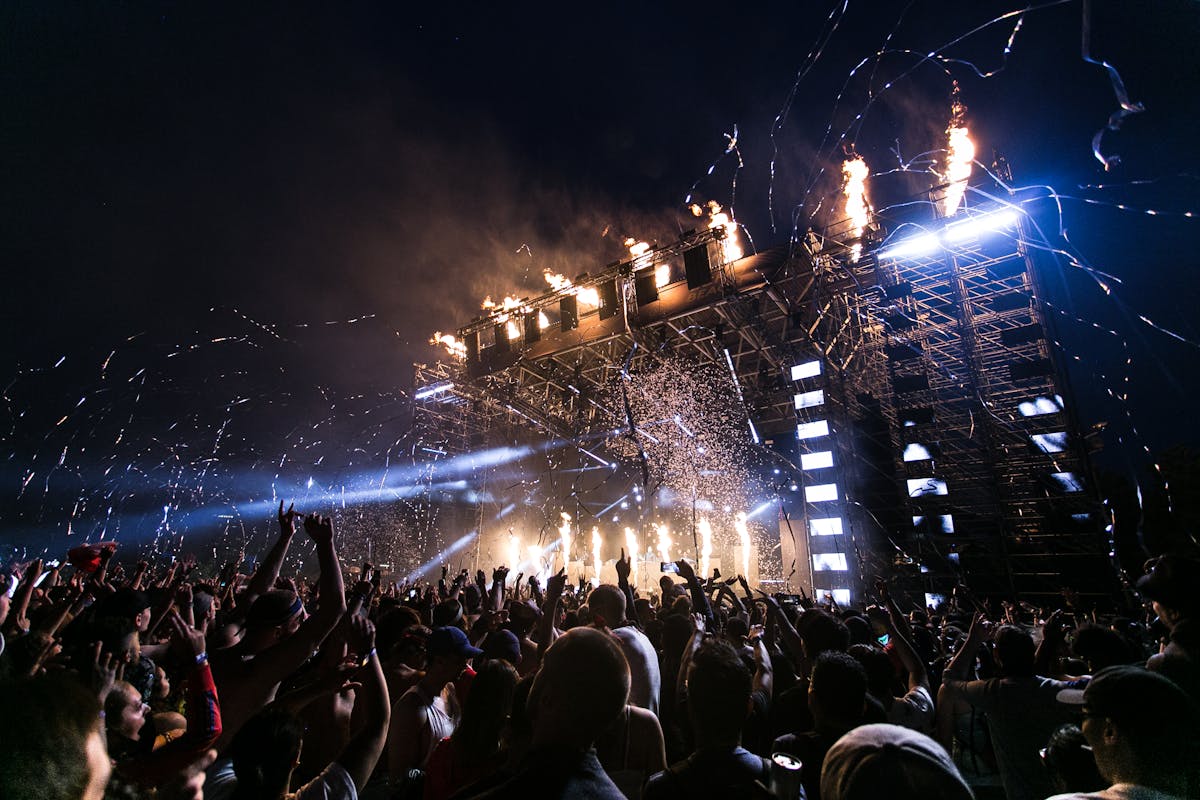
Header Image Source: Pexels / Wendy Wei
Translated from the German original using artificial intelligence. The German version is authoritative.

Coachella 2026: Three Headliners Making History →
Ultra Miami 2026: Three Days of Bass at Bayfront Park →
SXSW 2026: Austin Becomes the Epicentre of Sound →
Spring Fitness 2026: Start the Season Strong IBS →
Ice Bathing 2026: What Science Really Says IBS →
IBS Publishing is a publishing brand of evernine media