


21 Mar Dolby Atmos in the Car: Pioneer SPHERA Ends the Stereo Era
▶ 3:26 reading time
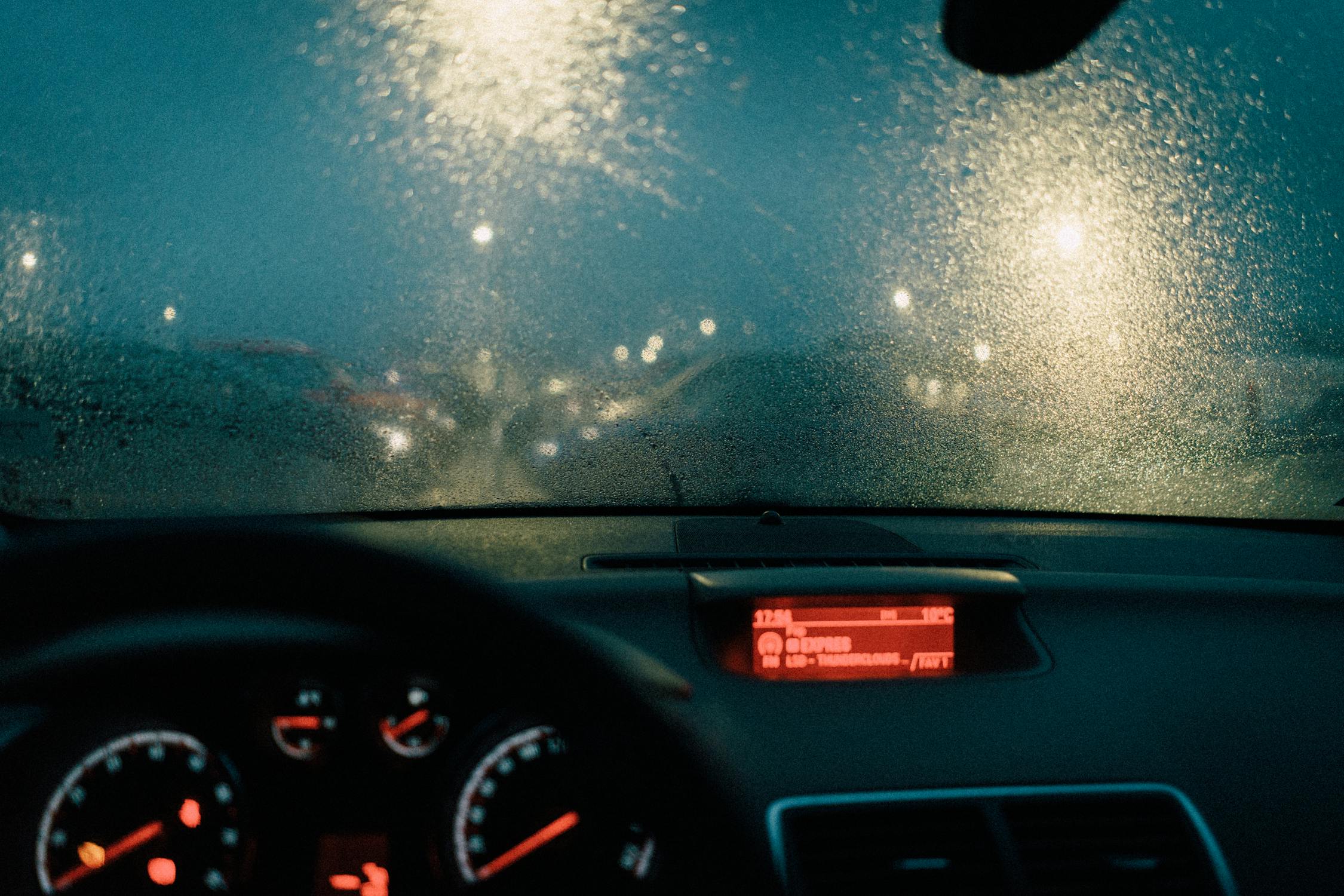
You cruise at night on the A9, the city behind you, Kendrick’s “Not Like Us” playing. And for the first time, it doesn’t sound like the music is coming from your dashboard. It’s everywhere. Over you. Next to you. Under your seat. Pioneer has just introduced the first aftermarket radio with Dolby Atmos. And with that, car audio will never be the same.
Why this changes everything
Dolby Atmos in cars was previously reserved for people who could afford an Escalade, an EQS, or a 7 Series. Mercedes installs Burmester surround sound for over 100,000 Euros. BMW uses Bowers & Wilkins in its premium models. Cadillac has AKG with 36 speakers in the Escalade. Nice for those who can afford it.
For the rest of us, there was: Stereo. Two channels. Left and right. No matter how expensive the subwoofer was, no matter how cleanly the frequencies were separated. Stereo stayed stereo. Flat. One-dimensional. As if the band was playing behind a glass pane instead of around you.
Pioneer changes this with the SPHERA. A 10.1-inch touchscreen with CarPlay that fits any standard DIN slot. ~1,200 Euro. Install, start PURE calibration, wait five minutes. Done. Your 2019 Golf suddenly sounds like a concert hall.
How Atmos Feels (Not Just What It Sounds Like)
The issue with describing spatial audio: It sounds like marketing. “Three-dimensional sound,” “sound objects placed in space,” “immersive experience.” All correct, but meaningless until you’ve heard it yourself.

Let’s get more concrete. Sit in your car. Play “Bohemian Rhapsody.” In stereo, all the voices come from two points. With Atmos, Freddie’s harmonies float above you. The guitar comes from the right rear. The bass rolls beneath your seat. It’s not louder. It’s not bass-heavy. It’s three-dimensional. As if you’re in the middle of it, not in front of it.
For hip-hop and electronic music, the difference is even more stark. 808 bass you feel, not just hear. Hi-hats that circle your head. Travis Scott’s “FE!N” in Atmos isn’t a song. It’s a place. Anyone who knows the best driving songs of all time knows what that means.
“The leap from stereo to Atmos is greater than the difference between 8 and 36 speakers.”
What You Get for About €1,200 (And What You Don’t)
The factory systems have more speakers. 38 in the Escalade, 30 in the EQS. The SPHERA works with what you have. The PURE-Autotuning technology analyzes your existing speakers and optimizes the Atmos signal for your exact setup. No need for a new amplifier or subwoofer upgrade.
Is this the same as 38 AKG speakers behind hand-stitched leather? No. But for 98 percent of listeners, the leap from stereo to Atmos is more significant than the difference between 8 and 38 speakers. You trade perfection for accessibility. And you gain.
The Trade-offs (Because Nothing’s Perfect)
Android Auto works, but Dolby Atmos currently only runs through Apple CarPlay. With Android, you get an excellent radio with a touchscreen and Bluetooth, but no spatial audio. Whether Pioneer Atmos will be available for Android remains to be seen.
Dolby Atmos only works with compatible sources. Apple Music: yes, thousands of tracks. Tidal: yes. Spotify: no, no spatial audio, just stereo upscaling. YouTube Music: no. If Spotify is your primary source, you’ll get better sound, but not true Atmos.
Installation is standard DIN, any car audio shop can do it in 30 to 60 minutes. Budget an additional €100 to €200.
Why This Is More Than Just a Gadget
Car audio has long been an afterthought. The industry has focused on infotainment, navigation, and voice assistants. The sound has improved, but not fundamentally changed. It’s still stereo, flat, and reminiscent of the 1990s, only with better speakers.
The SPHERA breaks this mold. Not because it’s technically revolutionary. Dolby Atmos has been around for years. But because it brings the technology where it truly belongs: to the people who want to immerse themselves in music while driving at night. These are the individuals who don’t see their car as just a means of transportation, but as a mobile club. From Vinyl to Spotify, much has changed. This is the next step in that evolution.
- you use Apple Music or Tidal
- sound quality in your car is more important than features
- you don’t need a new car to get premium audio
- you use Android (Atmos only via CarPlay)
- Spotify is your primary music source
- you primarily listen to podcasts
Q&A After the Show
Click on a question to reveal the answer.
Do I need new speakers for Dolby Atmos?
Does Spotify work with Dolby Atmos in SPHERA?
Can I install SPHERA myself?
Is the upgrade worth it if I mainly listen to podcasts?
Title image: Pexels / Lukas Rychvalsky

Tech-Editor ››
The 15 Best Driving Songs of All Time →
From Vinyl to Spotify: How Music in Cars Has Evolved →
In-Ear Monitoring: The Complete Guide →
Calisthenics 2026: Bodyweight Training That Makes You Stronger Than the Gym IBS →
Ice Bathing 2026: What Science Really Says IBS →
IBS Publishing is a publishing brand of evernine media
Translated from the German original using artificial intelligence. The German version is authoritative.