

14 May Club Death and New Beginning: What Berlin Pop‑up Spaces Have to Do with the Wilde Renate
▶ 5:40 read time · Scene Report
The Watergate has been closed since New Year’s Day. Wilde Renate shut down after eighteen years at the end of 2025. While landlords and city council members point fingers at each other, a club that was previously a warehouse is opening a few streets away.
The new venue has no name and announces its opening time via Telegram. Both are 2026. Both are club. The question is, what do both have to do with each other.
What actually happens when a club closes
Renate, Watergate, About Blank, Loophole, Burg-Schnabel-Club. The list of Berlin closures in just the last twelve months reads like a generational chronicle. Each club represents a phase, a sound, a crew. When Wilde Renate closes at the end of 2025, it’s not just a venue that’s lost, but a sediment of memory. For someone who stood at the door for the first time in 2008 and got married there in 2015, it’s a loss in their personal cityscape.
The reasons are banal and inseparable. Rent plus 60 percent over five years. Noise protection requirements tightened according to the revised BImSchG, which prescribes 35 decibels at night in residential areas. Staff costs plus 22 percent. Energy costs plus 40 percent. What was a local phenomenon in a niche ten years ago is now a calculated balance sheet where every free door hour costs money that doesn’t come in.
What you see as a guest: less choice. What you see as an organizer: less willingness to take risks among landlords, less willingness to insure, less enthusiasm for locations with real roots.
What makes the new spaces different
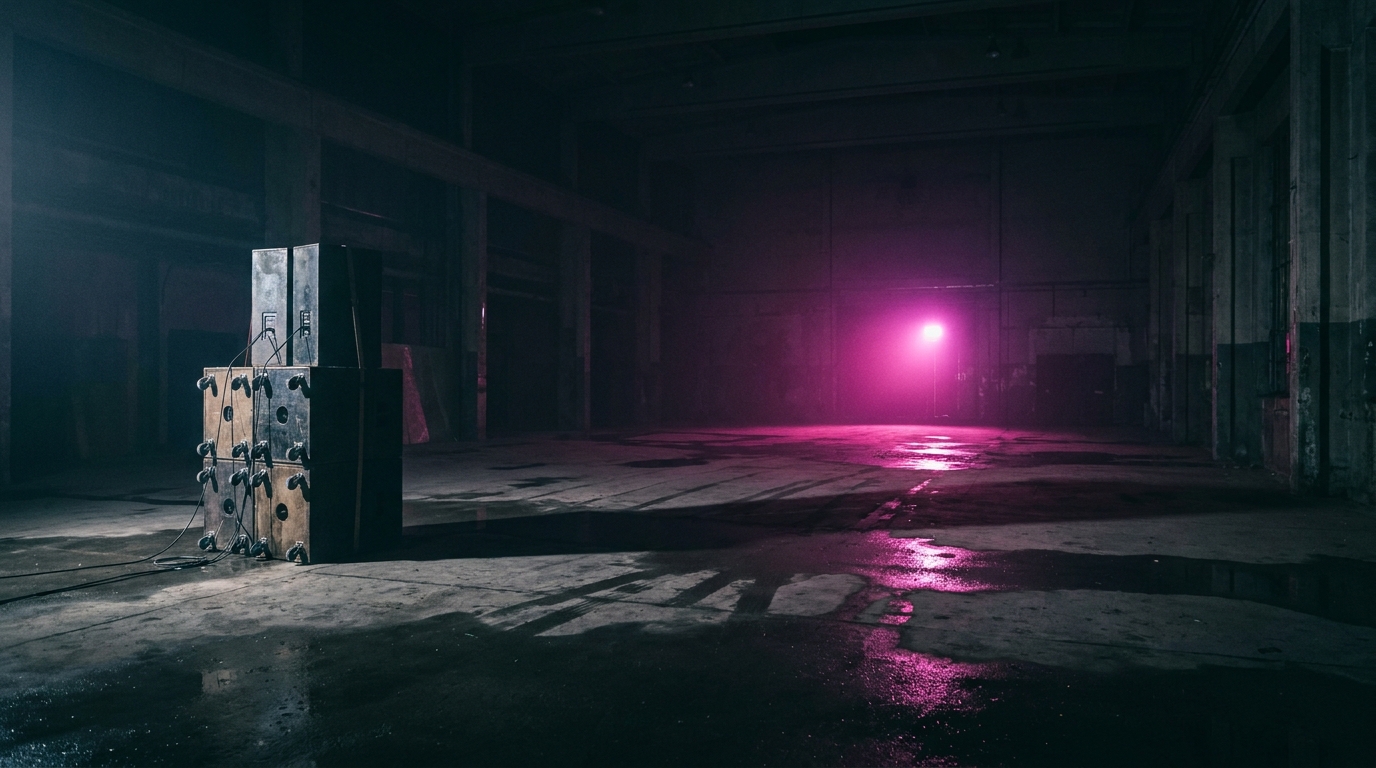
Imagine heading to a former paint shop in an industrial park on a Saturday at 2 pm, two S-Bahn stops outside the city ring. The event organizer rents the hall for 36 hours, from setup to Sunday morning. Soundproofing isn’t a concern since the surrounding area is filled with workshops. The permit is obtained through a one-time event notification under Section 60a of the Building Code. Tickets are available exclusively through a private Telegram channel. The stage is DIY, and the DJ booth is a wooden plank on beer crates. Admission is 18 Euro, with 4 Euro going to a relief fund for closed clubs.
Sounds precarious. It is. But it works. 800 people show up, no one complains, the police make a couple of rounds, and then leave. By Sunday evening, everything is cleared out. The hall stands empty again. The next event takes place in three weeks in the backyard of an old printing press, with a different concept and crew.
This is a different logic. The logic is about recurrence rather than permanence. Movement between locations instead of a fixed address. Those who ran clubs in the 2010s relied on substance. The current generation relies on choreography.
What connects both
- Sound system set up for seven years, every square meter acoustically optimized
- Staff with experience and responsibility, awareness team on call
- Reservation and door system that balances conflicts
- Reliability: open every Friday and Saturday
- Low threshold, low rent, low risk of sanctions
- Sound concept new for each event, allowing for experimentation
- Curated guests via Telegram, fewer tourists, more community
- No expectation of permanence, making it easier to dissolve without drama
What both have in common: they aim to create the same state, a sense of dance and timelessness, an hour where you don’t care what you do next. Established clubs achieve this through routine, structure, and acoustic shell. Temporary spaces achieve it through scarcity and inspiration. You don’t go there because it’s every Saturday, but because it’s this one Saturday.
Where the pop-up model reaches its limits
Awareness work is less effective with an inexperienced crew. When a conflict escalates at 3 am, you need staff who have been through ten similar nights. Awareness teams that have spent a weekend together in the same space and know each other. In the temporary logic, these teams must come together anew every Saturday, re-establishing themselves. This is a genuine drawback.
Musically, you also lose the depth of programming. Running a club for three years allows you to build resident DJs who grow into your space. In a pop-up, you’re reliant on guest sets that don’t have the same connection to the sound system.
Thirdly, pop-ups only work for the crowd that’s on the Telegram channel. Someone who’s 18 and new to the city has no access. The established club with a fixed address was an entry point for everyone. This aspect is partially lost.
Why the Debate Around Club Decline is Misguided
The demand for cultural space protection for clubs is justified. However, the argument that club culture is impossible without fixed venues is not true. The movement of locations is culture itself, with its own logic and aesthetics. What it needs is an adjustment of regulations rather than protection of the past. Approval procedures for temporary events that don’t last twelve weeks. Insurance packages for weekend operators. Soundproofing requirements that differentiate between residential areas and industrial wasteland.
Urban politics still think of clubs like theaters: fixed houses, fixed playing time, fixed cast. But clubs are closer to festivals or sports events, dynamic, short-term, and location-specific. Saving a Wilde Renate is a sympathetic reflex, but it saves a business model that can’t survive without subsidies. Legalizing new venues enables a different model that’s economically viable because it has lower fixed costs.
What’s Left
Renate is closed, the hall in Adlershof is open. Both brought 800 people to dance on the same night. Both gave someone the feeling that this city makes sense. One form is gone, another is growing. Those who lament the decline of clubs are right. Those who celebrate the new beginning are also right. It’s the same phenomenon, just seen from two different directions. As for you: you can mourn and still go to a strange hall next Saturday.
Playlist to Dive Into
Five tracks from the Berlin scene 2024-26 that explore the tension between substance and movement. Resident material from closed clubs and the pop-up scene.
Q&A After the Show
Click on a question to expand the answer.
Why are so many Berlin clubs closing at the same time?
Are pop-up spaces legal?
How do I get into the closed Telegram channels?
Are clubs dying out in other cities too?
Cover image source: AI-generated via nano