

17 Apr Eurovision 2026 Vienna: A First Look at Setlists, Songs and Favorites
6:15 Min. Track
Austria clinched Eurovision glory in 2025 with JJs “Wasted Love,” and in 2026 it will host the contest for the third time. Two semi-finals on 12 and 14 May, grand final on 16 May at the Wiener Stadthalle. Thirty-five countries have confirmed their entry. Five have stayed away. A Finn wielding a violin is leading the betting markets. And Vienna is already mentally decked out in red-carpet glamour.
Austria hosts, Vienna shines
The Wiener Stadthalle is the venue where Conchita Wurst’s follow-up event took place in 2015. A decade later, the Eurovision Song Contest returns to the same hall–with a larger stage, a completely new lighting setup, and a significantly higher production budget. The ORF has spent over a year developing the “State of the Art” stage, as ESC Today reports. A revolving platform embedded in the floor, LED walls stretching from the ground to the hall’s ceiling, plus a Green Room that is now woven into the show instead of lurking backstage. Anyone familiar with Eurovision productions of the past few decades will recognize this as a benchmark for the next five years.
The presenting trio sends a clear signal. Victoria Swarovski brings international recognition, Michael Ostrowski injects Austrian humor and character, and Emily Busvine–hosting the Green Room–offers the younger, UK-inspired, TikTok-friendly voice that resonates with the ESC community. Three people, three roles, classic Eurovision format formula, but with a deliberate generational split in appeal.
Vienna itself started decorating in mid-April. Billboards along the Danube Canal advertise the contest, and a giant LED display at the airport counts down the days. According to wien.info, the city expects roughly 250,000 visitors during the three show days alone. Hotels within a 3-kilometer radius of the Stadthalle are already 95 percent booked; by mid-May, whatever remains will command premium prices.
“The contest will celebrate 70 years of Eurovision with a production package that builds on the 2015 Vienna blueprint but raises stage technology, light design and audio significantly above all previous shows.” – ESCToday, “Austria: Vienna’s Eurovision 2026 State of the Art Stage Nears Completion”, April 2026
Top Picks and Bookmaker Odds
Finland is the surprise of this season. Linda Lampenius, 55, has deep roots in classical violin and has teamed up with young producer Pete Parkkonen. The result is a high-energy fusion of classical violin solos and electronic pop production that, according to OGAE voting and ESCInsight, has already won over fans before the Eurovision even begins. Finland won Eurovision in 2006 with Lordi and has since missed the top five multiple times–2026 looks like a prime opportunity.
France is banking on Monroe with a French-language ballad that echoes Barbara Pravi’s 2021 performance but with a more modern production. The Paris audience and the French diaspora are reliable voters. Denmark is entering with a national winner only decided in early March–production details are still fluid, but Scandinavian odds have quickly risen. Many Eurovision forecasts from last year’s Basel edition ended up matching ESCInsight’s model predictions almost exactly.
The Road to Vienna: Phases Leading Up to the Show
The Boycott: Five Countries Pull Out
Iceland, Ireland, the Netherlands, Slovenia and Spain will not participate in 2026. The stated reasons are the inclusion of Israel and documented attempts by the Israeli government to influence the results of the last two Eurovision editions. The EBU (European Broadcasting Union) has neither publicly confirmed the accusation nor categorically denied it. The boycott is the most visible political event in Eurovision history since Russia’s exclusion in 2022.
For fans, the consequences are multi-layered. The show loses five strong musical cultures: Ireland, the historic record-holder with seven wins; Spain, one of the Big Five with a vast audience; the Netherlands, a creative powerhouse. Slovenia and Iceland are smaller markets, yet often bring quirky entries. The drop in diversity is palpable–and has already reignited internal debates about the contest’s claim to be an apolitical platform.
For the German and Austrian scenes, the event remains important. Germany is sending an act chosen via a national selection this year. Austria is the host and automatically qualified for the final. The DACH community of Eurovision fans will be strongly represented in Vienna in 2026. At the Basel show in 2025, German, Austrian and Swiss visitors made up roughly a quarter of the audience.
2026 is often described as a turning-point year for Eurovision. That is not entirely wrong. Alongside the boycott, the format has been gradually modernised over the past two years: shorter performances as an option, more live vocals in the semi-finals, and more transparent jury-voting processes. In January 2026, the EBU adopted a new Contest Charter introducing stricter anti-manipulation rules for participating countries. Whether this will silence structural criticism will be decided on 16 May.
For newcomers who have never watched Eurovision, 2026 could be the perfect entry point. The production is likely to be the most visually lavish in a decade. The mix of established pop stars–Loreen in 2012 and 2023, Lordi in 2006, Conchita in 2014–and experimental acts is what makes Eurovision unique. A typical final features ballads, trash-pop, drama-rock, traditional folk and cutting-edge electronics on the same stage. That makes three hours of television in an era of TikTok clips surprisingly bingeable.
Eurovision’s Telegram channels have been running non-stop since early April. Fan groups such as OGAE, EscDiskutiert and the German-Austrian ESC chatroom dissect running-order rumours, fashion choices and rehearsal footage in real time. Anyone craving insider knowledge will find more on these channels than in official press releases. The community is the real show behind the show–and in a few weeks Vienna will be its epicentre.
From a journalistic standpoint, 2026 is a fascinating experiment. Eurovision has always been a cocktail of kitsch, competition and cultural identity. With the boycott, the political dimension is more visible than ever. Hosting in Vienna gives the show an almost diplomatic stage: the city is home to UNO Europe, the OSCE and numerous other international bodies. The symbolism is clear. Whether the production explicitly addresses this layer or stays resolutely apolitical will be decided on the night itself.
Q&A after the show
Click a question to reveal the answer.
Can I still get tickets?
How expensive is Vienna during Eurovision?
Is Germany broadcasting the final on Das Erste?
Who is Germany’s 2026 representative?
How does the voting work?

Editorial Team IBS Publishing ››
Eurovision 2025: JJ wins for Austria in Basel →Coachella 2026 and 2027: how to secure your tickets →Earplugs for concerts put to the test →Sombrs’ 37 venues: why bedroom pop is tipping the pop business →Triathlon start guide for swimmers (IBS) →
IBS Publishing is a publishing brand of evernine media.
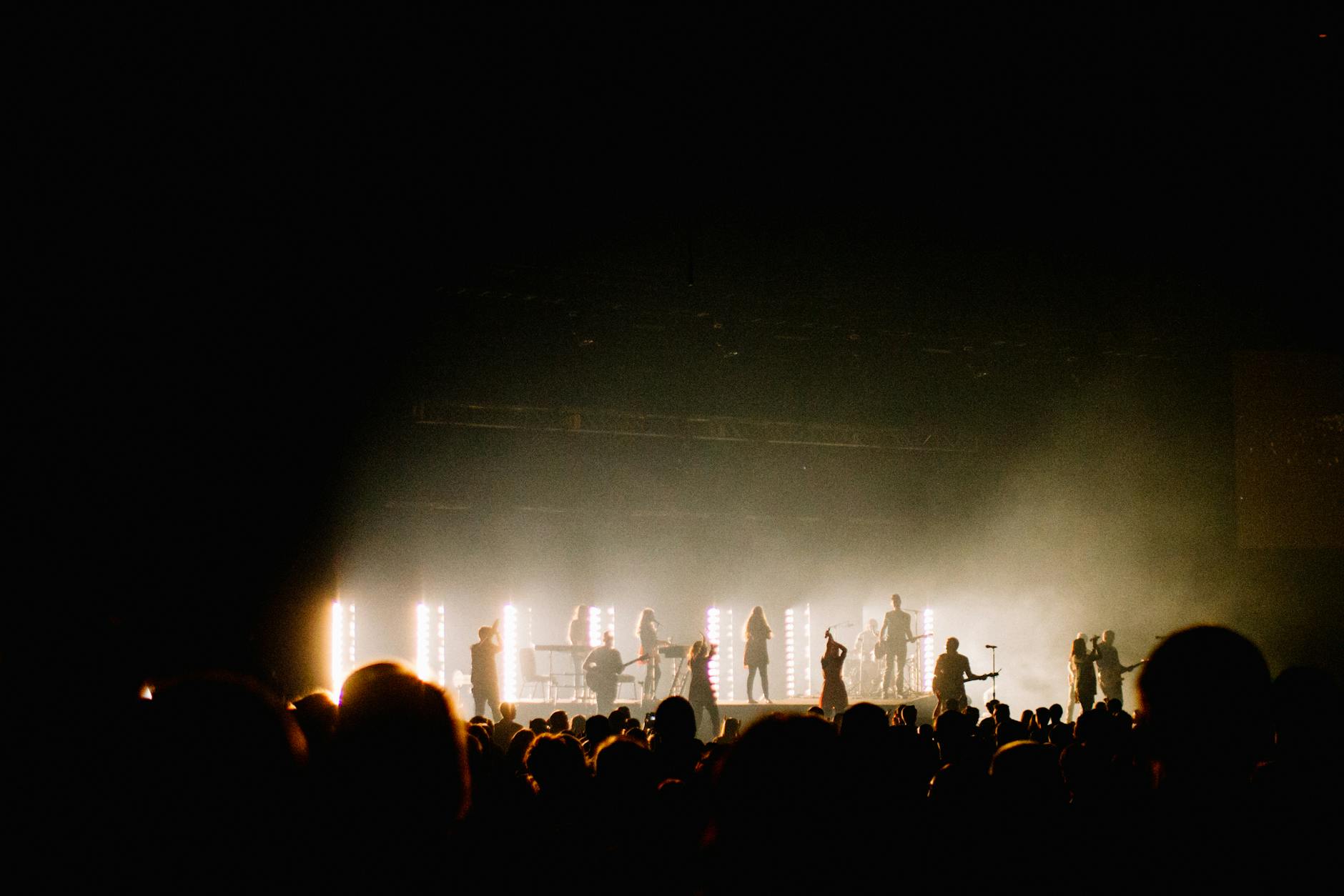
Featured image source: Pexels / Josh Sorenson
Translated from the German original using artificial intelligence. The German version is authoritative.