


11 Apr Why Olivia Rodrigo Is Accelerating the Vinyl Revival for Gen Z
▶ 5:22 read
You hit play, the song starts, you hit skip. Two days later you don’t remember what the album was called. What Olivia Rodrigo has been doing for three years targets exactly this gap in memory. Rodrigo’s albums arrive in half a dozen vinyl variants with different colors, photo booklets and bonus tracks. The numbers behind it aren’t rounding errors. And the audience buying them isn’t only making the label rich. They’re defining what an album even is in 2026.
Why vinyl is coming back right now
BVMI has published numbers for 2024 that need a moment to sink in. The physical music market in Germany shrank 7.4 percent, the CD lost 17.1 percent – and vinyl grew 9.4 percent. Within the physical market, records now hold 40.5 percent.
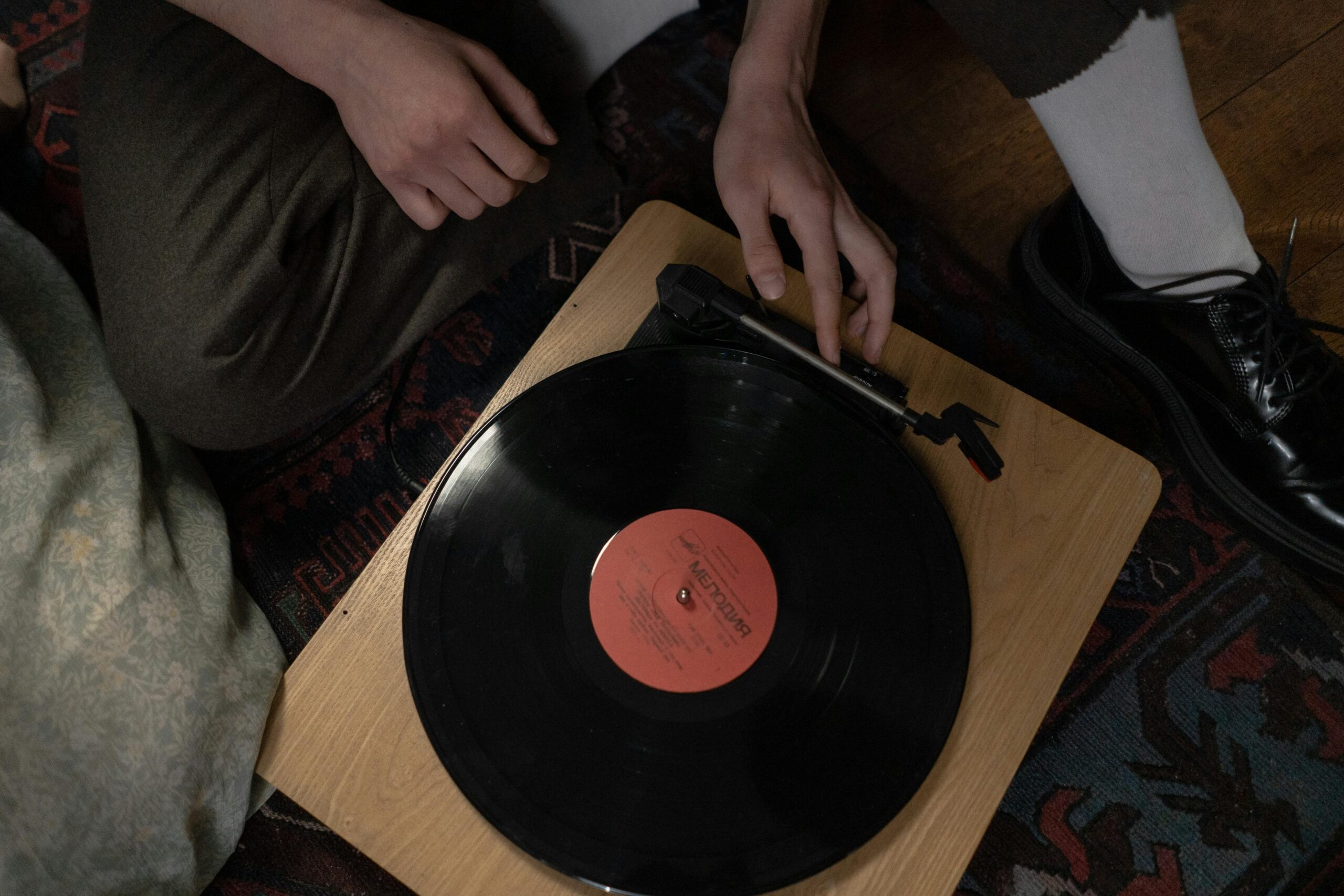
The buyers aren’t the generation that knows their records from their parents’ shared flat. They’re under-25s paying 30 euros for a ritual that streaming can’t give them. You put the record on, set the arm, sit down. Listening to records on the side doesn’t work. That’s exactly the point.

Olivia Rodrigo’s GUTS as a case study
“GUTS” came out in September 2023 and delivered numbers that are, frankly, too big for pop music in the streaming era. According to Billboard: 302,000 album-equivalent units in the first US week, 94,000 of them pure vinyl sales – the seventh biggest vinyl week since Luminate started tracking in 1991. In the UK it added 11,810 LPs plus 10,580 CDs and 8,489 cassettes.
The interesting part is who’s buying: fans who could stream the album on Spotify long ago – and still want it as an object. Rodrigo’s label pressed “GUTS” in half a dozen vinyl variants. Some fans buy several. Not because they need the music more often, but because they collect the object.
The generation that could stream everything is choosing to buy what can’t be swiped away.
What Gen Z is really buying
This isn’t about sound quality. Anyone telling you vinyl sounds better than a lossless file on Apple Lossless or Tidal HiFi has never read the audiophile data sheet. Technically, CD and a properly mastered stream have more dynamic range and less noise than any standard pressing. Rodrigo’s fans know this. They still buy.
What they buy is belonging. The record shelf is the only medium that stays visible once Spotify is closed. The difference between a playlist and a stack of records is the difference between a screenshot and a tattoo.
What vinyl does that streaming doesn’t
The comparison isn’t good versus evil. Both have their place. Streaming is the optimal way to discover new music, listen on the go and build playlists for specific moods. Vinyl is something else. It is the form where the album can be an album again – a sequence with a beginning and an end, no skip button within reach.
For “GUTS”, Olivia Rodrigo wrote several songs that only work in album context. “teenage dream”, the last track, thrives on the fact that you’ve heard the 38 minutes before. In a playlist the song loses its frame and becomes a pleasant mood piece between songs that can’t carry it. On vinyl, you have to stand up briefly, flip the record, keep listening. Those 20 seconds of pause aren’t an interruption. They’re a comma in the sentence the artist built. And they are the reason Rodrigo’s fans want the object even though they know the individual songs by heart.
The same goes for “all-american bitch”, the opener. The song starts acoustic, flips into a pop-punk chorus and lands quietly again. On shuffle, the flip feels like an error. On the album, it’s the point. The order, the pauses, the 44-minute dramaturgy – Rodrigo and her producers built all this deliberately. Streaming makes the work invisible. Vinyl makes it visible.
What vinyl can’t do: be cheap. A pressing costs 25 to 35 euros, premium editions quickly double that. For the same money you get millions of tracks on Apple Music or Spotify. The math is against vinyl, the context is for vinyl. Rodrigo’s fans have chosen which bill they want to open – the one-off but physical one. The release moment itself gains a gravity that playlists can’t deliver. Taylor Swift broke vinyl sales records in 2024 with “The Tortured Poets Department”. Billie Eilish presses every album in multiple colors. On the indie side, Phoebe Bridgers and boygenius make sure the phenomenon isn’t only a pop story. Rodrigo sits in the middle of it and knows exactly which levers her marketing team is pulling.
Q&A after the show
Click a question to expand the answer.
Does vinyl really sound better than streaming?
Why do Rodrigo fans buy multiple variants of the same album?
Is a 300-euro turntable enough or do you need 1,000 euros?
Is the vinyl revival in Germany just a niche?
Who else embodies the new album business besides Rodrigo?
Cover image: Pexels / cottonbro studio
Translated from the German original using artificial intelligence. The German version is authoritative.

From vinyl to Spotify: how the car changed music →
Dolby Atmos in the car: Pioneer SPHERA ends stereo →
The 15 greatest driving songs of all time →
Paris 2024 tech: what wearables deliver to hobby athletes IBS →
Calisthenics 2026: bodyweight training that makes you stronger IBS →
IBS Publishing is a publishing brand of evernine media