


19 Apr Concert Earplugs Tested: Which Protect Hearing Without Killing Sound
6:10 Min. Track
19.04.2026
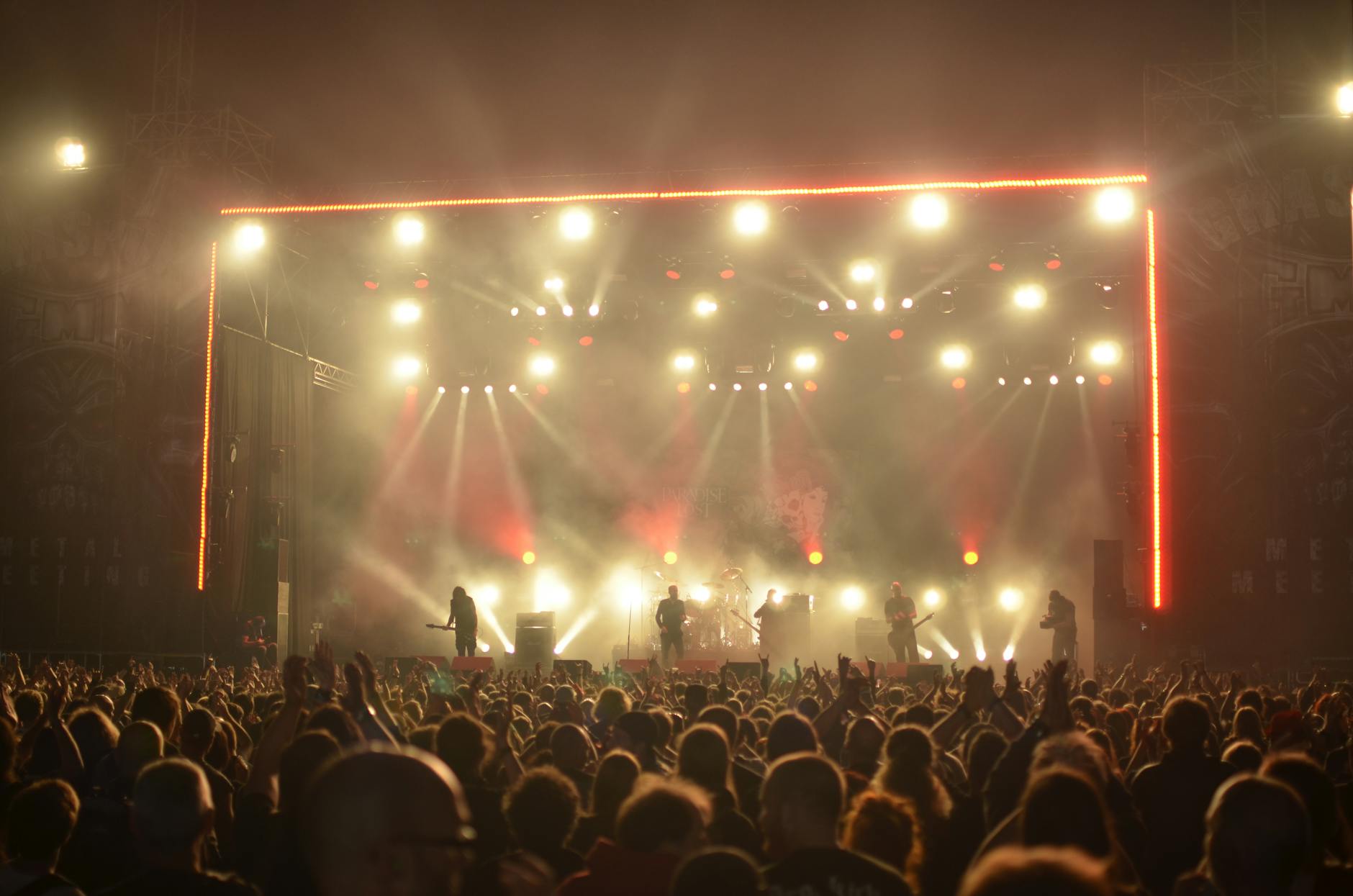
A concert in 2026 typically runs at 100 to 110 decibels. Daft Punk, Beyoncé, or Karol G can push levels up to 115 dB in the front row at festivals. That’s the range where your hearing sustains permanent damage after just 15 minutes. Earplugs aren’t uncool—they’re physics. The real question is: which ones sound good enough that you’ll actually keep them in?
What Live Music Really Does to Your Hearing
The human ear is a precise mechanical structure with limited self-repair capacity. Inside the cochlea are about 15,000 hair cells that convert sound waves into nerve signals. When these cells are overloaded or destroyed by loud noise, they don’t regenerate. This isn’t opinion—it’s been proven for decades through biopsies and MRI studies. Every “ringing in the ears” after a concert is a warning sign—and all too often ignored.
The WHO sets 85 dB as the threshold for chronic exposure. Anything above causes damage more quickly. The scale is logarithmic: 88 dB is twice as loud as 85, 91 dB is four times louder. An average rock concert hits 100 dB, a techno rave reaches 105 to 112, and a festival main stage ranges from 110 to 115 dB. The WHO’s 15-minute rule applies at 100 dB—but at 110 dB, it takes only a few minutes for measurable harm to occur. That’s why you wake up with tinnitus in your hotel after a Karol-G show.
What we underestimated until about ten years ago: post-concert tinnitus is often permanent. A 2018 meta-analysis published in the Journal of the Association for Research in Otolaryngology found that 75 percent of regular concertgoers have irreversible, though subclinical, hearing threshold shifts. These people don’t suddenly hear worse. But ten years down the line, they hear worse than peers of the same age who didn’t regularly attend clubs and concerts. That’s the real cost of going unprotected.
“High-fidelity protection means flat attenuation, but with less noise reduction. True hi-fi earplugs work like a volume knob: bass, mids, and highs are reduced evenly.”
– Hearing Health & Technology Matters, “Best Earplugs for Concerts”, 2024
Four Models in Direct Comparison
The Loop Experience isn’t the best-selling model of the past two years by accident. Priced around 30 euros, its design appeals to Gen Z aesthetics (no “granny look”), and the case easily attaches to a keychain. Sound-wise, Loop falls slightly behind EarPeace and Alpine, but the difference is negligible for non-musicians. If you only attend two concerts a year, this is the right choice.
The Alpine MusicSafe Pro and EarPeace MusicPro are closer in performance than their prices might suggest. Both feature interchangeable filters, come with a case, and last two to three years with moderate use. HearAdvisor Lab rated EarPeace a solid B, with Alpine performing at a similar level. I’ve personally been using EarPeace for 14 months—the silicone version fits my ears more securely than Alpine’s thermoplastic. That said, fit is highly individual: both brands offer return policies, so trying them out costs nothing but shipping. You’ll find similar tech reviews in our soundbar vs. stereo setup comparison.
When It’s Really Worth It
- you go to more than five concerts a year
- you’re a musician or DJ (constant exposure)
- you’ve had tinnitus after gigs before
- your family has a history of hearing damage
- you only attend seated acoustic concerts
- you always stand at the back of the venue (much quieter)
- you’re buying for a single show and opt for drugstore foam plugs (acceptable if sound quality doesn’t matter)
- you need kids’ headphones for children – that’s a whole different category
One aspect rarely highlighted in tests: earplugs only work if they fit correctly. The most common mistake is inserting them too shallowly, creating a gap. This reduces noise reduction to just 3 to 5 dB. For a proper fit, pull your earlobe down and back as you insert the plug, then twist it slightly. After insertion, your own voice should sound muffled. If it doesn’t, they’re not in deep enough.
For maintenance: wash silicone earplugs twice a month with mild soap, and replace thermoplastic filters as per the manufacturer’s instructions. A pair clogged with earwax won’t perform like a fresh one—these aren’t kitchen gadgets you leave lying around for years. If you’ve invested a solid 30 euros, treat them like the hardware they are. We’ve documented more audio myths in our Hi-Res Audio Check.
Here’s something rarely discussed: earplugs don’t just prevent acute damage—they also reduce cumulative fatigue. After a three-hour concert without protection, you’re neurologically drained. Your brain has made thousands of micro-decisions to filter speech and music from the noise. With earplugs, the mental load drops noticeably. Regular club-goers feel the difference the next day: less exhaustion, clearer thoughts, no foggy head.
The second underrated factor is everyday noise pollution. Many tinnitus patients report that their symptoms didn’t start after a single concert but after years of regular exposure—subways, open-plan offices, loud restaurants, gigs. It all adds up. Keeping a pair of earplugs on your keychain isn’t paranoia; it’s common sense. I’ve been wearing Loop Engage in noisy bars for a year now because their communication filter leaves voices almost untouched. It changes how you experience places.
If you’re investing in custom-fit earplugs, find an audiologist who specializes in musicians, not just hearing aids. Specialists in major DACH cities understand filter curves and can balance sound fidelity with protection levels tailored to your music consumption. It costs more, but a poorly calibrated custom solution is more frustrating than a 30-euro Loop.
The market is evolving fast. Loop introduced their Switch series in 2024, letting you adjust attenuation without swapping filters—just a small slider on the plug. EarPeace is launching a new generation in 2026 with improved filter material that, according to the manufacturer, reduces sound coloration. Alpine is increasingly focusing on vegan materials and recyclability. If you’re buying earplugs to last the next three years, check whether the current model is still in production or about to be phased out.
Finally, a candid look at community reactions: in Germany, wearing earplugs at a concert still occasionally draws eye-rolls from boomers. That stigma is fading, but slowly. Musicians, producers, and audio engineers almost always wear protection—and they have the sharpest ears in the room. Taking care of your hearing puts you in great company, not the lame one. The old logic of “it’s gotta be loud” never worked physiologically, and it’s losing cultural traction. Now’s a perfect time to join the movement.
Post-Show Q&A
Click on a question to reveal the answer.
Can you still hear the music properly with earplugs?
How long do earplugs last?
Is a custom fit from an audiologist worth it?
How do I know if they’re seated correctly?
Are there earplugs specifically for kids?

Coachella 2026 and 2027: How to Secure Your Tickets →Cheap Turntables Are Ruining Your Vinyl Collection →Soundbar vs. Stereo Setup: Which Sounds Better for 500 Euro? →Hi-Res Audio: Can You Really Hear the Difference? →Freediving for Beginners (IBS) →
IBS Publishing is a publishing brand of evernine media.
Featured image source: Pexels / Thibault Trillet