

14 May Nobody won Eurovision 2024
5:56 read time
March 2026 update: This article has been editorially reviewed and updated with current information.
Last updated: March 2026
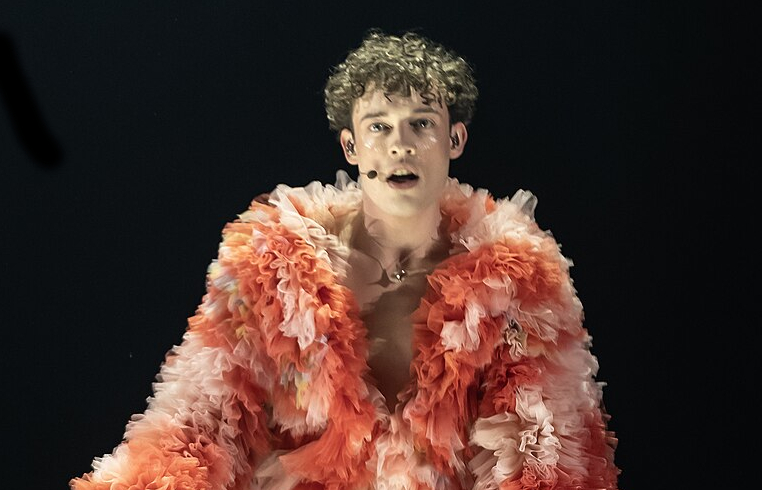
The Eurovision Song Contest (ESC) keeps getting wilder, more colorful, and more outrageous. The final on May 11, 2024, in Malmö nearly took the crown in that regard. One act immediately dropped their pants, others appeared more than “revealing.” Germany’s representative, Isaak, seemed somewhat awkward among the many performance acts, yet surprisingly landed in 12th place. The top prize went to a young Swiss artist performing under the stage name Nemo—Latin for “nobody.”
At Eurovision, victory no longer hinges solely on vocal strength or stage presence. With few exceptions—like Lena’s first place in 2010 and Michael Schulte’s fourth place in 2018—Germans have almost grown accustomed to underperforming at the Eurovision Song Contest, raising the question: Are we really that unpopular across Europe and Australia? When Isaak (Guderian, 29), a slightly stocky Westphalian, entered the race, criticism was fierce, with many doubting he could even win a mere participation trophy at the Eurovision final in Malmö, Sweden, on May 11, 2024. Indeed, his fiery performance in a rather conservative black outfit and equally painted fingernails got somewhat lost amid all the surrounding spectacle. Still, with Always On The Run, he managed a solid 12th place. The international jury had even ranked him 10th.
The Dutch entry was disqualified due to an alleged incident involving a camera operator, causing some confusion during the public vote—which, in turn, delivered a few surprises. The first-place finish for Nemo from Switzerland with The Code nearly turned into a nail-biter, as Croatia’s Baby Lasagna briefly surged to the top in the jury voting with the upbeat rap anthem Rim Tim Tagi Dim, despite having been third just moments earlier. Born in 1999, Nemo identifies as non-binary, although appearing more masculine than many other contestants. France entered what felt like the most traditionally masculine act in Slimane, who placed second with the juries but managed only 227 public votes—leaving him with 445 points and a final rank of fourth, behind Croatia and Ukraine. That was surprising, as was the fact that even traditionally conservative countries like Armenia awarded high scores to the most flamboyant performances.
More Vibrant and Diverse Than Ever
Ukraine could have benefited again from a certain sympathy bonus this year, as they did in 2022 when they topped the winner’s podium. Both Alyona Alyona and Jerry Heil would deny this, but the heated debates and protests surrounding Israel’s entry continued even in Malmö and elsewhere. Nevertheless, Israel secured 5th place with 323 public votes, while the international jury only awarded them 52 points, which would have been enough for 12th place, where Germany ultimately landed. Germany received 99 votes from the jury but only 18 from the public.
| All ESC 2024 Results | ||||||
| Rank | Points | Country | Artist | Title | Jury | Public |
| 1 | 591 | Switzerland | Nemo | The Code | 365 | 226 |
| 2 | 547 | Croatia | Baby Lasagna | Rim Tim Tagi Dim | 210 | 337 |
| 3 | 453 | Ukraine | Alyona Alyona & Jerry Heil | Teresa & Maria | 146 | 307 |
| 4 | 445 | France | Slimane | Mon amour | 218 | 227 |
| 5 | 375 | Israel | Eden Golan | Hurricane | 52 | 323 |
| 6 | 278 | Ireland | Bambie Thug | Doomsday Blue | 142 | 136 |
| 7 | 268 | Italy | Angelina Mango | La noia | 164 | 104 |
| 8 | 183 | Armenia | Ladaniva | Jako | 101 | 82 |
| 9 | 174 | Sweden | Marcus & Martinus | Unforgettable | 125 | 49 |
| 10 | 152 | Portugal | Iolanda | Grito | 139 | 13 |
| 11 | 126 | Greece | Marina Satti | Zari | 41 | 85 |
| 12 | 117 | Germany | Isaak | Always On The Run | 99 | 18 |
| 13 | 103 | Luxembourg | Tali | Fighter | 83 | 20 |
| 14 | 90 | Lithuania | Silvester Belt | Luktelk | 32 | 58 |
| 15 | 78 | Cyprus | Silia Kapsis | Liar | 34 | 44 |
| 16 | 64 | Latvia | Dons | Hollow | 36 | 28 |
| 17 | 54 | Serbia | Teya Dora | Ramonda | 22 | 32 |
| 18 | 46 | UK | Olly Alexander | Dizzy | 46 | 0 |
| 19 | 38 | Finland | Windows95man | No Rules | 7 | 33 |
| 20 | 37 | Estonia | 5Miinust & Puuluup | …narkootikumidest… | 4 | 33 |
| 21 | 34 | Georgia | Nutsa Buzaladze | Firefighter | 15 | 19 |
| 22 | 30 | Spain | Nebulossa | Zorra | 19 | 11 |
| 23 | 27 | Slovenia | Raiven | Veronika | 15 | 12 |
| 24 | 24 | Austria | Kaleen | We Will Rave | 19 | 5 |
| 25 | 16 | Norway | Gåte | Ulveham | 12 | 4 |
Portugal’s Iolanda also stood out, reminding everyone of the country’s traditional Fado singing style with her song *Grito*. The jury awarded her 139 points, while the public only gave her 13. France’s decision to sing in French was well-received by both the jury and the public. However, the Estonian entry 5Miinust & Puuluup, with 4 points from the jury and 33 from the public, didn’t fare as well. Their song title *(Nendesz) narkootikumidest ei tea me (küll) midagi* (Estonian for *We really don’t know anything about (these) drugs*) might not have been sexy enough.
Windows95man from Finland attempted a bold move by performing with his pants down. This strategy didn’t pay off, as he only received 7 points from the jury and 33 from the public, landing him in 19th place. His Finnish friend who joined him to watch the show together was almost embarrassed by the performance. Just last year, the Finns secured second place with Käärija and *Cha Cha Cha*, right behind the Swedish winners. Given the high costs of hosting the ESC, perhaps it was a blessing in disguise that the trophy went to Switzerland this year.
The host country’s opening act, twin brothers Marcus & Martinus, managed to secure 125 points from the jury and 49 from the public, placing them 9th. Looking at the country statistics since the first ESC in 1956, Ireland and Sweden lead with 7 wins each, followed by the UK, France, the Netherlands, and Luxembourg with 5 wins each. Germany, like Spain and Austria, has only managed to secure the top spot twice but has landed in second and third places four and five times, respectively. ESC founding member Luxembourg, participating for the first time in 24 years, secured 6th place with Bambie Thug’s *Doomsday Blue*.
Italy’s Angelina Mango landed in 7th place, while Greece secured 11th place, largely thanks to 85 public votes. The UK’s Olly Alexander received a flat zero votes from the public but managed to get 46 points from the jury, placing him 18th. The weak performance might be attributed to Brexit, highlighting that the ESC is not free from politics. This is understandable but also unfortunate, as it may unfairly impact some singers who want to shine with their voice rather than political statements. The vibrant, Gaga-loving fanbase of the ESC seems to be dwindling. This year, only about 150 to 165 million viewers tuned in, down from the usual 200 or 250 million.
You might also be interested in
- These mega concerts are coming to Germany in 2025
- Adele in Munich: Enthusiasm despite accompanying dissonance
- Wacken 2024 kicks off with sunshine and new investors
Q&A after the Show
Who won the Eurovision Song Contest 2024 and with how many points?
Swiss artist Nemo secured the win with the song The Code. He reached a total of 591 points, with 365 points from the jury and 226 points from the public.
Why did the Dutch entry exit before the final?
The Dutch entry was excluded from the competition due to an alleged assault on a camera woman. This incident caused additional confusion during the public vote.
How did the German participant Isaak fare with the jury and the public?
Isaak finished in 12th place overall with 117 points. The international jury ranked him 10th with 99 points, while the public gave him only 18 votes.
What role did the national language play in this year’s entries?
Many entries were performed in their respective national languages, which received great approval from the audience. This focus on native languages was a notable feature of this year’s event.
Why did France, despite ranking second in the jury vote, only place fourth?
French singer Slimane received 218 points from the jury but only gathered 227 votes in the tele-voting. This discrepancy led to a total score of 445 points and a fourth-place finish.
More from our magazines
- The Essence of Aikido (InspiredBySports)
Frequently Asked Questions
What should you know about Schriller und bunter denn je?
Ukraine, like in 2022, could again benefit from a certain sympathy bonus, even if singers Alyona Alyona and Jerry Heil would deny it. There were already heated discussions and protests surrounding Israel’s entry beforehand, which also
What should you know about Das könnte dich auch interessieren?
These mega-concerts are coming to Germany in 2025
Adele in Munich: enthusiasm despite accompanying discord
Much sunshine and new investors: that was Wacken 2024
Source of title image: Wikipedia/ Arkland
Translated from the German original using artificial intelligence. The German version is authoritative.