


04 Jun Annahstasia at Tiny Desk: Why Nähe Soul and Folk Reinvents
▶ 6:30 Reading Time
On May 26, NPR published Annahstasia’s Tiny Desk concert, and since then people have been talking about an artist many had never heard of before. No viral hook, no dance trend, no feature with a chart name. Just a voice, a band, and a desk full of books. Annahstasia does what is hardest at Tiny Desk and matters most: she fills the room without getting loud. And that’s exactly why an entire generation is rediscovering soul and folk right now, instead of scrolling past the next algorithm suggestion.
Annahstasia, briefly explained
Annahstasia Enuke is not a newcomer in the conventional sense. She was discovered at 17 and pushed into an industry that nearly suffocated the very thing that makes her special. Instead of adapting, she pulled back. Since 2019 she has worked without a label deal, and you hear that decision in every second of her music. Nothing here is straining toward a chorus engineered for a 15-second clip.
Her voice is deep, warm, slightly rough at the edges. First-time listeners think of Nina Simone, of Sade, of that strain of soul that has more to do with presence than vocal acrobatics. The Tiny Desk now brings her to an audience that might otherwise never have found her. And that is the moment when a recording becomes an event.
What Really Happens at the NPR Desk
The Tiny Desk format is merciless. No stage, no light show, no Autotune safety net. You stand between office shelves, a few feet from the audience, and either the music holds itself up or it falls apart. Annahstasia uses that confinement as a stage. Her band starts quietly, builds slowly, and just before things tip over, she pulls everything back. Every song breathes in and out.
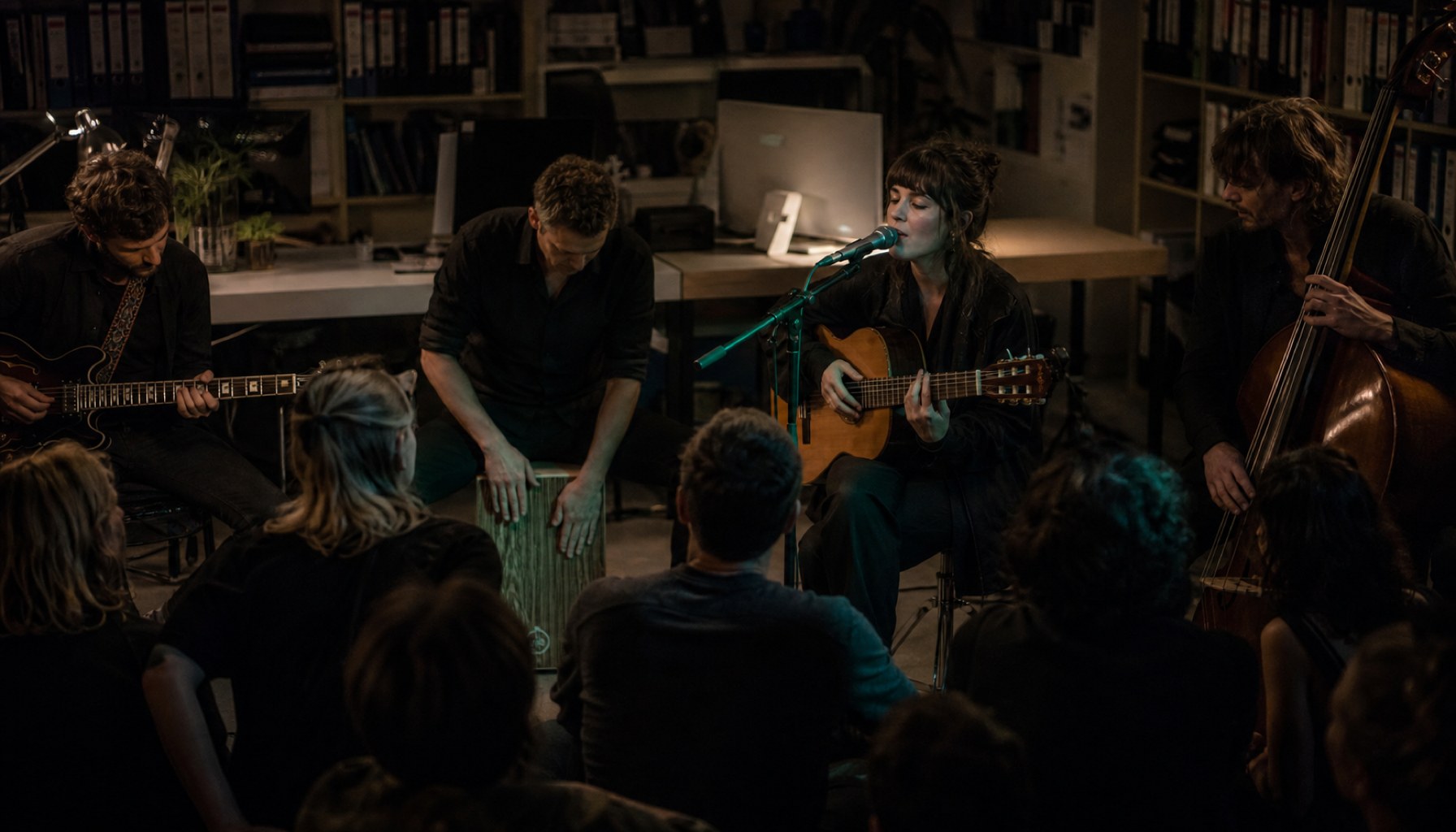
That dynamic is exactly why the set sticks. In a streaming world optimized for the instant hook, someone here dares to build tension rather than dissolve it immediately. As a closer, she reworks Villain, the standout track from Tether, turning a studio song into something that could only sound this way in this room. If you want to understand why artist proximity is carrying real weight again, it’s also worth looking at what actually reaches the artist per stream.
The Long Road to Tether
Anahtasias’s story isn’t a sudden rocket launch – it’s a journey. These milestones explain why the Tiny Desk performance feels so assured.
Discovered and fed into the industry machine. Early hype, little room for her own voice.
Free from her label deal. New momentum, her own pace, building a sound without market pressure.
Debut album Tether arrives with eleven tracks, including Villain, Be Kind and Slow featuring Obongjayar. Wide critical acclaim for its emotional depth.
The Tiny Desk brings the reach her sound has long deserved.
Why Intimacy Is Having a Moment
There’s a reason a format like Tiny Desk is delivering the most exciting discoveries right now – not the algorithm playlists. It rewards the opposite of glossy. No compressor ironing out every breath, no feature guest boosting stream counts. Instead: one person, one instrument, the courage to leave space.
Experiencing an artist for the first time across four quiet minutes rather than a 15-second clip – you hear a different kind of music. In 2026, intimacy isn’t a nostalgic reflex. It’s the most honest way to discover someone.
Annahstasia fits squarely into this movement. Her music doesn’t work as background noise – it asks you to stop for a moment. That’s the same shift you see in bedroom pop, where home recordings turn into sold-out arenas, or in leftfield projects like Earl’s double album, which proves that intimacy and ambition aren’t mutually exclusive. The common thread: artists who trust closeness over reach, and an audience that’s responding to exactly that.
Where to Start
If the Tiny Desk set sparked your curiosity, you don’t need a streaming guide. Four tracks from Tether are enough to understand why this voice stays with you. Villain is the entry point the NPR set chooses too. Be Kind shows the quieter side, Slow with Obongjayar the warmest, Satisfy Me the most direct.
Q&A After the Show
Click a question to expand the answer.
What is a Tiny Desk Concert?
Where can I listen to Annahstasia?
What does it mean to work without a label?
Why does her voice sound like soul, not pop?

Editorial IBS Publishing ››
Sombr’s 37 Arenas: Why Bedroom Pop Is Upending the Pop Business →Streaming Royalties Explained: What Artists Actually Earn per Stream →POMPEII // UTILITY: What Earl’s Double Album Says →UK Garage Revival: The Sound of the Suburbs Back in the Club →K-Pop B-Sides: Why the Hidden Tracks Are Often Better →
Image credit: Cover image and article images AI-generated (May 2026), C2PA certificate embedded in image
Translated from the German original using artificial intelligence. The German version is authoritative.