



04 May Studio Monitors or Headphones: What Your Home Studio Needs
6:00 min read
You want to upgrade your home studio and face the classic question: studio monitors or studio headphones first? The answer depends less on your budget than on your room. Whoever understands this will spend their money wisely and start mixing with confidence from day one.
04.05.2026
Why your monitoring dictates your mix
No matter how brilliant your idea is, you can only mix what you hear. If your monitors exaggerate the bass, you’ll turn it down in the mix-only for the track to sound thin on other systems. The choice between monitors and headphones isn’t a matter of taste; it’s the foundation for reliable decisions.
Both paths lead to a great mix, but they come with different demands. The deciding factor is your room. Whoever assesses it honestly makes the right call. That’s the bedrock of any studio, as our guide to setting up a home studio shows.
Studio Monitors: The Gold Standard When the Room is Right
Near-field monitors are the classic tool for mixing. They reproduce sound in the room, letting you hear the stereo width naturally and tiring you out far less quickly than headphones. The catch? A monitor is only as good as the room it’s in.
Bare walls, corners, and parallel surfaces create reflections and bass issues that distort the sound. Without some acoustic treatment-absorbers in the right spots-you’re not hearing the mix, you’re hearing the room. Monitors are perfect for a treated workspace, but in a reverberant bedroom they’ll lead you astray.
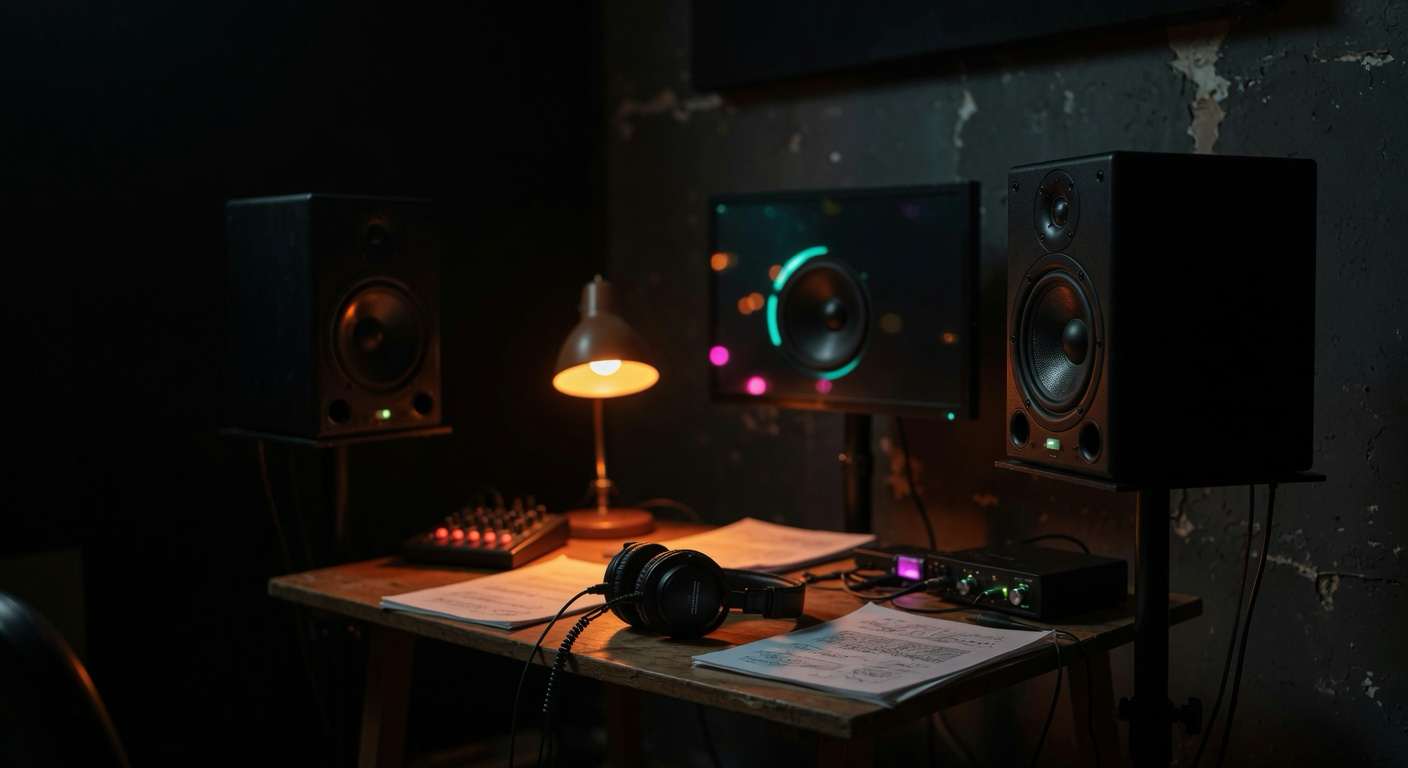
Studio Headphones: The Fix for Tiny Rooms
Headphones sidestep the room problem entirely. What you hear is the signal, not the acoustics of your four walls. That’s exactly why they’re the safe choice for anyone working in a rented flat, a bedroom, or late at night when neighbors matter.
Construction matters. Open-back headphones sound more natural and spacious, making them great for mixing, but leak sound and aren’t suited to loud environments. Closed-back headphones seal the noise in and out, the go-to for recording because nothing bleeds into the microphone. Many producers end up owning both.
Monitors vs. Headphones: The Head-to-Head
Pros: natural stereo width, less listening fatigue, realistic sense of space.
Cons: needs acoustic treatment, volume-dependent, not for late-night use.
Pros: room-independent, usable quietly, fine detail, cheaper entry point.
Cons: tires ears faster, skewed stereo width, needs getting used to.
What Beginners Should Buy First-and How Much It Costs
Honest advice: If your room is untreated and you need to work quietly, start with a solid pair of studio headphones. Decent open-back models begin at around €130 to €180 and give you a reliable foundation for mixing. A second, closed-back pair for recording can follow later.
If you have a quiet, partially treated room, near-field monitors are the more sustainable investment. A usable pair starts at about €200 to €300, plus a few acoustic absorbers. The ideal setup combines both: rough-mix on monitors, fine-tune details on headphones, and reference against familiar tracks. How the mix fits into the bigger picture is covered in our Beginner’s Guide to Producing a Song.
Q&A after the show
Click on a question to reveal the answer.
Monitors or headphones-what should I buy first?
Open-back or closed-back headphones?
Can I mix on regular headphones?
How much should I budget for a starter setup?
[/vc_column_text][/vc_column][/vc_row]

Editorial Team IBS Publishing
Produce your first song: from the first beat to release →Set up your home studio: interface, DAW and acoustics →DAW comparison for beginners: Ableton, FL Studio, Logic and Reaper →Understanding the Spotify algorithm: how songs land in playlists →aespa LEMONADE review: the second album with G-Dragon’s punch →
Featured image source: Pexels / cottonbro studio (px:5657727)
Image in article: AI-generated (May 2026)