


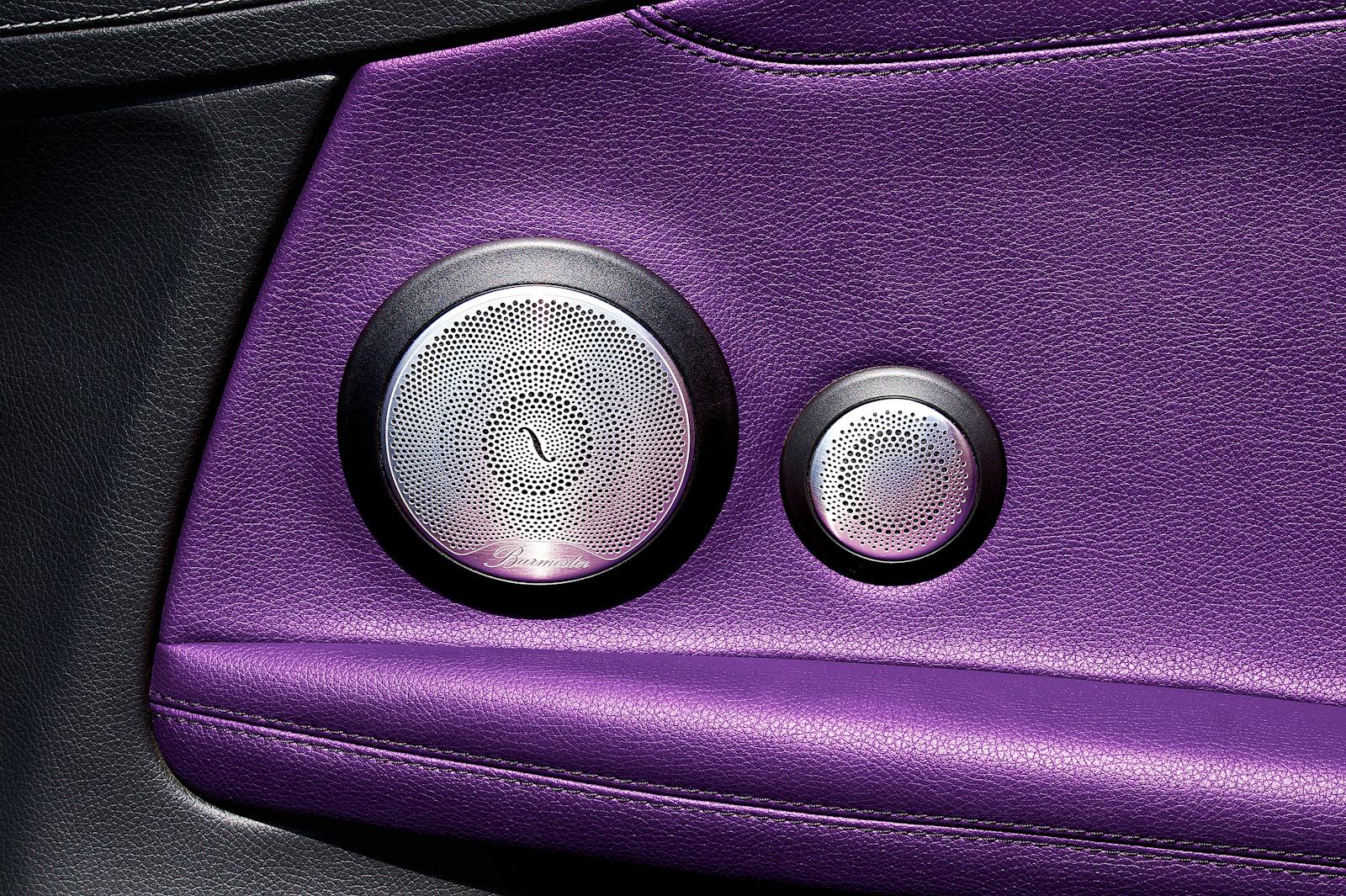
24 May Car Audio 2026: Volvo EX90 Dolby Atmos Meets BRAX Eigentakt
9:30 min read
Volvo’s EX90 packs a Dolby Atmos system boasting 1,610 watts across 25 speakers. BRAX is rolling out a new Class-D amplifier that leverages Purifi’s self-oscillating technology, promising to redefine the playing field. ESX is entering the fray with an amplifier featuring a 96-kilohertz high-res path. And at IAA 2025, immersive audio concepts dominated the show floor. Which of these innovations represent a genuine audio revolution, and which are just marketing fluff aimed at car audiophiles who really just want a solid sub and mid-range upgrade? We’ve gathered honest feedback from German installers to reveal what’s worth your money in 2026-and what you can safely skip.
Drop
- ▸ Volvo EX90 Dolby Atmos setup: 1,610 watts, 25 speakers including subwoofer array. A benchmark for immersive audio in the premium EV segment.
- ▸ BRAX is currently testing Class-D concepts with self-oscillating topologies similar to those Purifi and Hypex have established in home Hi-Fi-potentially breaking decades of Class-A/B tradition for the brand.
- ▸ ESX’s latest amplifier generation touts high-res paths up to 96 kilohertz sampling. Audible in workshops with quality sources, not on standard Spotify streams.
- ▸ Ground Zero’s Class-D lineup delivers 3,000 to 13,000 watts for SPL builds and subwoofer arrays with comfort installations-overkill for daily-driver sound upgrades.
- ▸ Industry trend 2026: DSP-based tuning software like Dirac Live is becoming the most cost-effective upgrade per euro. Aftermarket Atmos solutions won’t hit maturity until Q4 2026.
What Volvo is really installing in the EX90
The Volvo EX90 will set the benchmark in 2026 for factory-integrated premium car audio in the electric-vehicle segment. The built-in Bowers & Wilkins system with Dolby Atmos support delivers 1,610 watts across 25 speakers, including an active subwoofer array and multiple headrest-mounted speakers for the immersive-height component. Atmos-capable sources-such as Apple Music Spatial Audio or Tidal Atmos-are rendered directly into the object-based spatial playback. In practice this means: with native Atmos tracks, elements move between driver and front-passenger positions, emerge from the doors, from overhead roof channels, and from the subwoofer array. For classic stereo tracks, an in-house upmix algorithm converts the two-channel source into a pseudo-spatial signal. It works surprisingly well for most well-produced pop and rock tracks, but can sound strained on minimally mixed material in the high frequencies.
incl. headrest array
ESX high-res path
BRAX, self-clocking and the Class-D trend in the high-end segment
For decades BRAX has been synonymous in the car-audio world with Class-A/B amplifier modules costing upwards of €5,000 each. The question of whether the brand will open its topology has been on enthusiasts’ lips for a while. In the home Hi-Fi realm, Purifi’s Eigentakt topology and Hypex’s Class-D architecture are now the reference-delivering the efficiency and thermal balance of a modern switching stage without the sonic artifacts that once haunted earlier Class-D generations. For installers and workshops, adopting these topologies brings tangible benefits: much smaller amplifier boxes, fewer heat issues in the trunk or front-passenger footwell, and longer cable tolerances. Those keen to keep up can find regular listening tests of the latest amplifier generations in the Car Hi-Fi section at Stereo Guide and in Car and Hifi Magazine.
96 kHz Hi-Res: marketing fluff or real audible difference?
The current ESX amplifier generation and several other premium brands tout high-res paths up to 96 kHz sampling rates. In home Hi-Fi the 96 kHz versus 44.1 kHz debate has been deadlocked for years. Inside a car the conditions are different: cabin noise at 130 km/h typically sits at 60–70 dB, masking the finest detail in the upper registers. If you still want to invest: for stationary listening in the workshop or during slow city driving with well-produced 24-bit-96 kHz sources from Qobuz or local FLAC files, the advantages in mid- and high-frequency textures are subtle yet real. With Spotify Standard or low bit-rates, the source-not the amplifier path-is the bottleneck. So if you stream Spotify Free, a 96 kHz amplifier delivers roughly the same benefit as a 48 kHz model.
Ground Zero, SPL builds, and what really makes sense for the daily driver
In the last two years, Ground Zero has significantly expanded its Class-D lineup. The top models deliver between 3,000 and 13,000 watts-perfect for SPL competition builds, multi-sub configurations, and custom installations that prioritize showmanship over honest music reproduction. For the average car audiophile seeking a sensible premium sub-system upgrade and mid-range refresh, amplifiers exceeding 1,500 watts are rarely the right lever.
Workshop reality in German premium installer businesses: the bulk of serious daily-driver upgrades in 2026 will run on a well-tuned three-way setup with DSP, a 600 to 900-watt RMS Class-D amplifier stack, and a solid 10- or 12-inch sub. Budget ballpark: €2,500 to €4,500 including professional installation. That delivers audible improvement over the factory system in nearly every midsize car. Anyone thinking in audiophile budget tiers will recognize the same logic from home Hi-Fi.
DSP software, Dirac, and what arrives in workshops in 2026
The most exciting trend for 2026 in high-end car audio isn’t new speakers-it’s the DSP software layer. Dirac Live, long established in home Hi-Fi, has spent recent months rolling out its Bass Control extension for automotive applications. The software phase- and frequency-aligns multiple subs and speakers inside the cabin-no speaker upgrade required, just a DSP layer that measurably improves many existing systems.
The honest ROI question: DSP tuning software often delivers the biggest subjective leap per euro spent on an existing sub setup. Budget €600 to €1,200 for the license and tuning session at a DSP-capable workshop, plus a measurement microphone kit. If your current system doesn’t sound as expected, address the DSP question first, not the amplifier question. For Atmos steps in the aftermarket, German workshops aren’t uniformly ready until Q4 2026 or 2027, when it will start to go mainstream.
What you can save by 2026
Three investment hotspots that have been over-hyped in German forums over the last 18 months and don’t pay off for most auto-audiophiles. The list is based on talks with installers in Hamburg, Munich, Stuttgart and Cologne. First up: 13,000-watt SPL amplifiers for pure music listening. They make sense for SPL competitions or extreme sub configurations, not for the daily three-way driver. A solid 1,000-watt Class-D amp with DSP delivers better mid and deep-bass definition for 95 % of use cases. Second: 96-kilohertz high-res without a 24-bit source. If you’re on Spotify Free or Apple Music Standard, a high-res amp won’t unlock anything. Only when the source is already in matching bit depth and sample rate (Qobuz Studio, Tidal Hi-Fi, local FLAC files) does the path advantage become audible. Until then, invest in higher-rate software before hardware. Third: Atmos aftermarket kits in 2026. The tech isn’t ready for mass workshop roll-out; current OEM solutions are still superior. If you want Atmos in your car, buy the factory Atmos package in 2026 and wait on aftermarket upgrades until DSP and hardware toolkits are widely available in German garages. Want premium stereo sound? A classic three-way setup plus DSP tuning gets you there faster and cheaper. The takeaway from the Dolby Atmos vs. Stereo A/B test applies to cars too.
Q&A after the show
Click on a question to reveal the answer.
What’s the best price-to-performance ratio for a daily-driver upgrade?
Does 96 kHz Hi-Res audio in the car really make a difference?
How much does a Dirac Live tuning session improve sound?
Is Atmos worth it in the aftermarket by 2026?
[/vc_column_text][/vc_column][/vc_row]

Editorial IBS Publishing ››
Dolby Atmos Music vs Stereo: What you actually hear on good headphones → Audiophile under €2,500: The 2026 budget Hi-Fi landscape → Bose QuietComfort Ultra 2 vs Sony WH-1000XM6: Six months of daily use → Studio monitors vs headphones mixing: What serious producers really use in 2026 → Zone 2 personalized: What FatMax and VT1 data really teach your training plan →
Header image source: Pexels / Mike Bird (px:9604953)
Translated from the German original using artificial intelligence. The German version is authoritative.