

20 Jun Fred again.. live: The Future of the Electronic Stage
6:05 Read Time
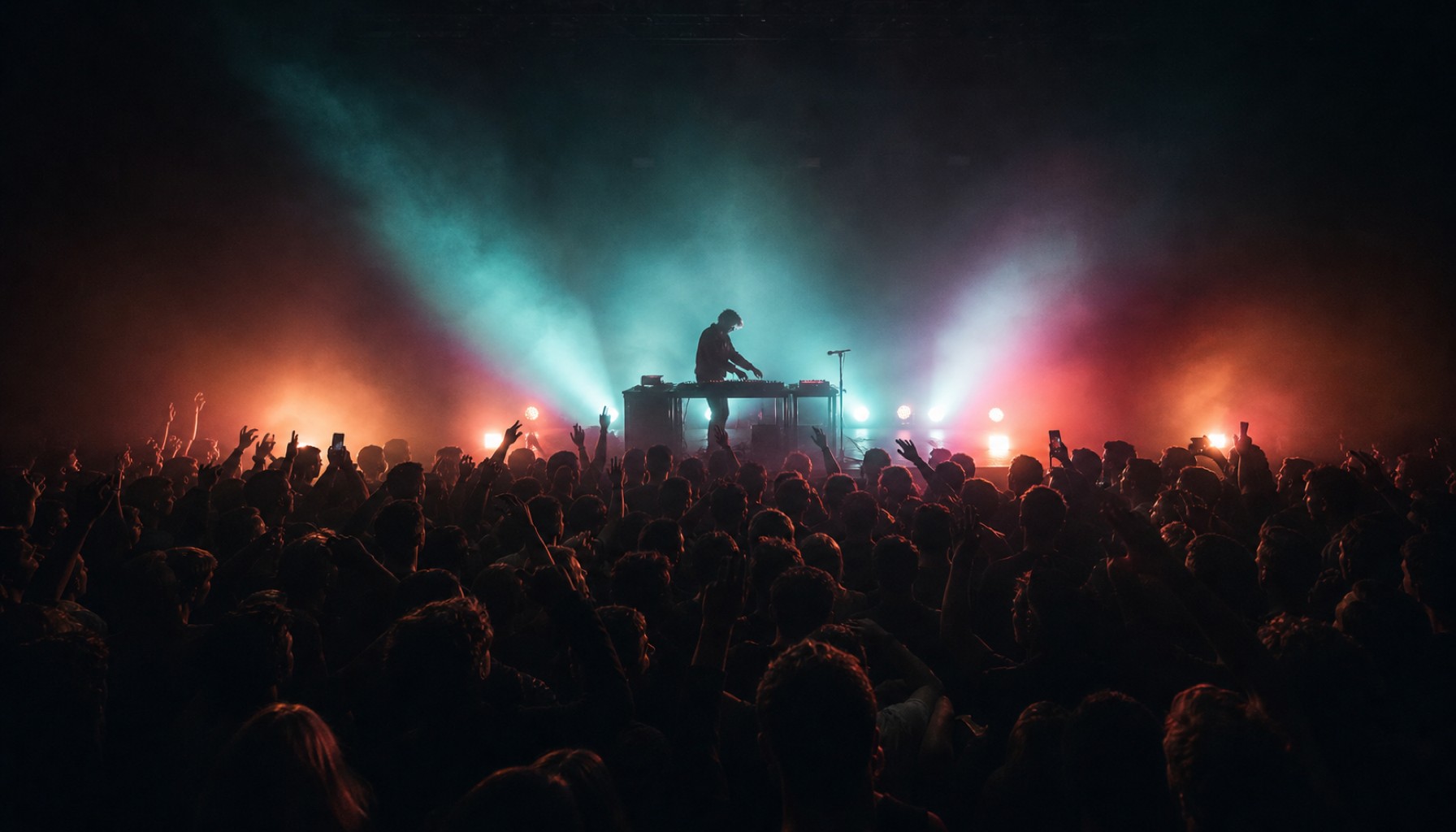
Fred again.. stands alone on stage. In front of him: sampler, pads, keyboard. Behind him: thousands of people who know every line. No DJ booth, no laptop playback, no pre-cooked show. He builds his tracks live, loop by loop, and that’s why his current live show feels more like an open studio than a classic arena set.
DROP
- ▸Fred again.. doesn’t play a DJ set. He triggers samples, vocals, and drums live from pads and assembles the songs right in front of your ears.
- ▸The show is never the same twice. Improvised drum machine moments and surprise guests make every evening a one-off.
- ▸The crowd is part of the song. In “Marea”, the music almost completely fades out, and the audience carries the melody.
- ▸Emotion over perfection. Small inaccuracies are left in because they show that something is really happening.
- ▸A model for the scene. His approach shows how electronic acts can make the transition from button-pushing to a genuine live performance.
Why Fred again.. doesn’t play a DJ set
The difference from a classic DJ performance is immediately audible: there’s no pre-recorded playback here. While a DJ blends two tracks together, Fred again.. sits at samplers, drum pads, and keyboard, building songs in real-time. A vocal snippet here, a drum track there, a chord progression he plays himself. You listen as a track is created, rather than just waiting for the next transition.
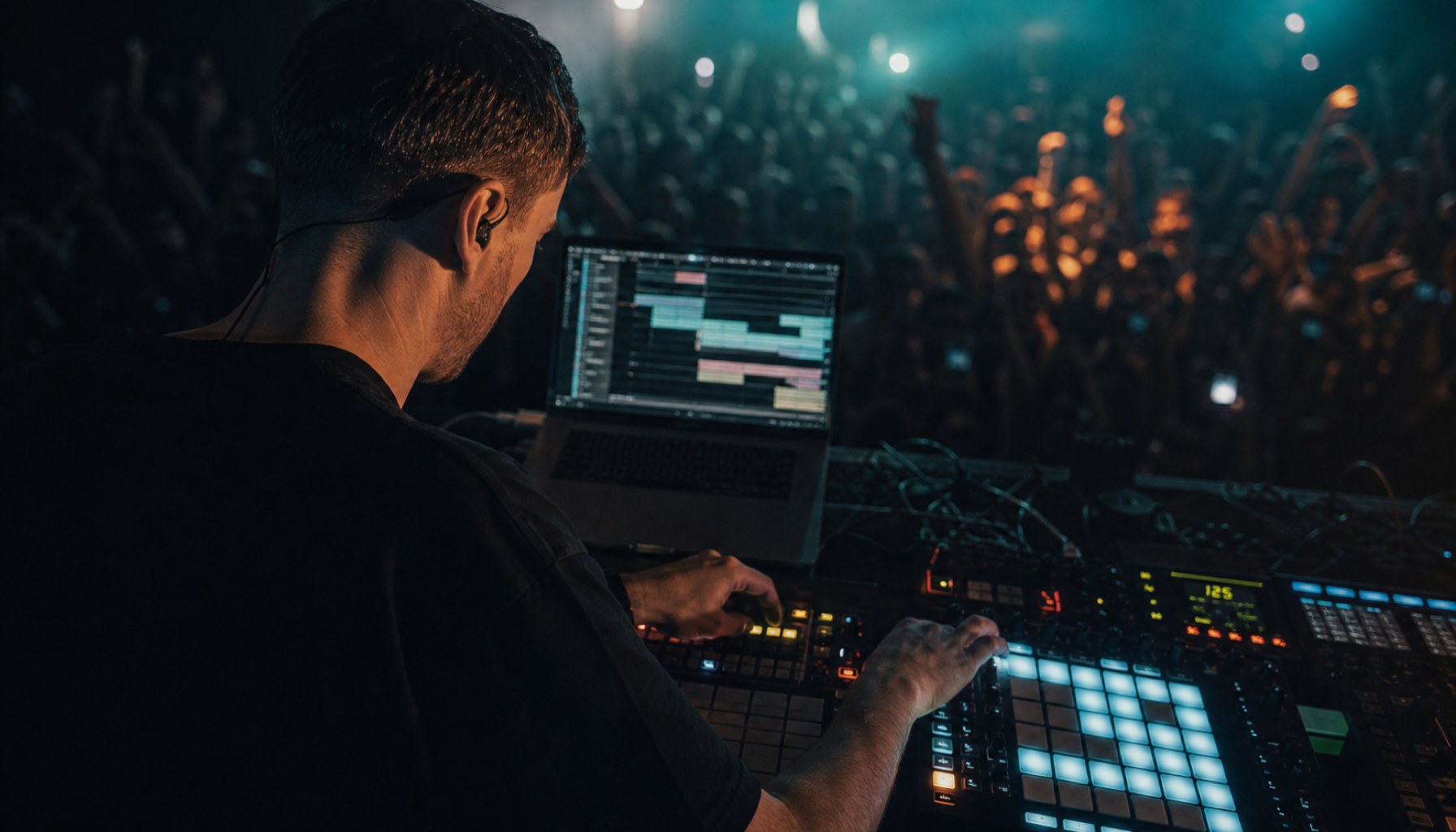
The principle comes from his studio work. Fred Gibson, his real name, built the Actual-Life series from voice messages, Instagram clips, and everyday snippets, and cut tracks from it. On stage, he translates this collage back into the moment. Those who want to understand why this sound has become so relatable can find the explanation in the analysis, why his post-electronic sound went mainstream.
Technically, this is more demanding than a DJ set, and that’s exactly why it feels so immediate. The system must transmit every trigger cleanly and without latency, or the moment falls apart. What a modern sound system must deliver for this is shown by looking at the latest generation of festival systems.
How the crowd carries the drop
Perhaps the most important part of his shows isn’t on any setlist: the crowd itself. In the big moments, Fred again.. almost completely takes out the instruments and lets the audience sing. What elsewhere is a nice call-and-response becomes a supporting element here. The song hangs for a few bars on thousands of voices, and that’s exactly why the drop hits harder afterwards.
This dramaturgy is deliberately constructed. Fred again.. reads the energy in the room and decides on the spot when to ignite a climax and when to let it simmer for another round. This is closer to a band concert than an electronic set. That’s also why his viral Boiler Room set a few years ago was such a hit: it felt like a shared moment, not a performance.
What electronic stages can learn from this
For a long time, the electronic live business was all about: the show is made of light, pyro, and a perfectly timed drop, while often little happens live behind the console. Fred again.. turns this around. For him, the performance is at the center, and the technology only provides the framework. For a generation that immediately recognizes playback aesthetics, this is a strong signal.
The effect can already be seen in acts that open up their live sets more, add more instruments, and rely less on playback. Whether this becomes a scene standard remains to be seen. One thing is clear: if you’re planning an electronic live show today, you have to answer how much of it is really created in the moment. What tools this new generation of producers uses for this can be found in the overview of the defining tools of the year.
Q&A after the Show
Click on a question to expand the answer.
Does Fred again.. really play everything live or is that marketing?
What do you need to build a live performance like this yourself?
Why does the crowd singing work so well for him?
Does this approach really change electronic music?
Editor IBS Publishing ››
Fred again.. 2026: Why Post-Electronic Sound is Going Mainstream →L-Acoustics L Series: How the New Festival Setup Changes Your Sound →Festival Summer 2026: What the Line-ups Reveal About the Scene →EDM 2026: Which Tools Really Shape the New Releases →EDM-Beats 2026: Four Rhythms Dominating the Charts →
Image source: Title image and article images generated by AI (June 2026), C2PA certificate embedded in the image
Translated from the German original using artificial intelligence. The German version is authoritative.