


09 Feb Why You Listen to Music Differently at Night
▶ 4:27 Reading Time
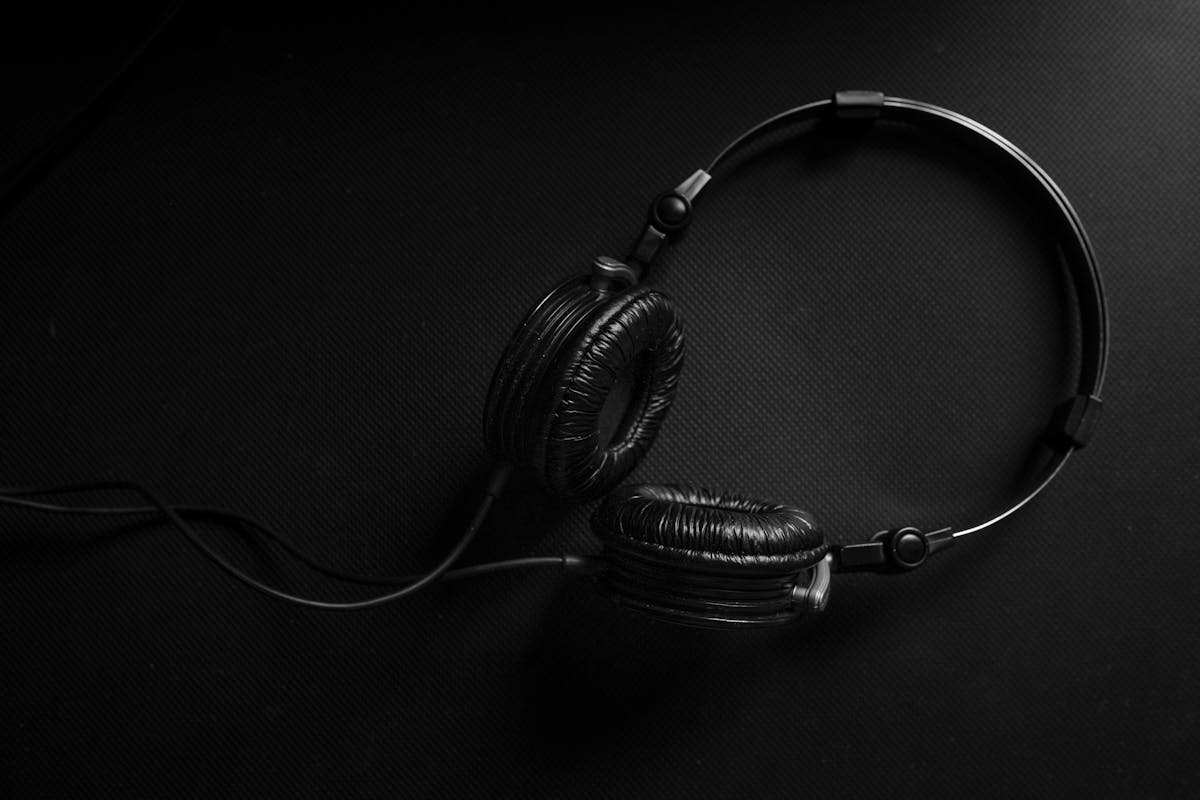
It’s 2 a.m. You’re sitting in the dark with headphones on, and the song you’ve played a hundred times today suddenly sounds different. Richer. More emotional. As if you’re hearing it for the first time. This isn’t just your imagination – your brain actually processes sound differently at night.
How Your Brain Shifts After Dark
During the day, your brain operates in efficiency mode. The prefrontal cortex filters information, assesses risks, and plans your next move. Music plays in the background – just one input among many. But at night, everything shifts. Analytical functions slow down. The amygdala – your brain’s emotional hub – takes over. The result? You don’t just hear music; you experience it. The bass line resonates in your chest, not just your mind. The melody sends shivers down your spine instead of just earning a nod. It’s the same track, but your brain is tuned to a different wavelength.
The Silence That Changes Everything
During the day, music competes with traffic, conversations, air conditioning units, and keyboards. Your brain filters out these noises, but the process requires attention. At night, this battle disappears. The silence of the night is like a blank canvas: every detail in the mix becomes visible. The subtle reverb tail at the end of a vocal phrase. The crackle of a vinyl sample. The room ambiance of a live recording. That’s why sound engineers recommend listening to final mixes at night. Not because the sound is better, but because you hear more. The silence reveals what the day conceals. Anyone who invests in studio monitors will experience the biggest “aha” moments at night.
Melatonin: The Chemical DJ
From late evening on, your body produces melatonin. The sleep hormone prepares you for the night, but it has a side effect: it alters your emotional processing. Studies show that melatonin increases sensitivity to acoustic stimuli. Music doesn’t get louder, but it becomes more intense. The emotional peaks hit harder. The melancholic passages dig deeper.
“Night turns every song into a confession. What is background during the day becomes the main event at night.”
Why Sad Songs Work Better at Night
This effect also explains why certain music works particularly well at night. Sad, slow, and atmospheric tracks benefit the most from nighttime receptivity. James Blake at 2 AM is a different experience than James Blake at breakfast. Lo-fi beats at midnight are not coincidentally one of the most listened-to Spotify categories. And when driving at night and listening to driving songs, you experience music on a level that’s impossible during the day. The good news: you don’t need any equipment, headphones, or monitors. Just the darkness, the silence, and a song that deserves to be truly heard.
The Science: What Happens in Your Brain After Dark
Your brain behaves differently once the sun sets. By day, the prefrontal cortex – the command center for rational thought, planning, and self-control – calls the shots. When night falls, its activity tapers off. The limbic system, the brain’s emotional memory hub, takes center stage. A track that “sounded fine” in daylight can suddenly land with emotional precision once the rational gatekeeper steps aside. There’s also less sensory competition after dusk: no visuals to decode, no chatter, no traffic, no pings. The auditory cortex inherits the surplus bandwidth, so you catch subtleties that vanish in daylight – the shimmer of a reverb, the decay of a single note, the silence between the beats. Lo-Fi Beats use the same trick: less input, deeper resonance. Around 9 PM, melatonin joins the mix, subtly reshaping how you perceive the world. It doesn’t knock you out; it blurs the edges. Contrasts soften, hues warm. Music sounds richer at night because your hormone levels literally tint the way you hear it.
The Perfect Nighttime Playlist: What to Play and What to Skip
Not every genre thrives in the dark. Uptempo pop feels jarring when your energy is meant to wind down, and aggro beats clash with the late-night hush. What clicks: music that leaves space to unfold. Ambient, downtempo, jazz, singer-songwriter, shoegaze – anything that unfolds instead of overpowers. The winning formula: slow tempo (60–90 BPM), expansive stereo image, light compression. Hunt for tracks that ebb and flow, that carve quiet pockets instead of maxing out every decibel. At night, those quiet pockets rise to the surface; by day they’re buried in noise. Familiar albums also shine: skip the algorithm’s Discover Weekly or Release Radar and cue the record you’ve played a hundred times – it’ll sound brand-new in the dark. Nostalgia’s grip tightens after dark, as your brain stitches the well-known melody to vivid memories, untouched by daytime logic.
The Allure of Late-Night Listening: Why You Can’t Stop
There’s a reason you keep hitting play long after dark. The same reason your thumb won’t leave the screen: no time anchors. By day, your schedule is carved up – meetings, deadlines, meals. But at night? Nothing. Just you, the next track, and the one after that. And the one after that. Then there’s the dopamine loop. Every song that lands just right at night delivers a tiny rush. Your brain logs the pattern: nighttime = better music = more dopamine. So you keep listening. It’s no accident that Spotify’s data shows average session lengths spike after 10 PM. Is that a problem? Depends. If you’re facing a 7 AM alarm: absolutely. If you’ve just stumbled on the perfect song at 2 AM? Not at all. Some moments matter more than sleep. Anyone who’s ever lain in bed at 3 AM with over-ear headphones, restarting an album for the fourth time, knows the feeling.
Music sounds different at night because *you* are different. Fewer distractions, more emotion, less inhibition, deeper immersion. Your prefrontal cortex clocks out, the limbic system takes the wheel, and melatonin blurs the edges. The result? Songs hit harder, details emerge, and time dissolves. So: slip on your headphones, kill the lights. Your brain knows exactly what it’s after.
Q&A after the Show
Click on a question to expand the answer.
Is it harmful to listen to music at night?
Which genres sound best at night?
Does this effect relate to sleep deprivation?
Cover Image: Pexels / Burak The Weekender
Translated from the German original using artificial intelligence. The German version is authoritative.