


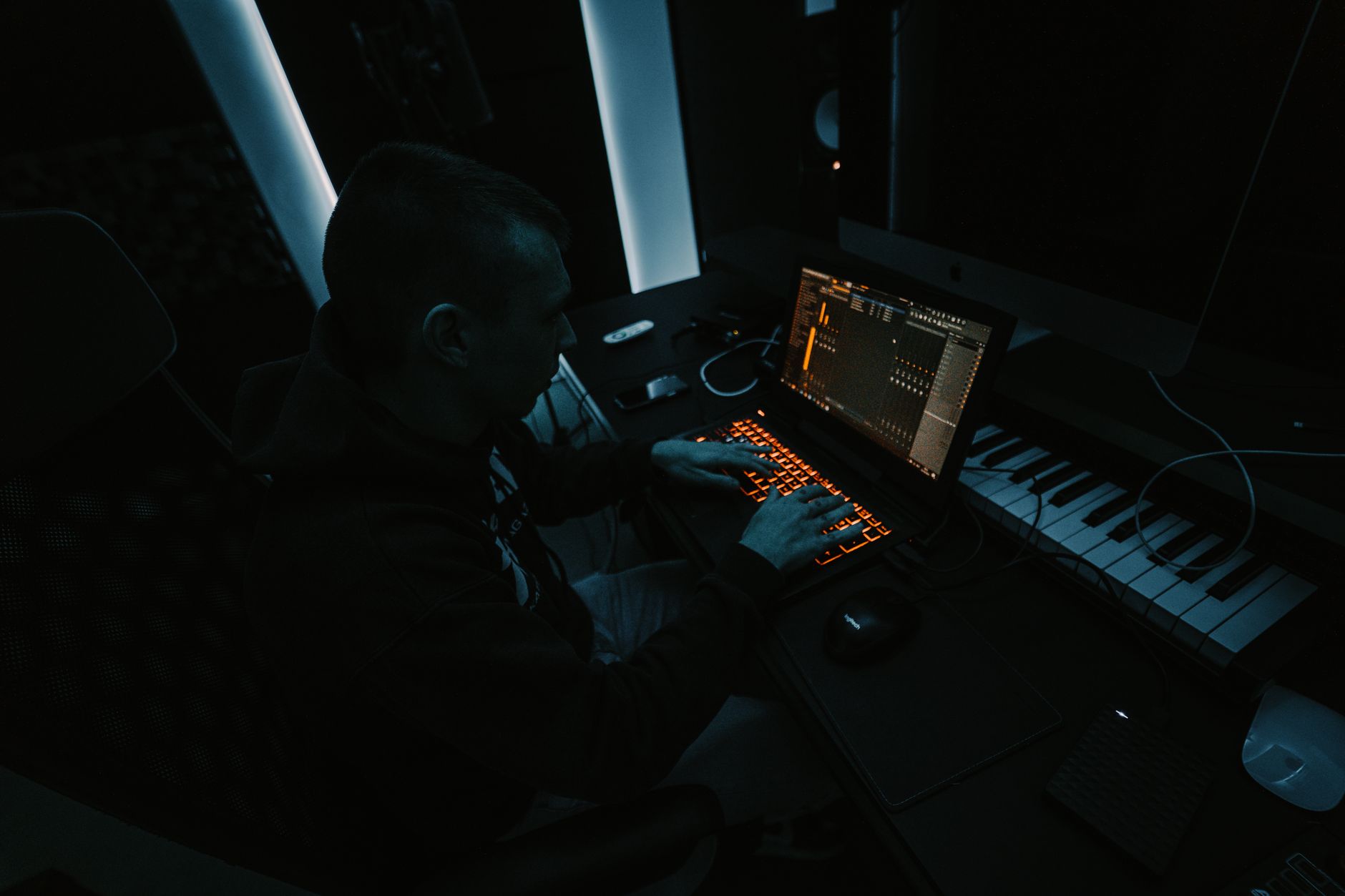
30 Jun AI builds the 90 percent beat. You do the rest.
▶ 6:30 min read
Type two lines into Suno and thirty seconds later you have a beat that isn’t cringe. Two years ago that was science fiction. Today it’s Tuesday. The uncomfortable question is no longer whether AI can build beats. It does-faster than you can. The real question is what you’ll still sell when everyone on Discord is pulling the same fire beat from the same model.
DROP
- By 2026 AI will reliably deliver the 90-percent beat. Generation is no longer the bottleneck; distinctiveness is.
- Where AI systematically fails: groove, arrangement arc, mix decisions, curatorial taste-exactly the spots that make a track sellable.
- Where it genuinely saves you hours: idea seeding, stem separation, sample repair, mastering prep.
- Legally murky: the RIAA is suing Suno and Udio, the EU AI Act brings disclosure duties. AI output isn’t automatically free.
- Your job shifts from building to deciding. That’s not bad news.
What AI in 2026 really extracts from the prompt
Let’s be honest-no hype, no panic. Text-to-song tools like Suno and Udio turn two sentences into a full track, vocals included. Great for demos, jingles, or quick mood checks. For a release it sounds like a template: vocals feel wiped, song structure is default, fine control is minimal.
Generative beat tools such as Soundraw, Boomy or Mubert spew out royalty-free loops-fine for beds or skeletal tracks. The groove stays flat. AI mastering from LANDR to Ozone delivers usable loudness and tonal balance in seconds, yet knows nothing about tension. Stem separation via Demucs or RX is solid by 2026-until dense mixes arrive, then cymbal attacks blur. Every tool is useful. None makes a decision.
The eight percent where every AI beat fails
Anyone who listens to AI beats often can spot them instantly. Not because of some mystical lack of soul, but for concrete reasons. The hi-hats run as clean sixteenth notes without phrasing. The snare has no ghost notes, the micro-timing is too centered, and the pocket is missing. The arrangement is often a solid eight-bar loop copied twenty times over, without any real arc.
Then there’s the mix. Which voice sits up front, what carries the message, what can disappear. That’s a contextual question, not an average. AI averages, and an average sounds like an average. This is where your work begins-not in generating, but in listening and correcting.
Where AI will actually save you hours by 2026
The failure modes aren’t a reason to avoid the tools. That would be the same romanticism, just flipped. AI solves the blank-page problem. A prompt starting point, a chord suggestion, a mood board in minutes instead of a slogged-through hour. For old material, stem separation rescues acapellas you’d never have accessed otherwise.
Sample cleanup, denoising, transient repair, auto-tagging your library: all routine, all time sinks, all tasks AI handles faster and without complaint. As a pre-mastering reference check, it’s pure gold. Use it. Let the machine handle the grunt work so you’re free to focus on what it can’t do.
By 2026, anyone still selling beat-making as their core service is competing with infinity. Those who sell taste and finish have no competition at all.
When an AI beat is fine-and when it embarrasses you
There’s a simple line. Internally, as a sketch, a sound palette, or a client preview with a disclaimer: completely legitimate. No one will penalize you for the idea because the first draft came from Suno. Publicly, scene-facing, as a finished release under your name: risky. Not for moral reasons, but because trained ears will hear the 2024 median and your sound will feel interchangeable.
Add the legal landscape you can’t ignore. In 2024 the RIAA sued Suno and Udio, alleging training on protected material; a verdict is pending. The EU AI Act introduces phased labeling requirements for AI content. Platforms are cracking down harder on fake streams and AI floods. Translation: AI output isn’t automatically free. You-not the model-remain responsible for samples and clearances.
What you’ll be selling from now on
The job is shifting, not disappearing. It’s moving away from generating material and toward making decisions. Stem surgery instead of fresh loops, re-grooving instead of default patterns, the courage to leave gaps instead of filling every track. The 2026 producer stands closer to a forensic editor than to the romantic artist hunched over a keyboard. And that’s a stronger position than it sounds. Whoever places the hook in the first 15 seconds and knows what to cut will be irreplaceable.
Curatorial taste, brief understanding, A&R instinct for potential-no AI can prompt that away from you. An AI generates options. You decide which ones make it into the world. As long as people still want music made by people, that remains the most valuable skill in the room. And it isn’t baked into the model.
Use AI when you need to go from zero to idea faster, need stems, want to rescue old material, or want to automate routine tasks.
Keep your hands off when the beat bearing your name has to sound scene-authentic and you aren’t personally shaping the groove, arrangement, and mix decisions.
Five tracks whose signature no model can replicate.
QÂÂfter the Show
Will AI make me redundant as a producer?
Can I commercially release a beat made with AI?
How do you spot an AI-generated beat?
Which AI tool is worth trying in 2026?

Image sources: Pexels / Bert Christiaens (px:5749192), Giuseppe Di Maria (px:14435275)
Translated from the German original using artificial intelligence. The German version is authoritative.