



26 Jun Why Shazam Doesn’t Recognize the Tune You’re Humming
6:50 reading time
You’ve got four notes stuck in your head but no track name to go with them. So you hum into your phone. Shazam stays silent, Google spits out results after a few seconds. Right there, music search is tipping from finished songs to remembered melodies. For anyone crafting beats, hooks, or full tracks, the question becomes: Is your melody catchy enough for someone to recall it?
DROP
- Shazam has identified over 100 billion songs, yet it still can’t recognize your hummed earworm.
- Melody search via humming is possible with Google, YouTube Music, SoundHound, and TikTok. Shazam requires music to be playing.
- Hum-to-Search converts 10 to 15 seconds of humming into a numeric melody code, stripping out voice and instruments.
- For producers, this means: The hook melody becomes a second discovery channel, not just the finished mix.
Why Shazam can’t decipher your humming
You wake up with a melody lodged in your head. No lyrics, no artist-just those four notes. You grab your phone, open Shazam, and start humming. The app finds nothing. That’s the blind spot in a music recognition tool most people reflexively reach for.
Shazam excels when the actual song is playing somewhere. Since its launch, the app has identified over 100 billion songs, with around 300 million users tapping into it monthly. But its principle remains narrow: record about ten seconds of audio, create an acoustic fingerprint, and match it against its database. Your humming falls outside this framework because it doesn’t produce a fingerprint Shazam recognizes.
Other services are rushing to fill this gap. Google has integrated Hum-to-Search into its app, Assistant, and search since 2020. YouTube Music added the feature for Android in 2024, SoundHound has offered it for years, and TikTok has Sound Search. Four ways to hunt down a melody when you’re missing the title and artist. Ironically, Shazam-the first reflex for many listeners-isn’t one of them.
10 Seconds Decide the Hit
Technically, they’re worlds apart. Shazam identifies a finished song. Hum-to-Search has to extract the melody from your shaky humming first. Google records 10 to 15 seconds of it and converts them into a number-based sequence of notes. Timbre, vocal tone, and instruments are stripped away until only the outline remains.
The scale is different too. Google’s server-side search compares against a catalog roughly a thousand times larger than what your phone could recognize offline. Yet the hit rate remains musically unfair: catchy melodies work, while gnarly metal or experimental hip-hop slip through more easily. A tune you can barely hum yourself is just as hard for the search to find. This also applies to the increasingly short songs in the charts, where a single hook often has to carry the entire track.
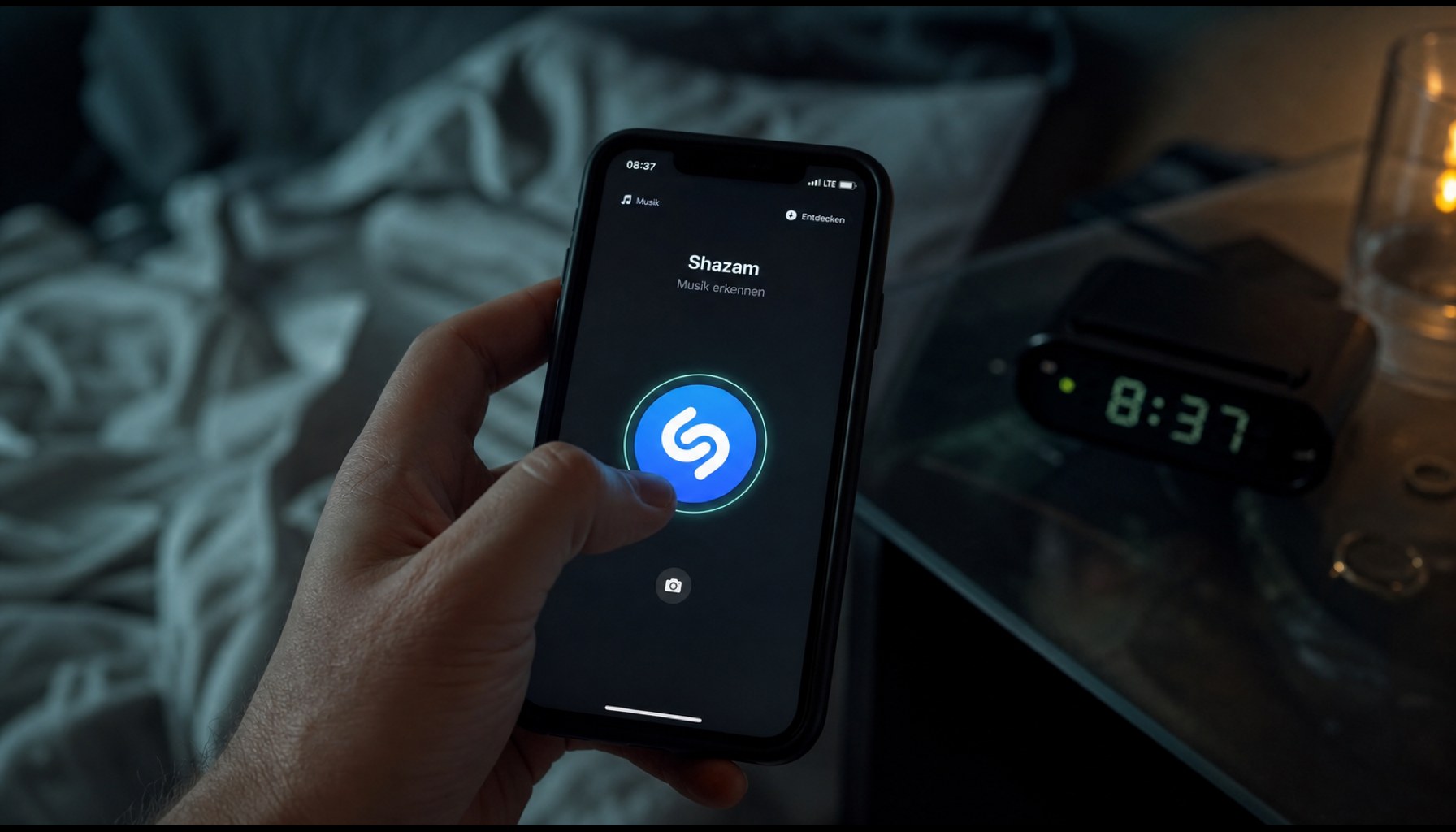
Meanwhile, the entry point for search is shifting. Since early 2026, Shazam can be launched directly from ChatGPT, no separate app needed. The first step now happens where people are already typing or talking. The more seamlessly music recognition slips into daily life, the more often humming becomes a search query. Then it’s not just about your mix-it’s about whether your hook still holds up without the beat, bass, or vocal chain.
Does Your Hook Pave the Way Back?
For producers, this is where it gets real. When melody hunting turns into a discovery channel, a hook that only packs a punch in the final mix isn’t enough. It needs to work when someone hums it into their phone first thing in the morning. A melody that sticks becomes findable. A lead line that vanishes in the arrangement stays silent in search.
This shifts priorities in the arrangement. A strong, clear hook in the first few seconds doesn’t just pull listeners into the track-it helps them rediscover it later. Producers who keep their melodies clean and distinctive give listeners a real recall signal. Those working with AI tools, like when separating individual tracks, can isolate the lead melody instead of burying it in layers.
This isn’t some backroom detail. It’s a second path back to your track, independent of playlist placement, algorithms, or ad spend. In the end, one brutal little question decides it all: Does the melody stay in their head when everything else fades away?
Post-Show Q&A
Why can’t Shazam recognize what I hum?
Which apps can recognize a hummed melody?
How does hum-to-search work technically?
How accurate is melody search?
What does this mean for my productions?

Hook-First 2026: Songs for the First 15 Seconds →Stem Separation: What AI Tools Can Really Do →Songs Under 2 Minutes: Why the Charts Are Getting Shorter →
Image source: Cover and article images AI-generated (May 2026)
Translated from the German original using artificial intelligence. The German version is authoritative.