


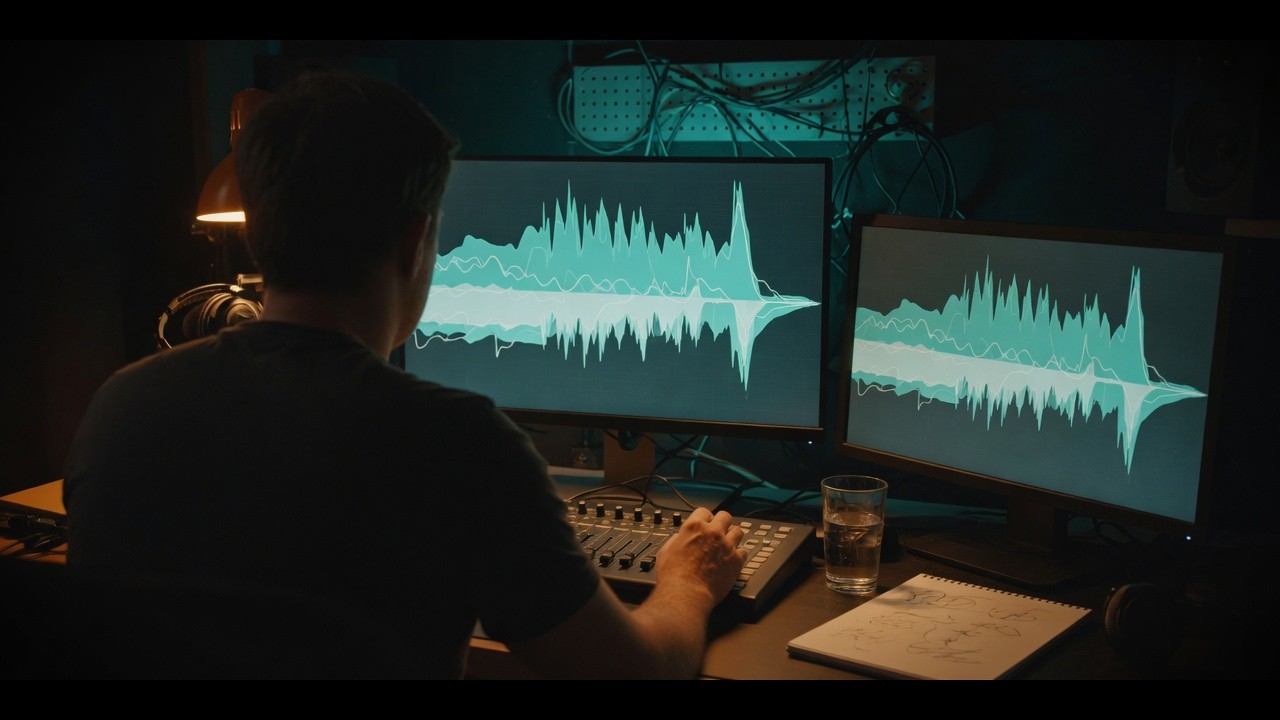
29 Jun Radio Edit for Club Tracks – How to Get Your Track on the Radio
6:30 reading time
It’s Wednesday afternoon, a producer sends their festival anthem to a radio promoter. Two days later, the email arrives: too long, the drop comes too late, and the bass disappears on car radios. The track was never built for the medium it’s now supposed to play on. Radio is its own discipline-and most producers learn that the hard way.
Why Your Club Banger Flops on the Radio
It took me a long time to realize that a great track and a radio-friendly track are two very different things. In the club, you’ve got a sound system with real sub-bass, a dancing crowd, and time. An intro can breathe, the build-up can stretch over 32 bars to build tension, and the drop hits when everyone’s ready. Radio has none of that. It’s got a tiny kitchen speaker, a car stereo stuck in traffic, and a listener whose thumb is hovering over the dial.
That’s exactly why the radio edit exists. It’s not a compromise-it’s a deliberate production choice. Crossover hits like *One Kiss* by Calvin Harris or *I’m Good* by David Guetta don’t sound so immediate on the radio by accident. The hook lands instantly, the structure is tight, and the mix is optimized for small speakers. What thunders through a festival PA at twenty thousand watts has to work on a three-inch paper cone.
Loudness Range
From Six-Minute Edit to Radio Version
The order of steps matters. You cut first, mix second, master last. If you start rearranging at the end, you’ll have to remix from scratch.
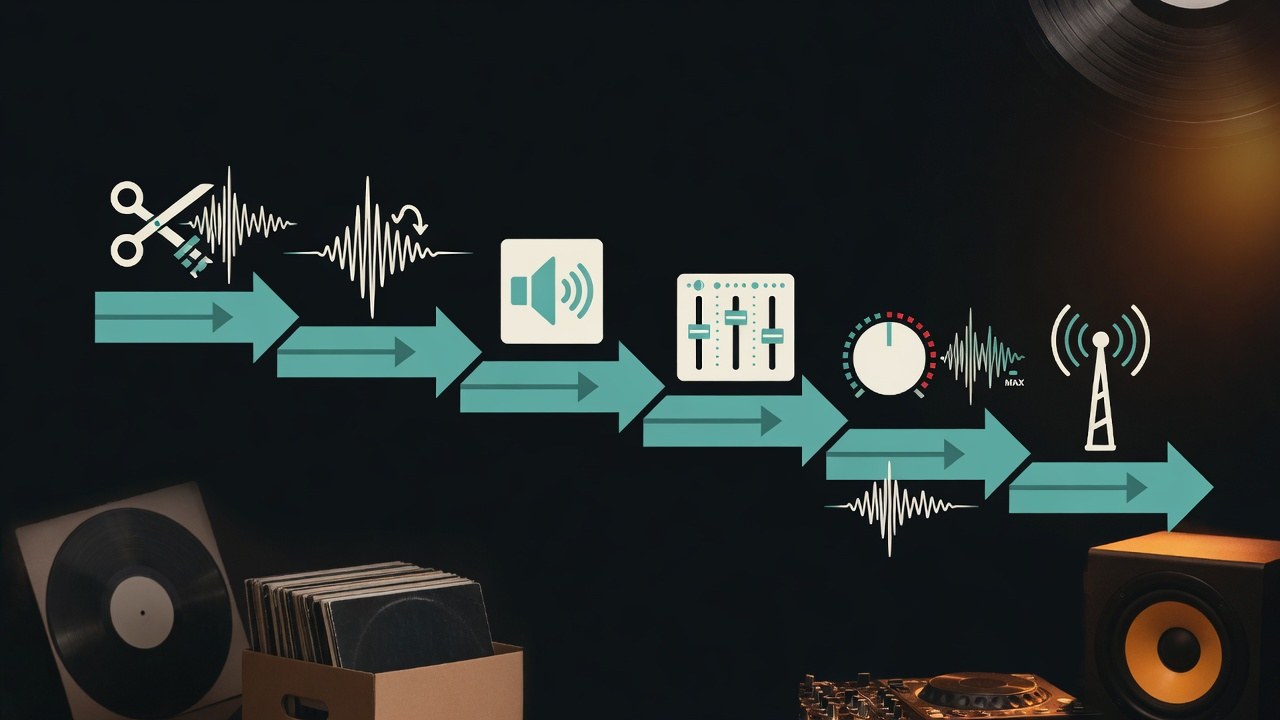
- Step 1, cut: Trim the arrangement to around three minutes. Lose a verse, drop a build, ditch the long outro. You’re telling the same story-just without detours.
- Step 2, hook up front: Condense the intro to a few seconds or lead with the chorus as a cold open. The hook decides in the first few seconds whether someone sticks around.
- Step 3, check mono: Sum the mix to mono as a test. If the hook disappears or the beat suddenly sounds thin, too many elements are relying on stereo width. Core elements belong in the center.
- Step 4, mix for small speakers: Sub-bass below 50 Hz barely registers on the radio-the energy needs to come from the upper bass and mids. Test on phone speakers and in the car, not just on studio monitors. Your monitors won’t show you what the listener hears.
- Step 5, master clean: Leave enough headroom-don’t crush it for maximum loudness. Include a clean version without explicit lyrics in the final delivery.
The Adjustments That Actually Matter
The most common pitfall? Loudness. Many producers push their master to festival-level volume because, at first glance, it sounds impressive. But once it hits the radio, a broadcast processor levels everything to a uniform loudness. Your over-limited master won’t end up louder-just flatter, with less perceived dynamics. If you’re familiar with the principles of streaming mastering, you’re already halfway to understanding the radio scenario.
The second key adjustment is hook discipline. In the club, repetition and hypnotic loops rule, but radio thrives on instant recognition. The chorus should arrive early and often-even if it feels excessive to many producers. That’s exactly why it works. If you’re refining your arrangement’s tension arc, build the radio edit into the process from the start instead of carving it out later.
The third? Patience with your ego. A radio edit will strip away some of your favorite moments-the extended breakdown, the second drop, that sprawling bridge. It stings. But the edit isn’t the “real” version minus something; it’s a second, complete iteration for a different audience. Your festival mix stays exactly where it belongs.
What ultimately lands on a promoter’s desk often matters more than the final mix tweaks. Don’t just send a single file-package it cleanly: the radio edit, a clean version, and ideally an instrumental for potential voiceovers. Label files clearly with the track title, artist, and version tag, and deliver them as an uncompressed WAV at 44.1 kHz. A brief info line with the track length and a one-sentence description helps programming teams place your track without needing to listen through the whole thing. It might feel like bureaucracy, but it makes all the difference: one track gets a shot in the rotation meeting, while the other languishes in an inbox.
Post-Show Q&A
Click on a question to reveal the answer.
How long should a radio edit be exactly?
Is it enough to just cut down the club mix?
How loud should I make the radio master?
Do I really need a clean version?

Editorial Team, IBS Publishing ››
Hook-first 2026: Crafting songs for the first 15 seconds →Understanding loudness: Why your master sounds quieter →EDM arrangement: From loop to track with real tension →Streaming mastering: Why louder on Spotify doesn’t help →EDM beats 2026: Four rhythms dominating the charts →
Image source: Cover and article images AI-generated (June 2026)
Translated from the German original using artificial intelligence. The German version is authoritative.