



23 Jun New Music Friday: Why All the Drops Happen on Fridays
▶ 6:30 min read
Friday, just after midnight: Hundreds of new tracks go live simultaneously, from Myles Smith’s debut album to the single your favorite act has been teasing for weeks. This isn’t random-it’s an industry masterplan. Since 2015, the music world has almost universally dropped new releases on the same day of the week. That single day shapes charts, visibility, and your personal playlist far more than most listeners realize. Five ways New Music Friday truly changes the game.
Why the Whole World Releases on the Same Day
New Music Friday refers to the globally standardized release day for new music, when labels and artists bundle their drops. It wasn’t always this way: music releases used to be a national free-for-all. In the US, albums dropped on Tuesdays; in the UK, Mondays; elsewhere, Fridays or Wednesdays. For an industry that thinks globally and whose fans have long since connected across borders, this fragmentation became a liability. An album would leak in one market before it was even officially available in the next. That’s why, in 2015, the industry agreed worldwide on Friday, just after midnight local time. Since then, the music week has kicked off on the weekend.
What sounds like pure logistics is also a cultural choice. Friday concentrates attention. Instead of trickling out across the week, a fresh wave of new music floods streaming apps all at once. This has become a ritual: a recurring moment when fans, labels, editorial teams, and playlist curators all look in the same direction. In streaming, that initial burst of attention is everything. How tightly packed it can get is already evident in the Album Summer 2026, with its gridlock of major releases.
Friday is a Chart Strategy
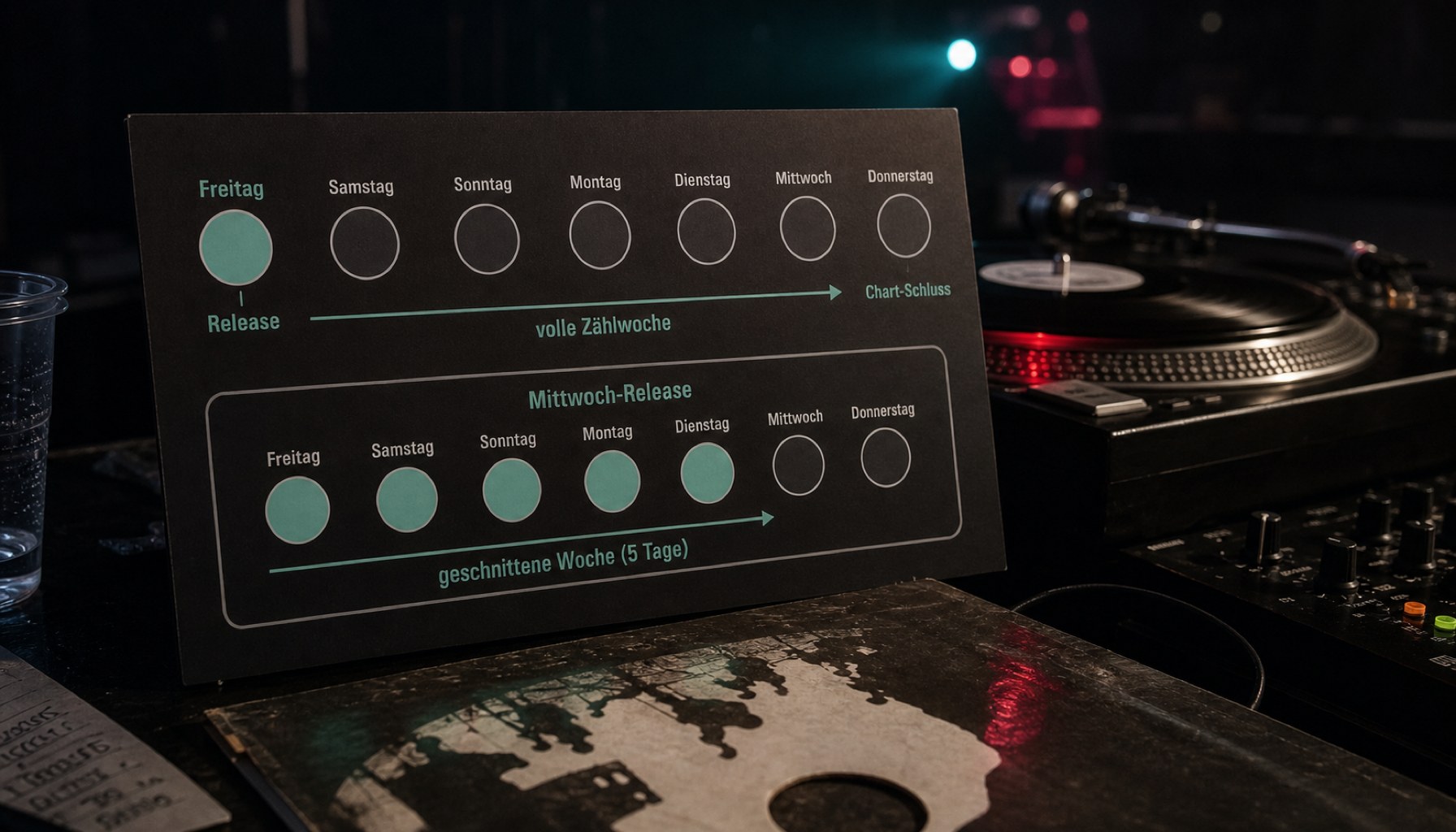
Here, it gets tactical. Most charts count a fixed weekly span, classically from Friday to Thursday. Whoever releases on Friday has seven full days to bring streams and sales into the same counting week. A release on Wednesday splits the week in two and loses momentum. That’s why Friday is not just habit, but calculation.
For big acts, this means: album, music video, maybe a feature drop – everything on the same Friday, so the first week can be as loud as possible. The debut week often determines the overall perception of a release. Those who start strong get headlines, playlist pushes, and momentum. Those who start weak rarely catch up.
The Playlist Decides Who Gets Heard
Friday has a bouncer, and his name is curation. The major New Music Friday playlists of streaming services are for many listeners the first stop for new music. Whoever gets placed there immediately faces a six- or seven-figure audience. Whoever doesn’t get placed starts in their own network and must win listeners one by one.
This curation is power. Labels pitch weeks in advance for the coveted spots, much like they once fought for radio rotation. The difference: today, the success of a track often depends on the first hour after the drop, because the hook in the first seconds decides whether people skip or save the track. This saving behavior then feeds the algorithm that determines who gets the song suggested next.
What the Traffic Jam Does to Small Acts
The downside of the big moment is the big traffic jam. When hundreds of releases appear simultaneously every week, attention becomes a bottleneck. A newcomer who releases their heart-and-soul track on the same Friday as three major acts with multi-million budgets simply disappears into the noise. Not because the song is worse, but because the stage is overcrowded.
Small artists respond with their own strategies. Some drop early in the morning, some tie the release to a viral moment, some build up traction on TikTok over weeks before the song even drops. Those without a label must actively use Friday for themselves instead of letting it overwhelm them. Complicating matters further is that manipulated streams distort visibility even more and make genuine reach harder to measure.
When It’s Smarter to Avoid Friday
Though Friday is strong, sometimes the best strategy is to ignore it. Surprise drops midweek break expectations and create their own event precisely because of that. If an act is big enough, it doesn’t need the Friday boost and instead wins the undivided attention of a day when little else happens.
For niche genres, another day can also make sense. Those serving a loyal, clearly defined community don’t need Friday’s mass appeal and avoid competition with the heavyweights. The rule is therefore not a law, but a standard-one that can be deliberately deviated from, which itself is a statement. Those who understand the game decide on a case-by-case basis whether to go with the flow or cut loose.
Post-Show Q&A
Click on a question to expand the answer.
Why is new music released on Fridays?
What is the New Music Friday playlist?
Does Friday hurt smaller artists?
Why do some acts drop in the middle of the week?
Does Friday change how I listen to music?

Editor, IBB Publishing ››
Album Summer 2026: Why Olivia, Madonna, and Ariana are dropping almost simultaneously →Hook-first 2026: Songs for the first 15 seconds →Fake Streams: How bots manipulate the music charts →Music Scene 2026: What festival line-ups really reveal →Streaming Mastering: Why louder on Spotify doesn’t pay off →
Image source: Title image and article images AI-generated (June 2026)
Translated from the German original using artificial intelligence. The German version is authoritative.