


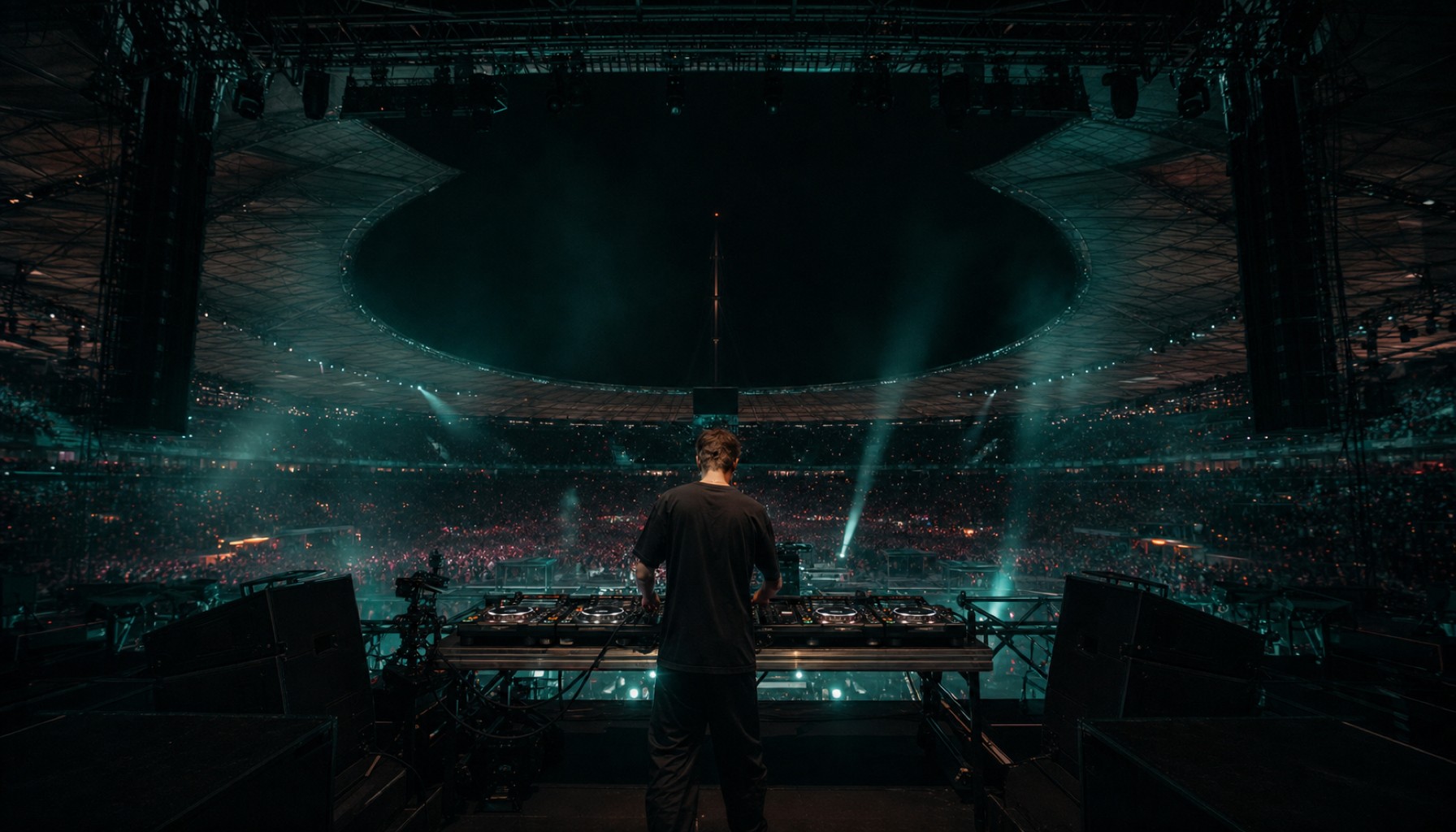
07 Jul How a Producer Brings the Olympic Stadium to Resound
▶ 4:30 min read
On 19 July, Boys Noize will bring his electrifying set to Lollapalooza Berlin-a stage so vast it dwarfs any club he’s ever called home. Sandwiched between Pitbull, Lorde and Lewis Capaldi, he’ll unleash bass pressure, club logic and a provocative question: how far can a club set really travel?
What to expect on 19 July at Olympiastadion
Lollapalooza Berlin returns on 18 & 19 July 2026 across Olympiastadion and Olympiapark. Day one belongs to Pitbull, Ayliva, Lily Allen, Zara Larsson and Tom Odell. Day two shifts to Lewis Capaldi, Lorde, Teddy Swims and Anitta. Slotted between them is Boys Noize: the sharpest club anchor in a lineup leaning hard into big pop voices. That contrast is the draw-2026 line-ups lean heavily on pop and singer-songwriters.
Since the timetable dropped, my eyes keep drifting to Boys Noize. His name isn’t top billing, yet for stadium sound he’s the weekend’s toughest test. That sound thrives on intimacy-both in the studio and the club. Olympiastadion tears that intimacy apart.
Why a club producer has to rebuild the system in a stadium
In a club, the system sits just a few metres from the dancers, often under a ceiling that bounces the bass back. On a festival site like Olympiapark, the distance between stage and last row is far greater than in any club. Add wind and an open sky, and technicians compensate for the delay between front and back rows with delay towers. Otherwise, the rich club bass turns into a muffled thud without definition. That’s where things get interesting-how the FOH team drives the subs for Boys Noize.
What becomes crucial is how quietly the quieter passages are mixed so they don’t vanish in the ambient noise. The sub has to work harder over distance because low-end bass dissipates first. In the end, Boys Noize sounds different in the front row than it does at the back of the field. This difference isn’t a side effect-it determines which set you actually hear.
How your seat changes the sound
Up close by the fence, the bass hits you in the chest; from the lawn at the back, the same set arrives smoother and flatter. On vast open spaces, sound becomes distance. Anyone who’s stood on an industrial site like Ferropolis knows the compromise. A skilled stadium FOH engineer doesn’t just crank the volume-they use delay towers to deliver the sound time-shifted so it lands in every zone at once.
For you, that means your position in the field changes the concert more than it would in a hall. Want Boys Noize with club-level punch? Get as close as you can. Stay further back and you’ll lose bass intimacy-but you’ll gain sightlines to stage, lights, and the crowd.
4 Tracks Highlight the Stadium Contrast
Four tracks from the line-up reveal just how far apart this weekend’s vibes can swing. Boys Noize brings the club pressure, Lorde and Lewis Capaldi stake out the pop pole, while Pitbull embodies the stadium energy on day one.
Q&A after the show
Click a question to reveal the answer.
When exactly will Boys Noize perform?
How much do Lollapalooza Berlin 2026 tickets cost?
Does Boys Noize sound different in a stadium than in a club?
Where in the field is the sound best?
Editorial IBB Publishing ››
Music scene 2026: What festival line-ups really reveal →
splash! in Ferropolis: why the iron city makes the festival →
Understanding loudness: Why your master sounds quieter →
Hook-first 2026: Songs for the first 15 seconds →
Freestyle football: Your timing still has room to grow IBS →
Image source: AI-generated (July 2026)
Translated from the German original using artificial intelligence. The German version is authoritative.