


03 Jul Vinyl vs. Streaming: Why Records Are Booming Again
6:12 min read
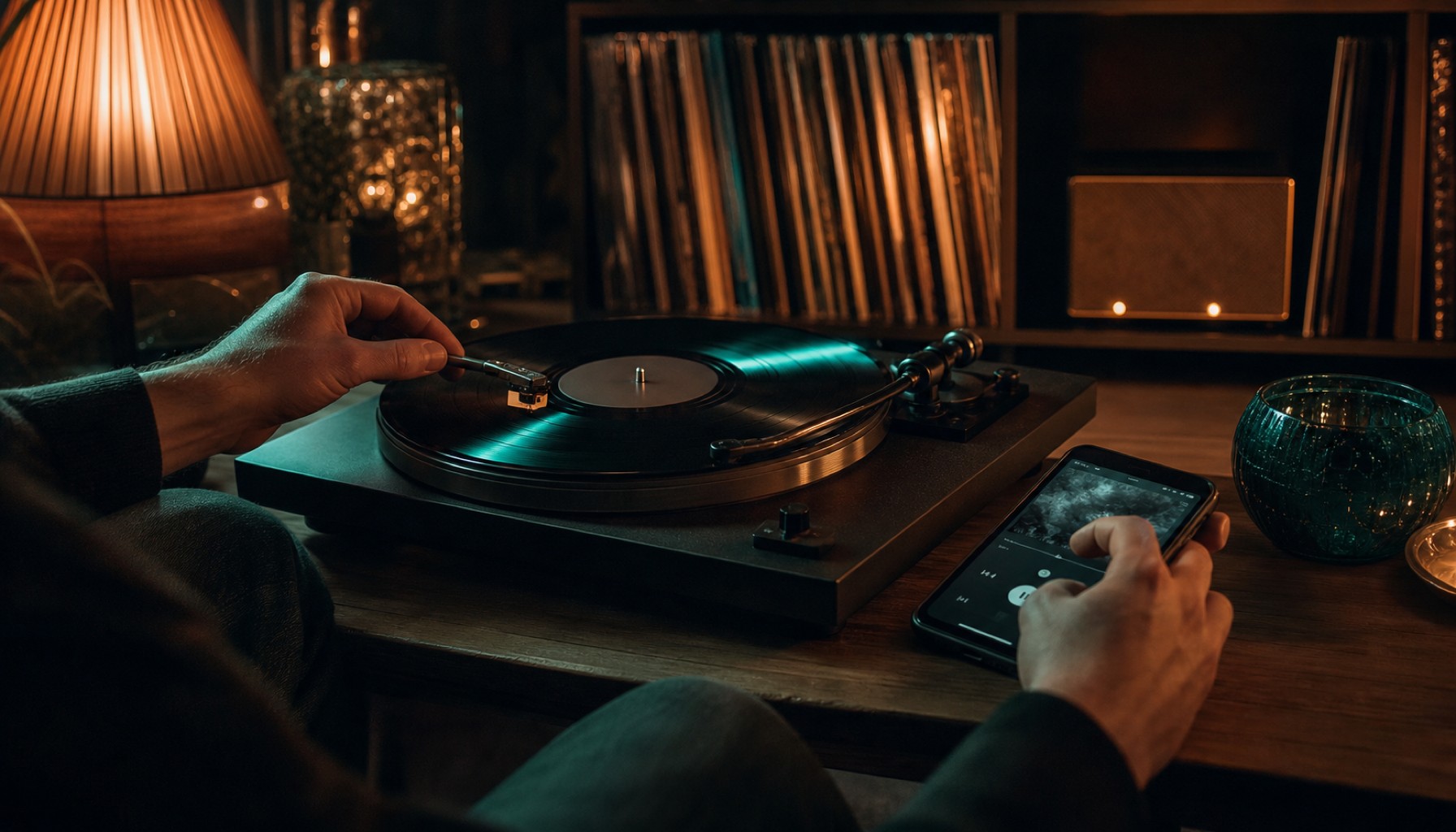
Friday evening, the needle drops, there’s a brief crackle, and then the first note fills the room. In 2025, vinyl sales in Germany grew again by 2.8 percent, according to the Federal Music Industry Association, while streaming still commands 84 percent of the market. Both figures fit together. That’s exactly why it’s worth taking a closer look at the myth of superior sound-and at what truly makes vinyl stronger than any app.
DROP
- ▸Vinyl continues to grow, but at a slower pace. Up 2.8 percent in Germany in 2025, accounting for 6.3 percent of sales. Streaming still claims 84 percent.
- ▸The warm sound is usually down to mastering, not the format. Most pressings come from the same compressed digital masters as the stream.
- ▸Digitally, the numbers win. Around 96 dB of dynamic range versus about 70 dB for vinyl, plus less distortion and cleaner channel separation.
- ▸The real win is the ritual. Putting the record on, holding the sleeve, listening to one side straight through instead of skipping after 20 seconds.
- ▸No either/or. Stream on the go, spin the record at night. Most people do both. And that’s perfectly fine.
Why the record is back on the turntable
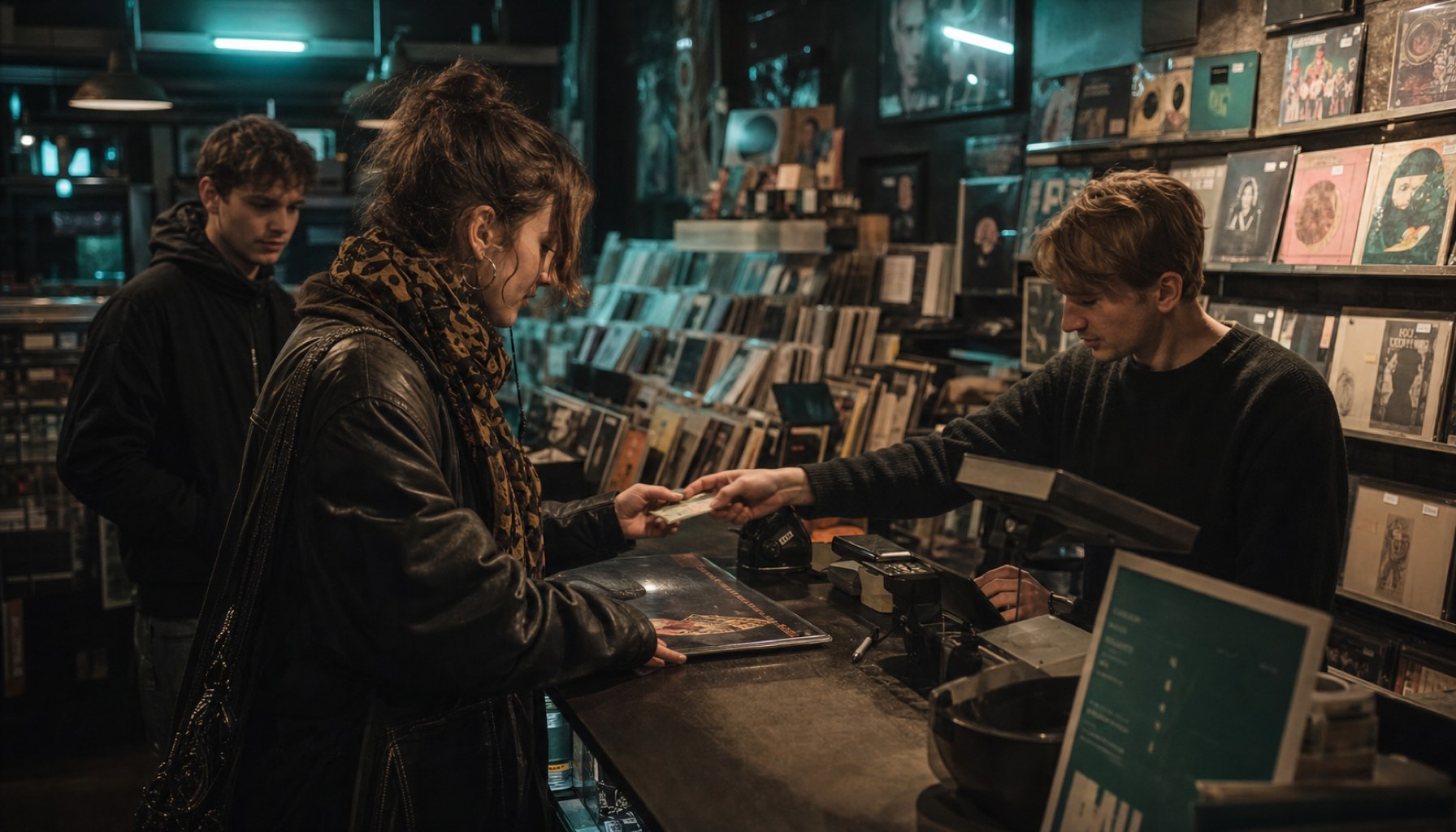
I used to think the vinyl hype was over. Then I found myself waiting in line at the record store around the corner, behind two people who couldn’t have been older than fifty. That’s what piqued my curiosity.
The Federal Music Industry Association reports a 2.8 percent revenue increase for vinyl in 2025. The catch? Unit sales dipped slightly. Vinyl is getting pricier, not necessarily bought more often. Still, the revenue fits into an upward trend that’s been running for nearly two decades. Its share of total music revenue now stands at 6.3 percent. That’s no footnote, but it’s not a revolution either. Streaming still commands 84 percent and continues to grow in absolute terms.
What’s interesting is who’s buying. According to the Association, the most affluent group remains middle-aged, specifically 40- to 49-year-olds. Yet there’s a noticeable influx of younger listeners who grew up with Spotify yet still reach for vinyl. For them, it’s an antidote to endless playlist scrolling: a format that demands your attention.
What 96 Decibels Reveal About Vinyl
Here’s the part where I regularly pick fights in online forums. Technically speaking, digital playback outperforms vinyl in almost every measurable category. That’s physics, even if the turntable rarely sounds romantic.
16-bit digital delivers around 96 decibels of dynamic range. Vinyl clocks in at about 70. Channel separation between left and right on a record hovers around 30 decibels, while digital exceeds 90. And the distortion factor-the audible warping-ranges from 0.4 to 3 percent on vinyl, whereas a decent digital converter stays below 0.001 percent.
Yet many still swear by the vinyl sound. The reason is a stubborn misconception. When a record “sounds better” than the stream of the same album, it’s almost never the format-it’s the mastering.
During the so-called Loudness War, many digital versions were brutally loud, heavily compressed. The vinyl edition of the same album often sounded airier because the record couldn’t physically be cut that loud. The catch: today, many pressings are cut straight from those same compressed digital masters. A record that looks dynamic on paper often originates from a flattened digital file.
In the end, you’re hearing the same recording through a mechanical stylus, with slight distortions, noise, and the little quirks that many love about vinyl.
How to Hear Better with Vinyl and Streaming
For me, this changed how I look at my own system. I no longer chase the supposedly purer sound. Vinyl shines in the ritual, streaming in availability and precision.
When you buy a record, focus on the mastering, not the format promise. Some albums get their own, carefully crafted vinyl master. Those sound genuinely different. A quick check on databases like the Dynamic Range Database tells you before you buy whether the pressing is worth it or if it’s just the same loud master as the stream.
Then just drop the needle. The value of vinyl rarely lies in the frequency response. It happens in the moment you listen through a side without skipping twelve times. That’s the difference that sticks.
Q&A after the show
Click on a question to reveal the answer.
Does vinyl sound objectively better than streaming?
So why do so many people love the vinyl sound?
Is an expensive turntable worth it for better sound?
Is hi-res streaming better than vinyl?
Why is vinyl booming if streaming is so convenient?

Image source: Cover and article images AI-generated (July 2026)
Translated from the German original using artificial intelligence. The German version is authoritative.