


08 Jul Why Pop Is Once Again Embracing the Out-of-Tune Piano
4:25 min read
For years, pop was polished so smooth that every note felt drawn with a ruler. In 2026, the wind is turning. Producers like Jack Antonoff deliberately leave the piano out of tune, let the drums breathe, keep a breath before the line in the mix. Suddenly imperfection is the selling point. Human is the new flawless. The interesting question is whether this is a genuine return to roots or just the next carefully curated pose.
DROP
- ▸Pop in 2026 celebrates imperfection, real instruments and audible humanity instead of synthetic perfection.
- ▸Jack Antonoff is the face of the movement, for him it’s the imperfect sound that makes a recording feel alive.
- ▸Heard on Billie Eilish or Olivia Dean records, acoustic textures and live elements move to the foreground.
- ▸Fatigue is the trigger, audiences have grown tired of flawless studio perfection.
- ▸There’s still a catch, even calculated imperfection is a product in the end.
The out-of-tune piano as a statement
Jack Antonoff is one of the most influential producers working today, his name behind countless major pop records. At this year’s Grammys, he was honored among other things for his work on Kendrick Lamar’s album GNX. What makes him interesting is his openly stated skepticism toward digital perfection. He uses modern tools as a matter of course, but insists that a recording has to start with something of its own.
His favorite example, roughly put, is the piano that hasn’t been tuned in months. That slight detuning, that audible state of a real instrument in a real room, is exactly what people love about music. It sounds like nostalgia, but it’s really more of a counter-thesis to the era when every voice got pulled to perfect pitch by software. Antonoff isn’t selling the old, he’s selling the tangible.
Where you’re already hearing the trend
The phenomenon is far from a niche topic anymore. Billie Eilish’s hit song Birds of a Feather thrives on acoustic guitar and an organic pulse instead of a wall of synthesizers. Olivia Dean, named Best New Artist at the 2026 Grammys, deliberately builds her soul-soaked sound around warm, handmade arrangements. Observers of the scene see the same pull with other names across pop, from major stars to rising songwriters.
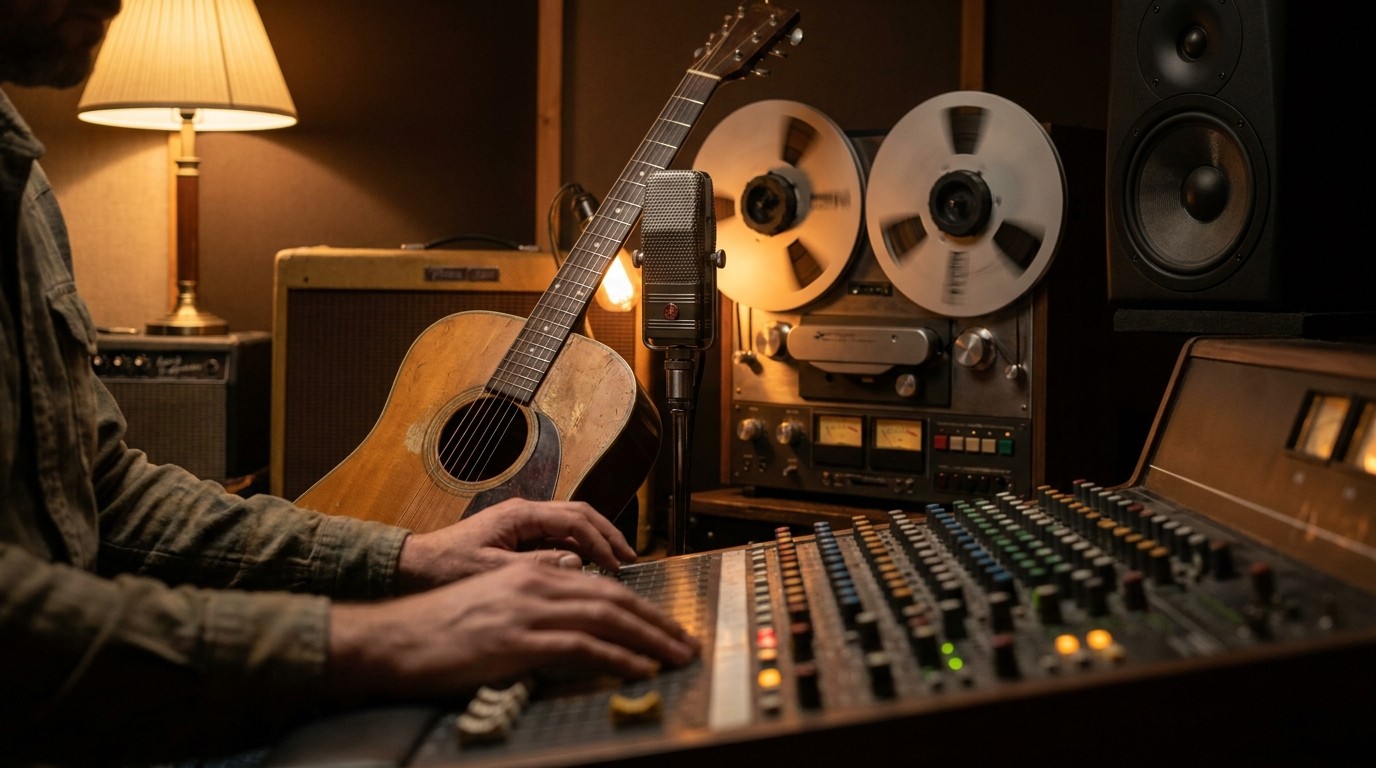
Technically speaking, this is a return of hybrid production. Nobody is throwing away the digital toolbox. Instead, producers combine the precision of software with the warmth of real instruments, with tape-machine saturation, with room sound. The goal isn’t retro for retro’s sake, but a sound that feels alive without being technically behind the times.
Why now, of all times? Part of the answer lies in oversupply. When streaming services spit out tens of thousands of new tracks daily and AI tools deliver perfect beats in seconds, flawlessness becomes commodity. What stands out is what can’t be reproduced at will: a specific room, a particular voice on a particular day, a mistake that never happens quite the same way again. Humanity becomes the differentiator, precisely because machines struggle to replicate it. The trend is also a reaction to the AI debate stirring up the entire industry.
Then there’s the live factor. Anyone who wants to fill a venue has to offer something that works on stage. Songs that rely heavily on studio tricks often feel thin live. An arrangement built from real instruments right from the recording translates more easily into the concert experience. The return to the handmade isn’t just a matter of taste, it’s also solid stage economics.
Genuine return or clever marketing?
And here’s where it gets interesting. If imperfection becomes a selling point, is it still imperfect? A deliberately out-of-tune grand piano, recorded with expensive equipment and curated by a star producer, is a very calculated form of casualness. The irony is obvious: authenticity itself has become an aesthetic that gets manufactured on purpose.
That doesn’t make the trend worthless, though. Even a staged return to roots can produce real, moving music. Still, the difference from pure Auto-Tune perfection is real, because the ear reads the room, the breath, the small imperfection as human. Staying skeptical is worthwhile, but there’s no need to turn fully cynical. Sometimes the calculated gesture is, in fact, more honest than the flawless one.
What This Means for You as a Listener
For you as a listener, it’s mainly attention that changes. Pay conscious attention to the small things next time: the creak of a chair, the breath before the line, the guitar that sits minimally off. What used to get edited out is now often left in on purpose. If you produce yourself, take that as an invitation not to kill every imperfection. A take with feeling often beats the technically clean one without soul. In the end, it’s not whether a note sits perfectly that counts, but whether the song reaches you.
Q&A After the Show
Click a question to expand the answer.
What does anti-overproduction actually mean?
Is Auto-Tune disappearing completely now?
Isn’t this just nostalgia?
Can I recreate the sound at home?

Editorial Team IBS Publishing ››
Fred again.. 2026: Why the post-electronic sound is going mainstream now →Streaming economics 2026: How Spotify, Apple Music and Amazon Music are redistributing royalties →Music industry Q1 2026: Universal, Warner and Sony report their numbers →DJ controllers tested: Pioneer DDJ-FLX10 vs. Denon Prime 4+ →
Image source: AI-generated (July 2026)
Translated from the German original using artificial intelligence. The German version is authoritative.