


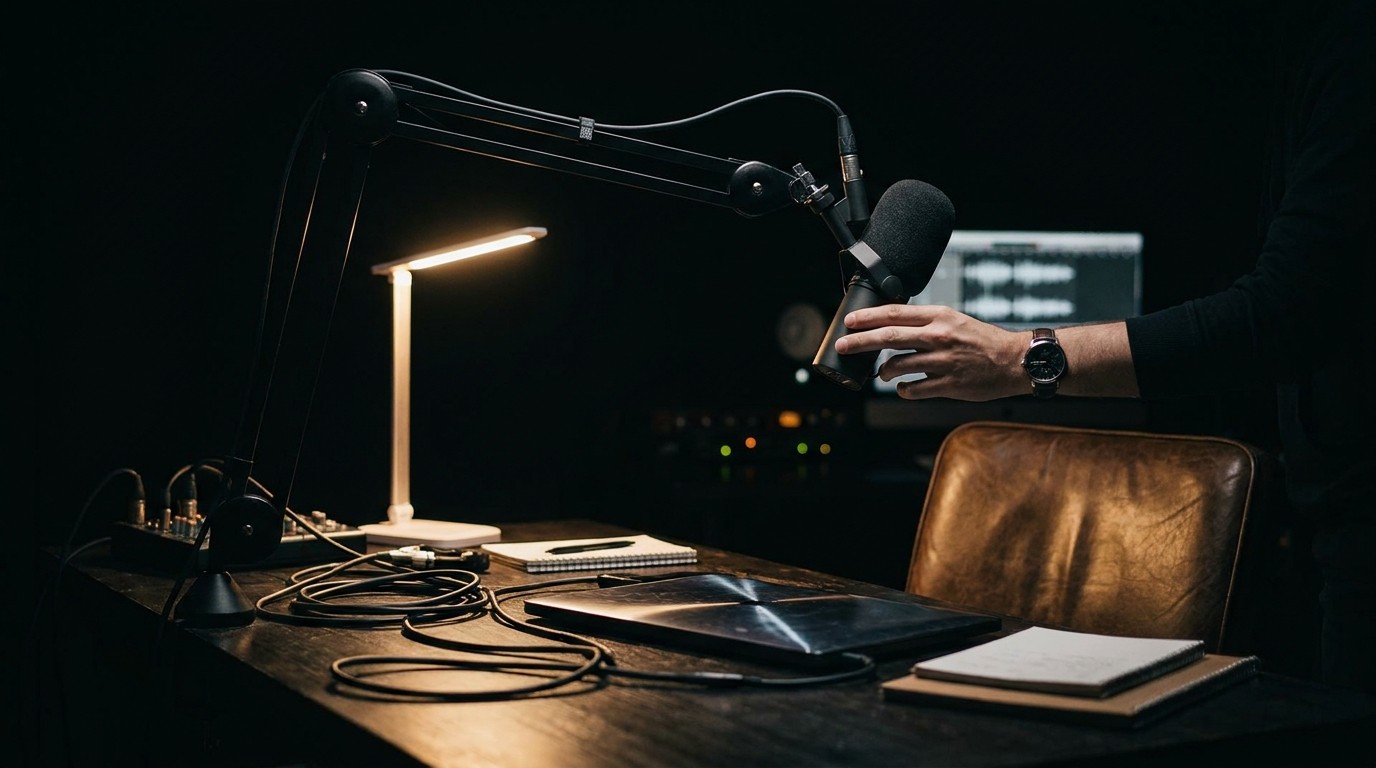
14 Jul Dynamic Podcast Mics: 4 for Voice and Proximity
▶ 3:41 min read
Condenser mics hear the room. Dynamic broadcast mics forgive the home-studio grind. Four candidates compared: SM7B class, PodMic, RE20 line, and Heil-adjacent alternatives. What proximity demands and what your preamp must deliver.
Why dynamics win in the home studio
Condenser mics are sensitive and unforgiving. In untreated rooms, that quickly becomes a problem: keyboards, traffic, reverb. Dynamic broadcast mics shrug off room noise and reward proximity. You move closer, the room fades, and your voice cuts through.
The trade-off: you need gain. Some interfaces provide enough, others need a clean boost. That’s physics. Want the SM7B sound? Budget for a solid preamp.
For streams and podcasts, handling matters too: weight on the arm, pop-filter needs, and whether you can laugh without wrecking the take.
Neighbors and flatmates are part of the signal chain. Dynamic mics pick up less fridge hum and street noise. That doesn’t replace a quiet time slot, but it makes evening sessions far more doable. Schedule when household noise drops and use the mic’s polar pattern: turn its rear to the noise source and its front to your mouth.
The Four in Everyday Use
The SM7B class sets the standard by which everything else is measured: robust, close, iconic. The PodMic is the budget-friendly entry point with a podcast focus. The RE20 class better accommodates distance variations and has been a staple in broadcast studios for years. Heil’s close proximity dynamics often prioritize presence, which helps thin voices but can sound harsh on already bright ones.
Comparison criteria: pop behavior, proximity effect, signal-to-noise ratio at the preamp, weight on the arm, and whether you can whisper and shout in the same take without constantly adjusting the gain.
Plosives and sibilants are the two main enemies of any vocal recording. Plosives are the air blasts from P and B that slam the diaphragm. Sibilants are the harsh S sounds that pierce in the high end. Dynamic mics are more resistant to plosives than condensers but often need a pop screen or foam. To tame plosives, use close proximity and a 15-degree off-axis position relative to the mouth. For sibilants, a de-esser in the DAW or a foam windscreen helps. Pop filters are less often required with dynamic mics than condensers-a good basket often suffices. Too much P? Adjust the position before stacking plugins.
Preamp and Room Trump Brand Myths
A pricey dynamic on a noisy preamp sounds worse than a cheaper mic on a clean one. And even the best dynamic loses impact if you’re a meter away. Proximity is part of the sound.
Acoustics still matter: a rug and a soft rear wall behind the mic save more takes than a third accessory cable.
Gain numbers are the pragmatic point-and heavily preamp-dependent. The SM7B class often needs significantly more gain than a PodMic. On simple interfaces, that can fall short. Clean inline boosters like Cloudlifter or FetHead classes, which lift the signal by roughly 20 to 25 dB, help. Prices typically range from about €80 to €150. For SM7B and RE20 on weak preamps, that’s often worthwhile and more than pure luxury. For PodMic on modern interfaces, it’s often unnecessary. Test: if the take hisses at usable volume, you’re missing clean gain.
Which mic for whom
Two-person podcast in the living room? PodMic or SM7B-class with a solid interface. Daily voice with broadcast aspirations? RE20-class. Character voice with edge? Heil-close options. Budget rule: preamp and boom arm first, mic upgrade later.
Two people at a table need two mics-not one in the middle. Keep the distance between speakers generous; otherwise each mic will pick up the other. Point cardioid patterns toward the speaker, rear toward the other person. Two identical mics are easier to process than two different ones. Set both levels equal-three seconds at the interface makes a big difference.
USB mics live in a different league from these dynamic XLR mics. They’re plug-and-play and fine for solo podcasts. For dual-mic setups and upgrade-ready preamps, XLR remains the clearer path. If you truly podcast solo and never plan to upgrade, a good USB mic often suffices. The leap from USB to XLR buys you an interface and boom arm-and pays off once production and multitrack become serious.
Q&A after the show
Click on a question to reveal the answer.
Do I absolutely need a clean-boost pedal?
Condenser or dynamic for vocals?
Is XLR into a USB interface enough?
What’s the most expensive mistake?
[/vc_column_text][/vc_column][/vc_row]

Chief Digital Officer, Evernine ››
Studio headphones under 200 Euro: 4 classics compared → Near-field monitors for beginners: 4 in direct comparison → Setting the DSP: the moment the bass locks in → Friday 17.07.: Nia, Gracie, Steve Lacy → Adam Lambert: indie vinyl as a community drop →
Image source: AI-generated (July 2026)